
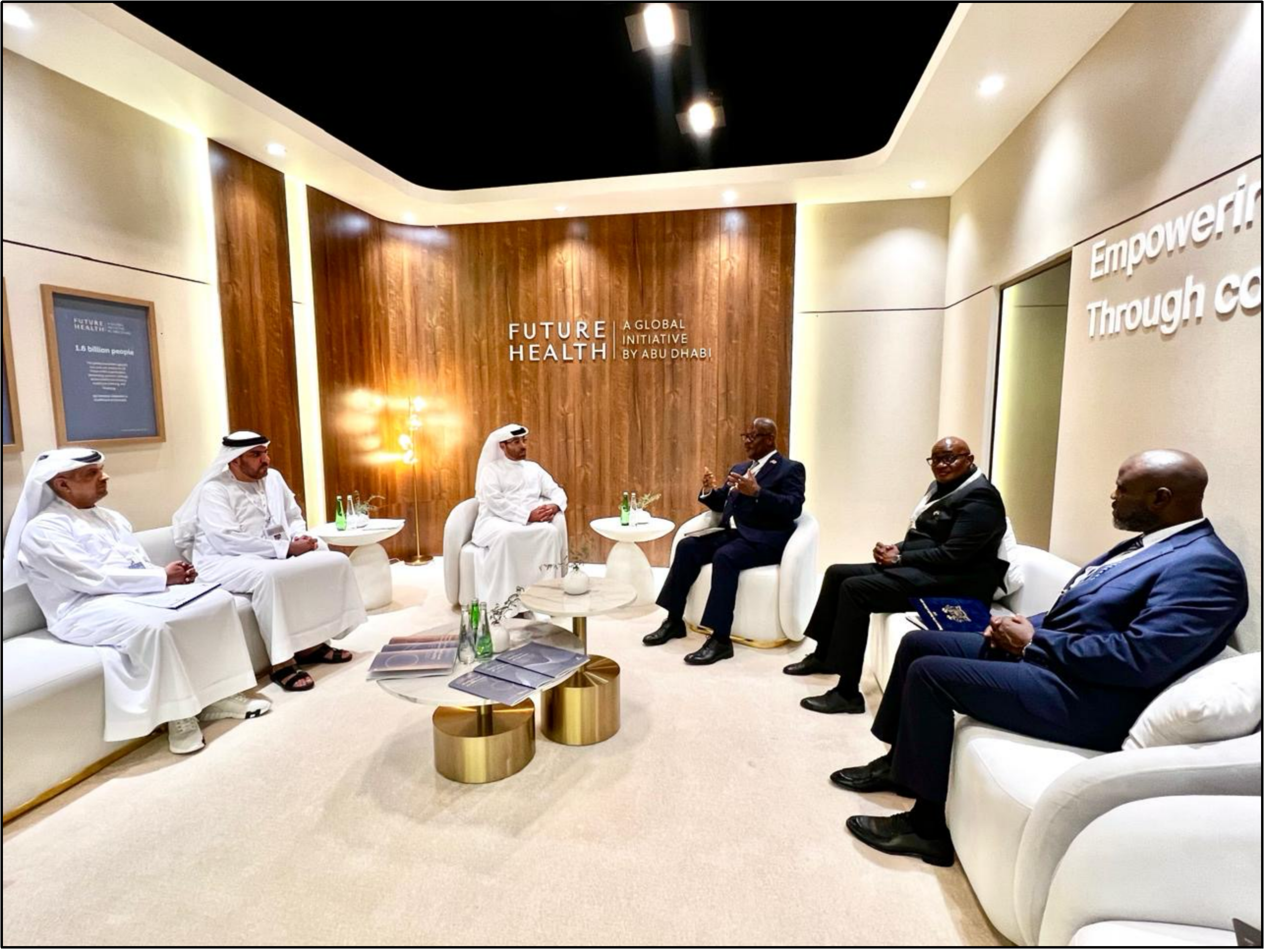
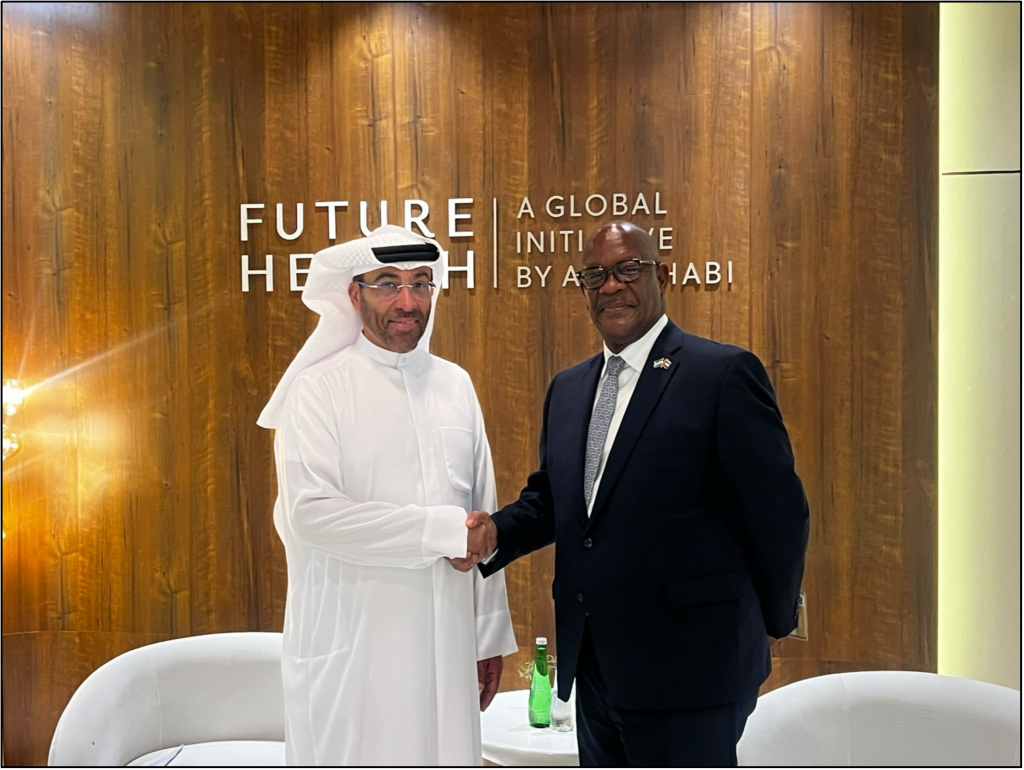
Sierra Leone’s Minister of Health, Dr Austin Demby, met with the United Arab Emirates (UAE) on the sidelines of the Abu Dhabi Future Health Summit to discuss ways to enhance cooperation.
Dr Demby held talks with the UAE Minister of Health and Prevention, Ahmed Bin Ali Al Sayegh, and expressed his gratitude to the UAE leadership for its support for Sierra Leone’s health sector. He cited support that has included building a 100-bed field hospital in Port Loko District and providing medical supplies during emergencies and disasters.
The Sierra Leonean minister also thanked the UAE for supplying vaccines during the Mpox outbreak. “The assistance helped the country to move from treating patients in communities to treating them in hospitals,” he said, “which also helped prevent further transmission of the disease.”
Dr Demby said Sierra Leone is working to strengthen its health infrastructure and build its capacity to detect, monitor and manage future disease outbreaks, reflecting on the Ebola and COVID-19 outbreaks. He stressed that the public should be educated so that they can trust the health system and come forward for treatment.
He added that the Ministry of Health was investing in secondary and tertiary health care services to complement the primary care already in place across the country. The investments aim to increase access to services and improve the system’s ability to meet people’s health needs.
Dr Demby also presented on the progress of Sierra Leone’s 300 Days of Activism for Maternal, Newborn and Child Survival campaign, launched earlier this year during the meeting. The campaign aims to prevent maternal and child deaths and ensure every child is vaccinated to protect against preventable disease.
The campaign was “founded on digital technology,” the minister said. The Ministry is now utilising an electronic system to register pregnancies, monitor women through pregnancy and review cases of pregnancy loss. The information is meant to help health workers identify difficulties, respond to risks, and improve the quality of care provided to mothers and children.
Dr Demby said the campaign helped reduce maternal and infant mortality and helped health workers identify children who had not received any vaccines and ensure they were fully vaccinated.
“Maternal mortality has decreased by 32 per cent and infant mortality by 11.4 per cent during this campaign. We identified all the children who had not received any vaccines, and we were able to fully vaccinate them. “The electronic system gives us data to tell us what to do,” he explained.
“The digital system was built to support care through pregnancy, not just labour and delivery,” he said. Once a pregnant woman registers through the app, health workers can follow her progress and provide the care she needs, he said.
Dr Demby also presented proposals for the planned regional referral hospital and health sciences centre, the Jembe Medical Campus. The development will include a 300-bed hospital and schools of medicine, nursing, midwifery and pharmacy. It is supposed to serve people from all over Sierra Leone.
The Government is looking for partners to help fund and develop the campus. “The project will support President Dr Julius Maada Bio’s ongoing efforts to improve healthcare delivery across the country,” Dr Demby said. The hospital and training institutions would be part of a larger effort to strengthen health services and build the health workforce.
The UAE minister thanked Dr Demby for participating in this year’s Abu Dhabi Future Health Summit. He welcomed progress in Sierra Leone’s health sector and discussed opportunities to deepen cooperation between the two countries. He also reiterated the UAE’s commitment to continue cooperating with Sierra Leone.
Dr Demby was joined at the meeting by Sierra Leone’s Chief Medical Officer, Dr Mustapha Kabba, and the country’s Ambassador to the UAE, Rashid Sesay.
