
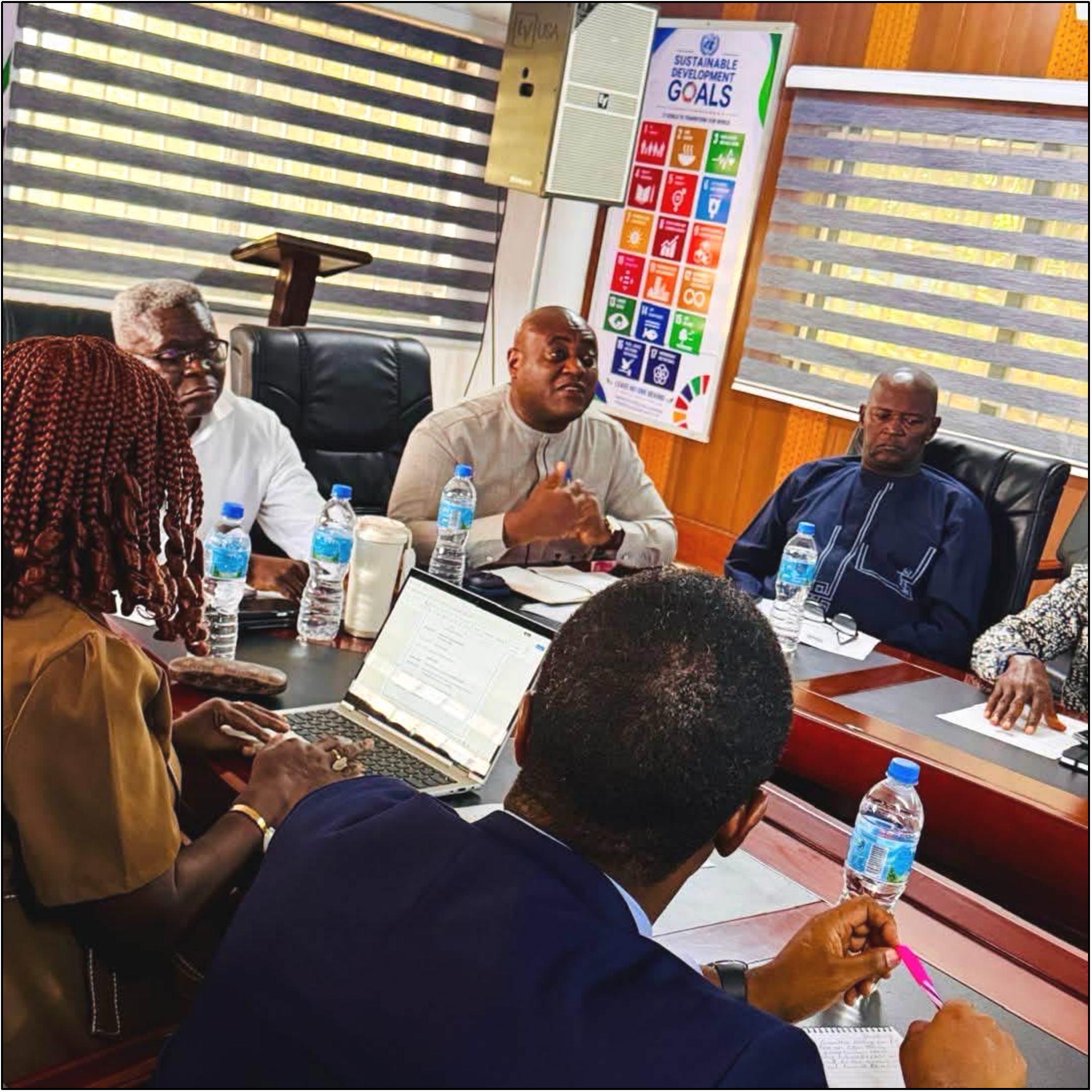
The Ministry of Planning and Economic Development (MoPED), through its Rural Development Directorate (RDD), today held a Technical Committee meeting to advance the development of Sierra Leone’s first-ever Community-Based Organisations (CBOs) Policy. Senior ministry officials, representatives of local governments, national and international NGOs, SLANGO, and other stakeholders met at the Ministry Conference Hall, Tower Hill, to agree on a fast-tracked plan for consultations, recruitment, and resource mobilisation ahead of a December 2026 target.
Development Secretary Ambrose James, who opened the meeting, stressed that the new policy is meant to improve coordination between communities, the government and development partners, and not to restrict CBOs. “MoPED is committed to the process, and we are calling for strong collaboration to achieve the ambitious timeline. This is an opportunity to make history for Sierra Leone,” he said.
In his closing remarks, he said: “Collaboration is the key. “The proposed policy is not to restrict CBOs, but to provide a framework that recognises their contribution, builds their capacity and enhances coordination with government and other development actors. ‘If we work together, with proper coordination, we can meet our goals.
Mr Sahr A.K. Lamina, President of the Local Councils Association of Sierra Leone (LoCASL), chaired the meeting. From MoPED were Deputy Development Secretary 1 and Mrs M’balu Kamara, Director of the Rural Development Directorate. Also participating was Haja Abie Kamara, Director of the Development Assistance Coordination Office (DACO). Participants included representatives of national and international NGOs (e.g. Trócaire), local councils, SLANGO and other sector stakeholders.
Mrs M’balu Kamara stressed the need for an inclusive, workable policy that reflects development priorities and community realities. DACO Director Haja Abie Kamara stressed the need for collaboration and coordination to mobilise the resources to advance the policy development process. She urged stakeholders to work together to ensure the process is adequately resourced and ultimately results in a framework that benefits communities.
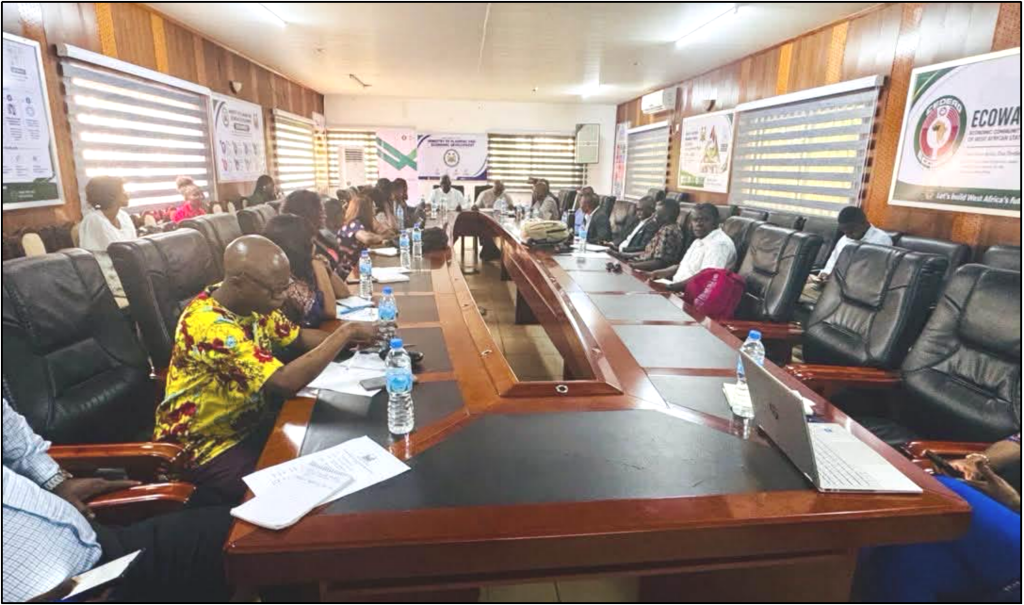
Mr Braima Sellu, Partnership and Localisation Manager at Trócaire, provided an update on partnership development, resource mobilisation, and preparations for the consultation phase on behalf of the NGO community. He said NGOs supported the review of the consultant’s work plan, budget, and terms of reference. Mr George, Country Director, Trócaire. The NGO community reaffirmed its commitment to financial and technical support to the policy process. Chair of the SLANGO Board, Mr Christian Martin Kamara, pointed out the need to ensure that CBOs are meaningfully involved and promised continued support from domestic and international NGOs.
The Committee members expressed satisfaction with the progress made so far, while stressing the need for clear coordination mechanisms among CBOs, local councils, NGOs and government institutions. After long discussions, members agreed on several steps that were doable to shorten the timeline:
• Two teams will consult simultaneously in different geographical locations to save time and increase reach. All teams will attend a common orientation to ensure consistency in the consultation tools, questions, and messaging.
• A consultant will be engaged to help speed up the process. The recruitment team will consist of four members, two from MoPED and two from the NGO community, who will supervise the process.
• The NGO sector set a deadline of 15 September 2026 for resource mobilisation commitments to support the process.
• Committee members agreed to develop standardised communication products, including radio jingles, fliers and messages in local languages, emphasising community-level engagement to promote understanding and participation among the public.
• Develop and share an updated timeline for recruitment, consultations, drafting, validation and finalisation of the policy with committee members to ensure clarity on roles and deadlines.
Local council representatives and other participants stressed the importance of ensuring that consultations are inclusive, reach marginalised groups and reflect the full range of CBO experience in both urban and rural contexts. The committee also stressed the need for the policy to be workable and practical, boosting coordination and transparency between actors while reinforcing CBO capacity.
Development Secretary Ambrose James, who wrapped up the meeting, thanked all participants and partners for their commitment and called for strict observance of the deadlines set.
He reiterated the need for effective coordination and collaboration among all stakeholders in formulating a national policy framework that recognises and strengthens the contribution of CBOs to Sierra Leone’s development.
The Technical Committee’s decisions are a major step toward finalising the document by December 2026 and an expedited process to deliver Sierra Leone’s first stand-alone CBO Policy.
