
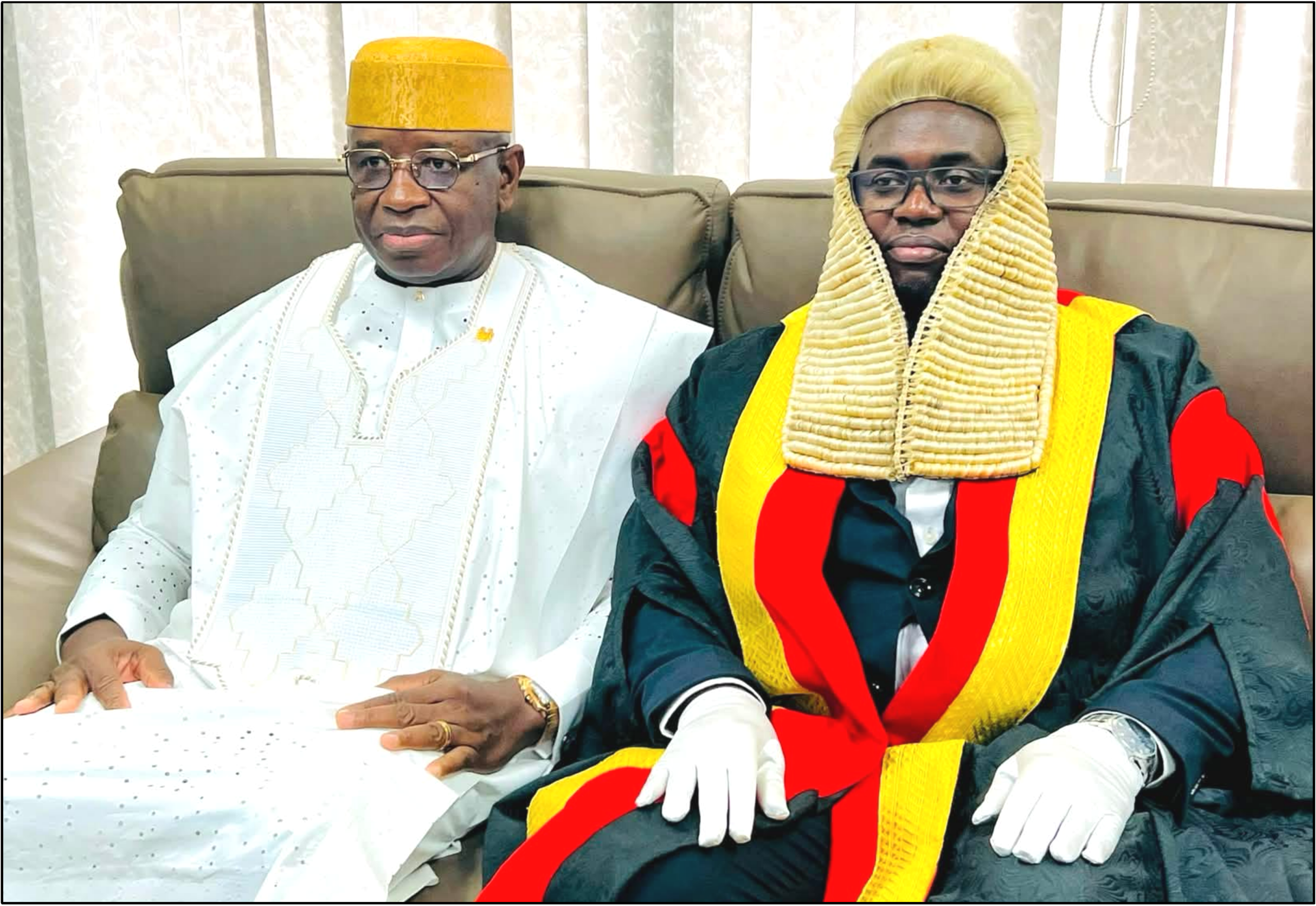
President Julius Maada Bio and Segepoh Solomon ThomasParliament passed the Constitution of Sierra Leone (Amendment) Act, 2025, on 10 August 2026, generating heated political and legal debate, with opponents arguing that it was flawed, even unlawful. The bill, which passed after an opposition walkout and heated debate, would change several key aspects of Sierra Leone’s electoral and political systems.
Opponents say President Julius Maada Bio would be complicit in what they describe as an illegitimate enactment if he signs the measure into law. Main opposition All People’s Congress (APC) lawmakers staged a walkout during the vote, accusing the government of not following constitutional procedures. The APC and several independent legal experts cite Section 108(2)(b) of the 1991 Constitution, which they say states that any amendment to some entrenched provisions must be passed by a two-thirds majority of all Members of Parliament, i.e. 100 out of 149 MPs.
The amendment passed by a bare majority of members present, not by the two-thirds majority of the full assembly required, they say, and the process was therefore constitutionally flawed. The terms of the amendment are inherently controversial. Among the most significant changes are a drop in the threshold for a presidential victory from 55% to a simple majority of 50% plus one vote, and a geographic spread condition, requiring at least 20% of the votes in two-thirds of the country’s districts.
The Act also provides for a minimum 30 percent quota for women in political nominations at the national and local levels, and makes proportional representation the permanent system for electing ordinary members of parliament. A suggestion that independent candidates should be barred from running for president is said to have been dropped.
Legal heavyweights have warned against it. The bill has generated controversy, with prominent lawyer and constitutional expert Sulaiman Banja Tejan-Sie publicly urging the President not to sign the bill after a contentious parliamentary process on August 10. The APC has gone further to describe the push for the amendment as treasonable. Hon. Abdul Kargbo, the minority leader in Parliament, has accused the Speaker and all MPs who took part in the August 10 proceedings of treasonous conduct. He has also said that, if the President signs the Act into law, he will be a “particeps criminis” or accomplice.
Supporters of the amendment say it simplifies election rules and helps promote women’s representation, while opponents say procedural flaws and the constitutionality of the entire process threaten the constitutional order. President Bio now has the Act, and Sierra Leone now faces rising legal and political uncertainty. The next steps, which could include possible court challenges or further political mobilisation, will probably decide whether the amendment is entrenched or overturned.
