
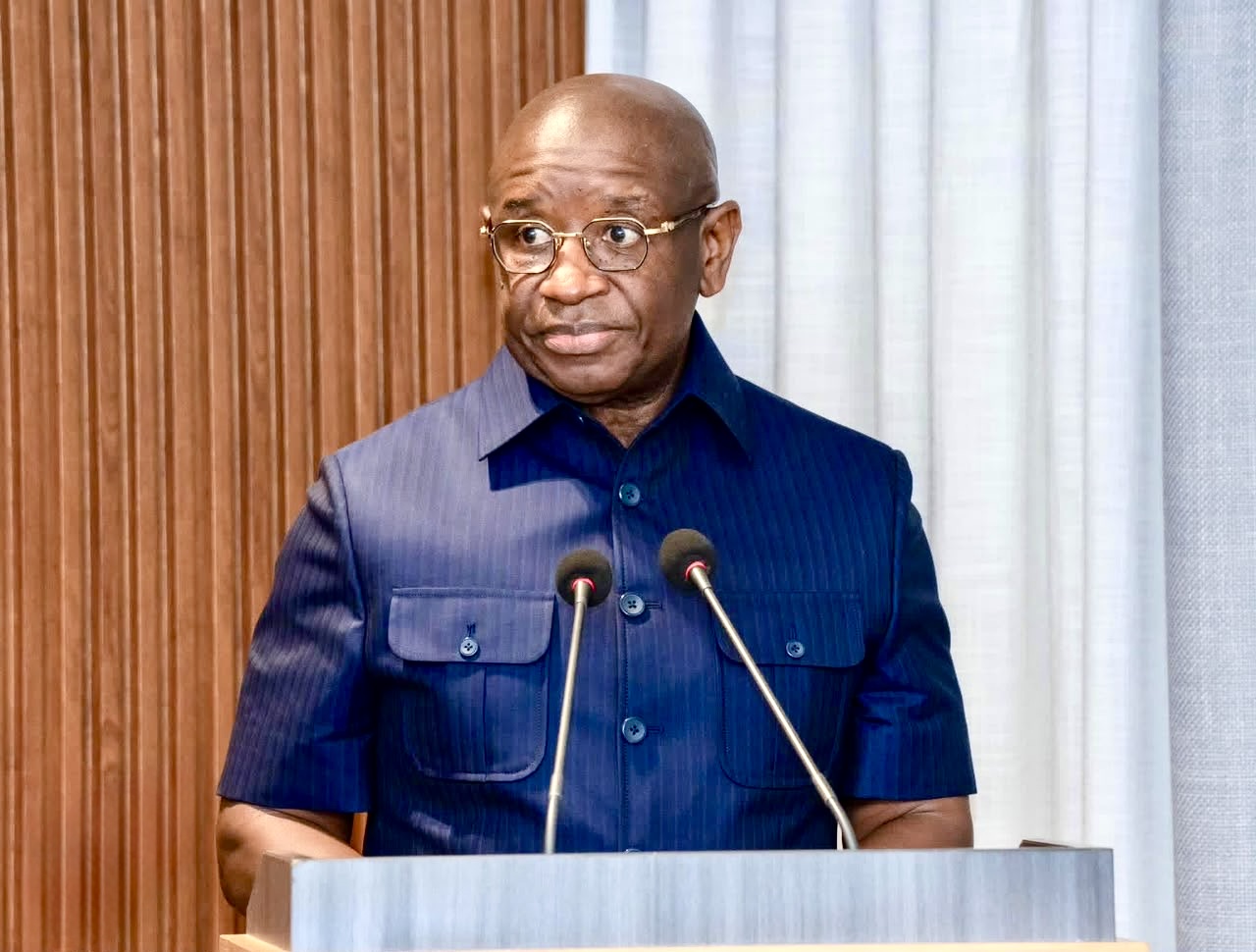
President Julius Maada Bio
Since taking office in 2018, President Julius Maada Bio has presided over a presidency of ongoing crises rather than peaceful progress.
Three issues in particular – a protracted economic crisis, an explosive scandal involving a convicted European drug kingpin reportedly hiding in Sierra Leone, and a divisive constitutional amendment – are likely to outlast his administration and shape how history remembers his time in office.
The most enduring and visible challenge, arguably, has been economic turmoil. For much of Bio’s tenure, ordinary Sierra Leoneans have been grappling with rising food prices, a depreciating exchange rate and a general squeeze on living standards.
The government has struggled to stabilise the macroeconomy, and frequent changes at the finance ministry have mirrored the pressure from politics to find solutions. Four men have been appointed as finance ministers since 2018.
They are Jacob Jusu Saffa (2018), Dennis Vandi (2021), Sheku Ahmed Fantamadi Bangura (2023) and, recently, Karefa Ansumana Francis Kargbo, approved by Parliament in August 2026. Successive ministers have experimented with different policy mixes, but a large number of citizens say that their day-to-day conditions have worsened rather than improved. Sierra Leoneans are waiting for concrete plans from the new finance team to ease cost-of-living pressures, and public patience is thin.
Domestic economic pain is compounded by an international scandal that has cast a long shadow over the presidency. Multiple sources confirm that Jos Leijdekkers, a Dutch national convicted in absentia in the Netherlands and Belgium for 81 years for international cocaine trafficking, money laundering and alleged contract killings, is currently holed up in Sierra Leone. Intelligence and media reports indicate that he lives under an alias and is protected by people in positions of power; some reports even say he is romantically involved with a member of President Bio’s family.
These allegations are denied, and no independent corroboration of personal relationships has been offered. Many details have not been confirmed publicly by authorities in Sierra Leone and elsewhere, but Dutch special forces have planned a classified maritime operation to apprehend Leijdekkers. Commandos staged offshore ambushes that were eventually abandoned when risks changed. The episode has drawn intense international scrutiny and domestic political fallout, raising fears about state capacity, the rule of law, and the possibility of high-level intervention.
The third major flashpoint of Bio’s presidency is the controversial constitutional amendment passed by Parliament on August 10, 2026.
The Sierra Leone Constitution (Amendment) Act of 2025 changes key parts of the laws and rules about voting. One of the most important changes is the reduction of the presidential election winning percentage in the first round from 55% to a simple majority of 50% plus one vote and the introduction of a condition that the winning candidate must have at least 20% of the votes in two-thirds of the districts.
It makes proportional representation the primary way of electing Members of Parliament, adjusts the rules on disqualifying candidates to allow dual citizens to stand but retains some disqualifications for naturalised citizens, and sets a 30% quota for women in representative bodies. Supporters of the Biden administration hail the package as progressive reform; opponents, including the leading opposition constitutional lawyers and the All People’s Congress (APC), said the amendments were rushed through and could threaten political stability. Since the bill was passed, legal challenge and heated public debate have ensued.
All three of these developments – economic distress, the Leijdekkers scandal and the constitutional overhaul – combine to form a trifecta of headaches that will heavily shape the political future of Julius Maada Bio. They are part of a raft of long-standing concerns raised by critics and analysts – including allegations of leniency to corruption, ongoing commissions of inquiry, rising insecurity in parts of the country and worrying trends in educational outcomes.
In the end, history will judge the Bio presidency on whether it can translate policy change into material benefits for citizens and whether the remaining concerns about governance and the rule of law are sufficiently addressed.
