
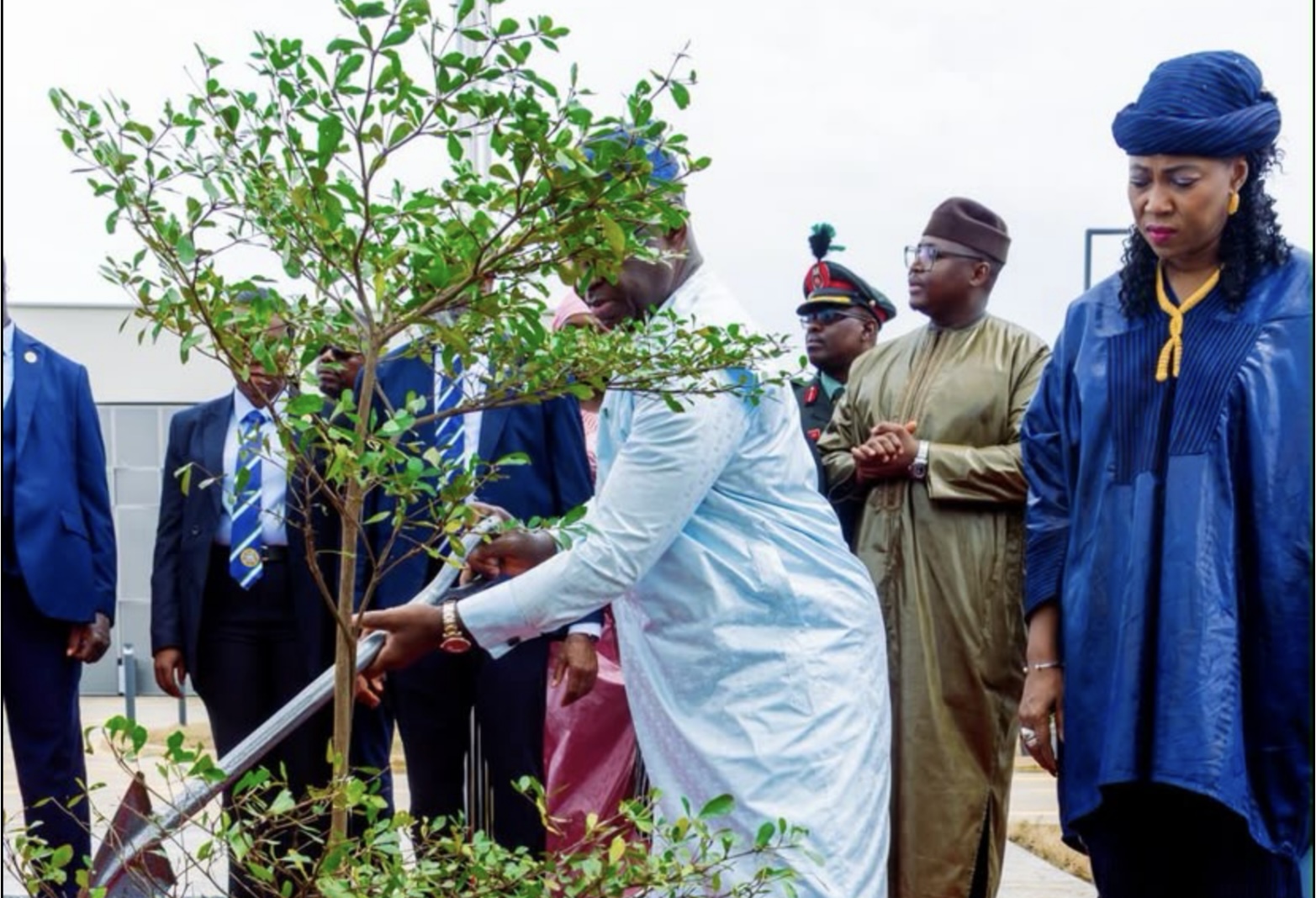
President Julius Maada Bio formally ended his one-year tenure as President of the ECOWAS Authority of Heads of State and Government during a high-profile Mid-Year Summit in Lungi, Port Loko District, 18-19 July, 2026. The events saw the commissioning of two major regional assets, the Julius Maada Bio International Conference Centre and the ECOWAS Logistics Depot as well as the peaceful transfer of the chairmanship of ECOWAS to Senegal’s President Bassirou Diomaye Faye.
On 18 July, President Bio inaugurated the new multi-purpose conference centre named after him and the ECOWAS Logistics Depot, calling the two projects enduring symbols of Sierra Leone’s aspiration to be a hub for diplomacy, peacebuilding and regional integration. He said, “Nations are remembered not only for the challenges they overcome, but also for the institutions they leave behind, and these facilities are a shared legacy between Sierra Leone and ECOWAS. Ideally, such investments should be made in Lungi, where the country’s main international gateway is. The new infrastructure will link West Africa to the world, boost tourism, create jobs and open avenues for local businesses.
President Bio said the ECOWAS Logistics Depot is a strategic asset which will support the Community to respond promptly to peace operations, humanitarian emergencies and other regional crises. He said the choice of Sierra Leone as the location for the depot shows the confidence of ECOWAS in the country’s stability, strategic location and commitment to regional cooperation.
The Summit kicked off on July 19 with a Summit of the Future on Regional Integration, followed by the 69th Ordinary Session of ECOWAS Authority of Heads of State and Government. In his closing statement, President Bio called on West African leaders to transform their vision into action by prioritising investments in people through resilience building, food security, regional trade, peace and transparent governance. A region that thinks together makes each member state stronger. A region that works together guarantees a more peaceful, prosperous and resilient ECOWAS for all its citizens. ” “We have to build together this is a future,” he said.
Bio stressed that “improved disaster preparedness, early warning systems and climate resilience are essential for sustainable development,” and urged member states to adopt climate-smart agriculture, expand regional food trade and strengthen strategic food reserves. But he cautioned that high-sounding statements would count for little if not accompanied by clear responsibilities, adequate resources, realistic timelines and measurable results. Our decisions must be based on clear responsibilities, enough resources, realistic deadlines and measurable results. ” “The next fifty years of ECOWAS will not be judged by the declarations we make but by what we deliver to our people,” he said.
The summit also approved a major leadership appointment for the regional commission. General Birame Diop, former Senegalese Minister of Defence, former Chief of Staff of the Senegalese Armed Forces and former Military Adviser to the UN Secretary-General, has been appointed the new president of the ECOWAS Commission. Regional officials said the ECOWAS leadership transition had ended with the formal handover of the chairmanship of the Authority to Senegal’s President Bassirou Diomaye Faye signalling the end of a decisive and constructive tenure.
Sierra Leone was commended for hosting the summit and President Bio for his leadership. Vice President Dr Mohamed Juldeh Jalloh said the new projects were defining features of Bio’s legacy and symbols of Sierra Leone’s rising international profile. “We were once known for conflict, but today we are a trusted convener of regional and global dialogue,” he said. He called the conference centre a permanent national landmark that will shape opportunities for future generations.
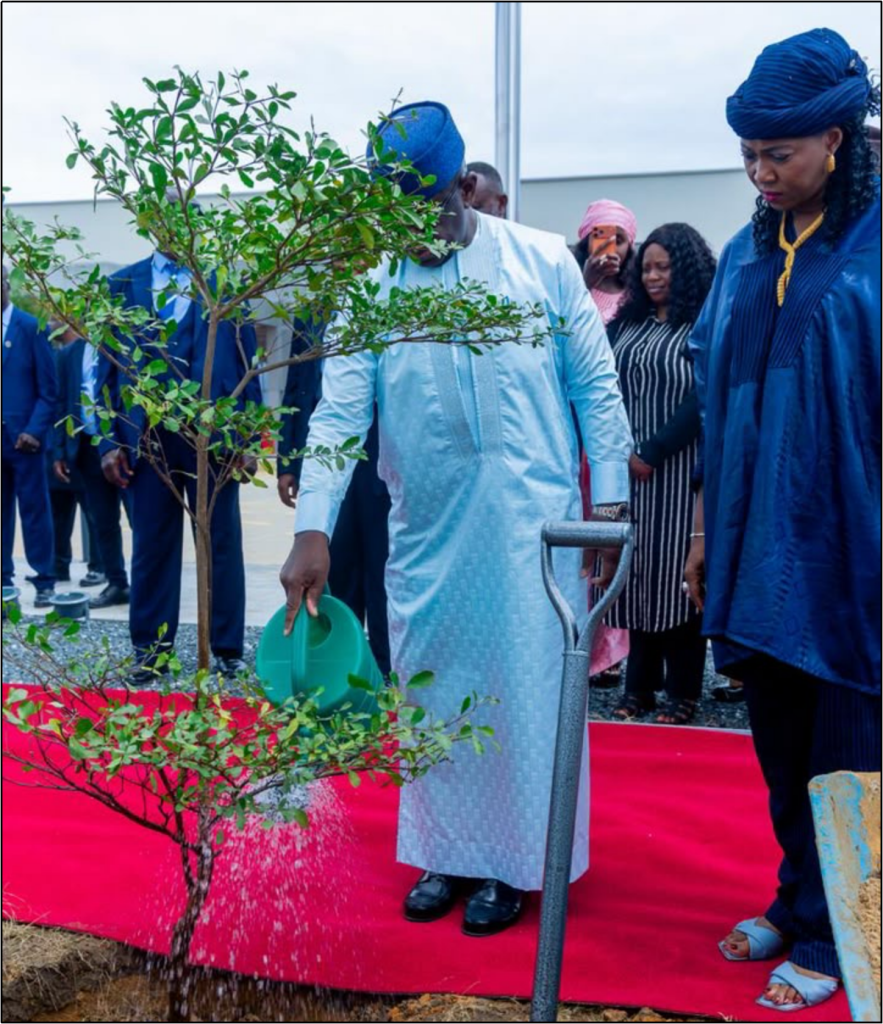
“This is a testament to the visionary leadership and statesmanship of President Julius Maada Bio,” said Adama Barrow, President of The Gambia. “The conference centre will be used for diplomacy, commerce and co-operation. Dr Omar Alieu Touray, President of the ECOWAS Commission, commended Bio for steering the Community through a challenging year marked by political transitions, security threats, terrorism, economic shocks and climate-related emergencies. “The logistics depot is not a building, but a functional extension of ECOWAS’ collective ability to act in the face of regional circumstances,” Dr Touray said. “We are commissioning more than a physical building. “We are strengthening the Community’s ability to respond rapidly, together and with determination as the situation demands,” he said.
The summit was a chance to reaffirm ambitious regional goals. He called on member states to increase intra-regional trade to 40% by 2035, establish an ECOWAS Single Market by 2030, create a regional energy market by 2035, restore constitutional order where it has been disrupted, and achieve 40% female representation in ECOWAS governance institutions by 2028.
We also had the backing of international partners and private sector leaders. The United Nations Deputy Secretary-General, Amina Mohammed, congratulated Sierra Leone on its investment in infrastructure to foster national development and regional integration and reaffirmed the UN’s commitment to the region, especially its women and youth. The private sector’s view on regional integration was presented by the chairman of the Dangote Group and the ECOWAS Business Council, Aliko Dangote, who spoke to the delegates at the Summit of the Future.
The summit ended with the commissioning of new infrastructure, declarations of high-level policy commitments and peaceful transition of leadership, all of which pointed to Sierra Leone’s increasing importance as a centre for diplomacy and regional cooperation in West Africa. Officials said the investments offer the potential for tangible returns, from better operational readiness for crises to more opportunities in tourism, trade and local enterprise, but stressed President Bio’s warning that the real measure of success will be implementation and better lives for West Africans across the region.
