
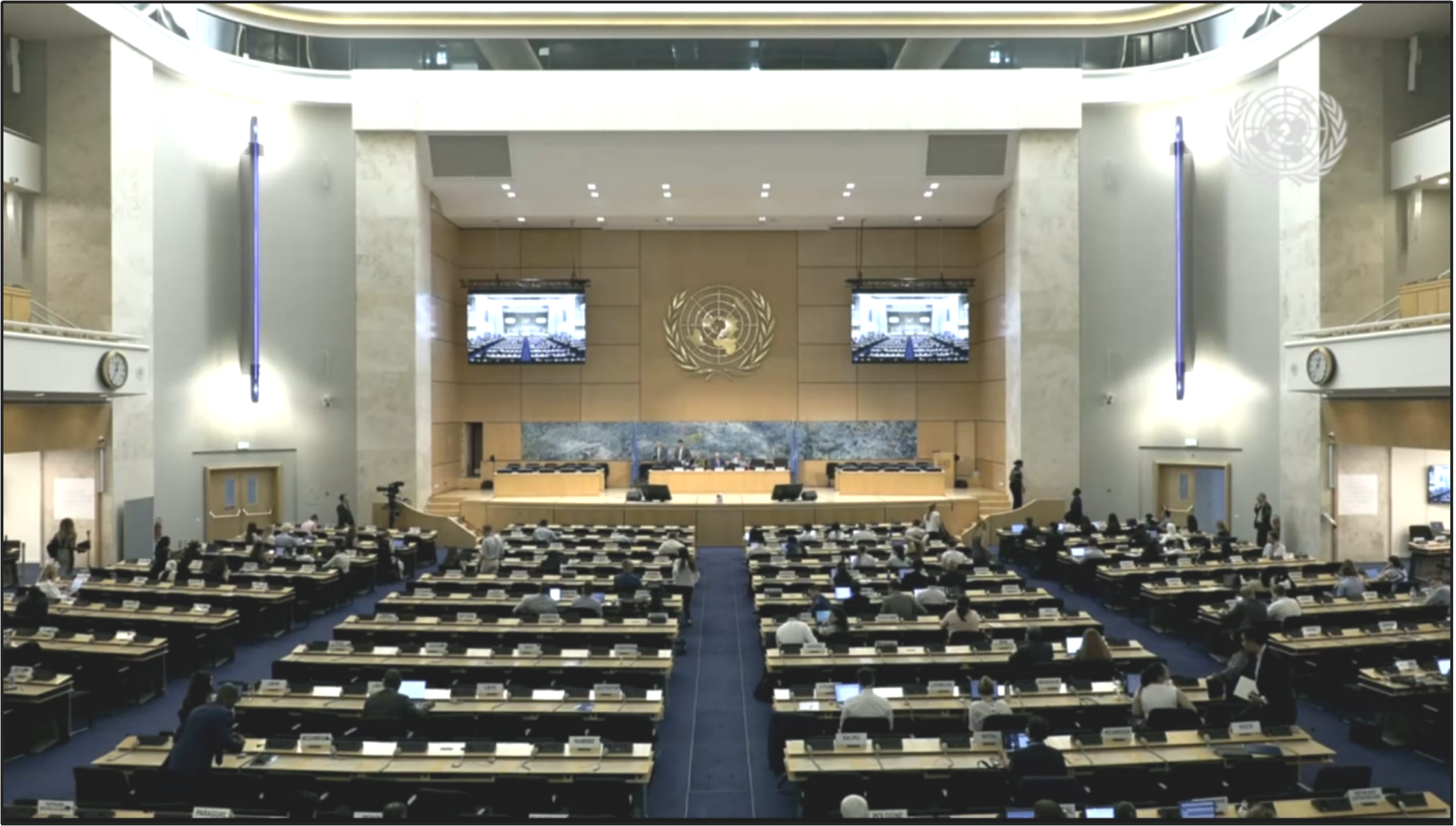
Geneva, 26 June 2026 – Today the Human Rights Council was updated by the Chair-Rapporteur, H.E. Samuel U.B. Saffa Esq., Ambassador and Deputy Permanent Representative of Sierra Leone.
He reported on the outcome of the first session of the Open-Ended Intergovernmental Working Group on strengthening the right to education. Despite global commitments, Ambassador Saffa worried that millions of children lack access to early childhood care and to free primary and secondary education.
The session was attended by 94 Member States, United Nations agencies, civil society organisations, and children. Participants observed that there continued to be barriers to education for all, such as school fees, discriminatory practices, inadequate inclusive services for children with disabilities, conflict and displacement, and endemic poverty.
Five thematic panels highlighted weaknesses in the existing international legal framework, including the lack of firm guarantees for free pre-primary and secondary education. They called for stronger accountability measures and more robust financing mechanisms.
Member States held divergent views on whether a new Optional Protocol to the Convention on the Rights of the Child could be created.
The Chair-Rapporteur said that 28 countries had supported the idea, 19 had engaged constructively but had not fully supported it and six had reservations. In December 2025, a consultation took place during the intersessional period on the recognition of free pre-primary and secondary education as a core obligation under international law.
Ambassador Saffa said the Working Group will meet again from August 31 to September 2, 2026, to discuss draft principles and additional work to build consensus for stronger global protections for the right to education of children.
