

The Better Education for Africa’s Rise (BEAR III) Project has advanced a key component of Sierra Leone’s workforce development strategy by holding a one-day workshop on April 16, 2026, to develop an operational work plan for the newly formed Agriculture Sector Skills Council (SSC). The meeting in Freetown brought together government officials, technical specialists, training providers, private sector representatives, development partners, and youth advocates to discuss practical steps for aligning agricultural training with labour market needs.
Agriculture is a key component of Sierra Leone’s economy, providing significant opportunities for job creation, food security, and inclusive growth. Recognising this, BEAR III has supported the formation of an Agriculture SSC as a mechanism for bringing employers, industry stakeholders, training institutions, and government bodies together in a long-term partnership to ensure that technical and vocational education and training (TVET) meets sectoral demand. The workshop served as a foundational exercise in making that partnership a working reality.
The event began with presentations on BEAR III’s objectives and the SSC’s anticipated role in shaping agricultural skills provision. The session was facilitated by John D. Kamara, National Project Officer for BEAR III, who emphasised the importance of industry-led, competency-based approaches that provide learners with practical skills and increase their employability. Participants then went through a series of focused discussions and technical working groups to identify priority actions and create a draft operational work plan.
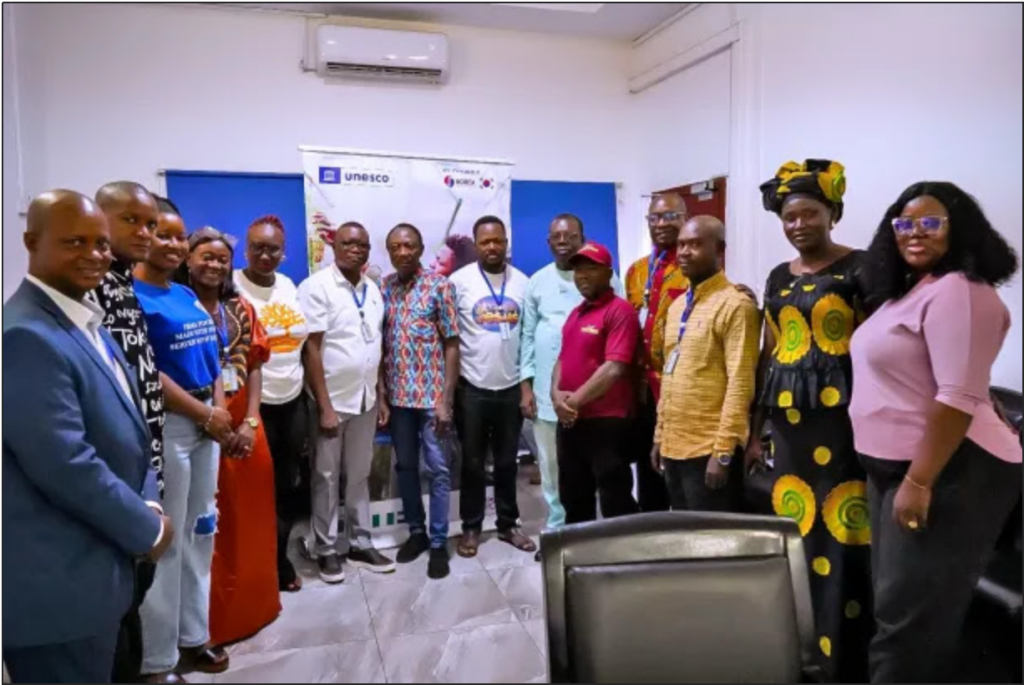
The workshop was attended by a diverse group of stakeholders, including representatives from the Ministry of Technical and Higher Education (MTHE), the Ministry of Agriculture and Food Security (MAFS), the National Council for Technical and Vocational Education (NCTVE), the Tertiary Education Commission (TEC), members of the Sector Skills Council and technical advisors, public and private training institutions, and youth and women involved in agricultural enterprises. This broad participation allowed for a thorough exchange of ideas on the opportunities and constraints that currently affect agricultural training and employment in Sierra Leone.
Workshop discussions focused on several critical issues, including persistent skill gaps across the agricultural value chain, priority occupational and technical competencies required by employers, systemic and institutional challenges in delivering quality training, and opportunities to expand industry partnerships, apprenticeship arrangements, and other forms of work-based learning. These sessions aided the collaborative development of the SSC’s operational work plan.
The draft plan outlines strategic priorities, concrete activities, and an implementation framework to help the Agriculture SSC become operational. Key elements include the development of occupational standards and competency-based curricula that reflect employer needs, clearly defined roles and responsibilities for council members and partner institutions, implementation timelines and milestones, resource requirements and funding mobilisation strategies, and monitoring and evaluation measures to track progress and impact. Participants emphasised mechanisms for long-term employer engagement, practical on-the-job training opportunities, and the inclusion of young women and men in skill development programs.
Following the workshop, the draft operational work plan will be sent to the BEAR III Technical Committee for plenary approval. Feedback from the validation process will be incorporated into a finalised document, after which stakeholders will begin implementation. The council is expected to lead the development and oversight of the sector’s occupational standards, support the implementation of competency-based training, and coordinate collaboration between training providers and employers to provide job-relevant learning pathways.
The workshop resulted in a more unified vision for aligning training with labour market demands, agreed-upon implementation timelines, clarified stakeholder responsibilities, and initial resource mobilisation strategies. The process also improved institutional relationships between ministries, regulatory bodies, training institutions, employers, and development partners, which participants identified as critical to long-term sustainability.
Stakeholders stated that improving the quality and relevance of agricultural training will have a ripple effect on Sierra Leone’s economy, including increased productivity for farms and agribusinesses, improved food security for communities, and more job opportunities for youth and women. The BEAR III Project reaffirmed its commitment to supporting Sierra Leone’s TVET reforms by strengthening partnerships between education providers and industry, improving workforce readiness, and creating pathways to meaningful employment.
The workshop is a significant milestone in the Agriculture Sector Skills Council’s operationalisation. With a draft implementation framework in hand, the next challenge is to move from planning to action—mobilising resources, formalising partnerships, and implementing programs that equip Sierra Leone’s agricultural workforce with the skills required to meet the sector’s changing demands.
