
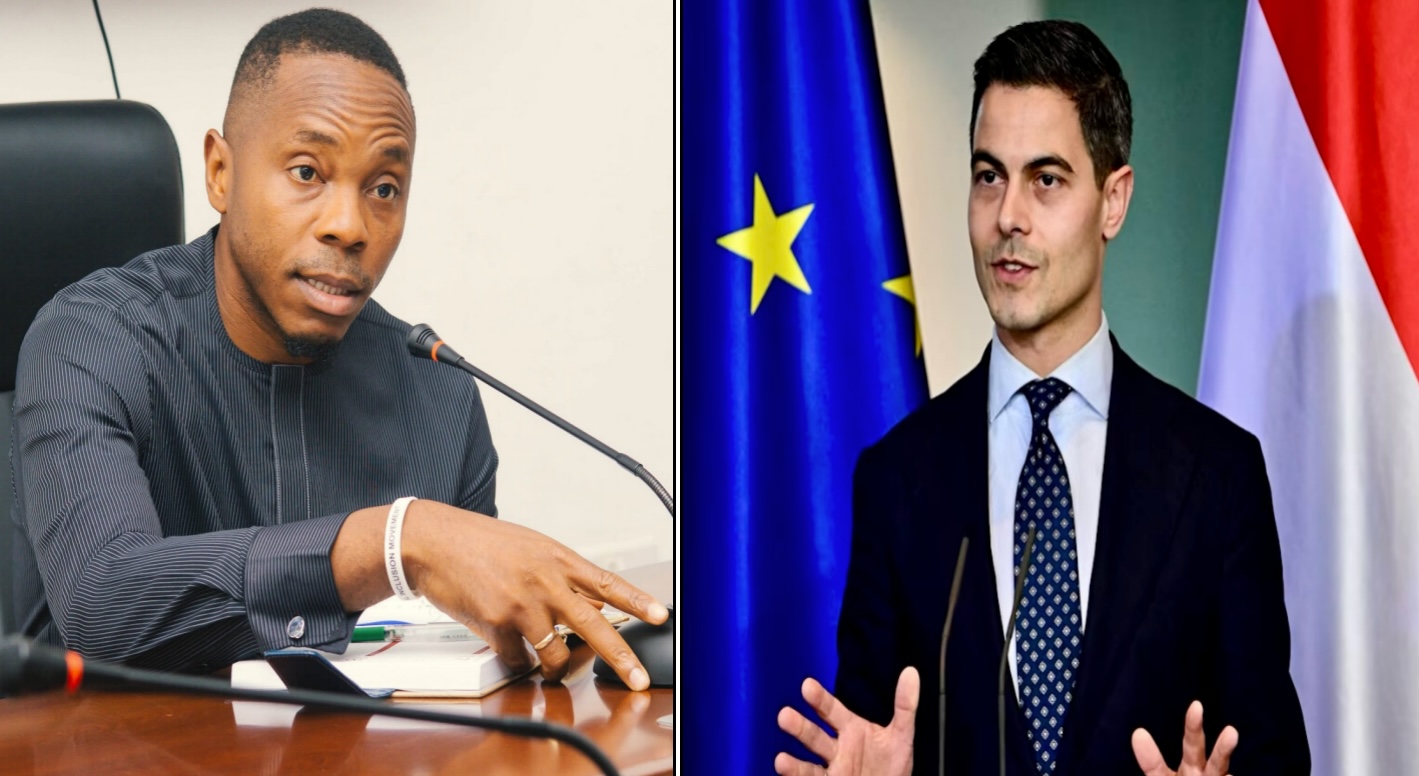
Sierra Leone's Chief Minister, David Moinina Sengeh, Rob Jetten, Prime Minister, Netherlands.Sierra Leone’s Chief Minister, David Moinina Sengeh, has publicly pressed the Netherlands and other EU partners for more concrete cooperation in combating transnational organised crime, claiming that the country’s economic and maritime vulnerabilities are “weaponised” when partners fail to provide critical support.
In a recent article, Dr Sengeh expressed frustration that multilateral dialogues have not always resulted in the necessary information-sharing, institutional strengthening, and operational assistance for Sierra Leone to secure its borders and protect its people. Sengeh emphasised that Sierra Leone is actively pursuing national development and is committed to reducing illicit trafficking and organised crime, but that the country’s geography and limited naval capacity present real and unique challenges. Sierra Leone, one of 16 Gulf of Guinea coastal states, has extensive territorial waters that make maritime policing challenging without long-range assets, according to Dr Sengeh.
“Sierra Leone is a beautiful country. Sierra Leone is a safe country. Sierra Leone is a low-income country with limited naval resources, making it difficult to monitor traffickers’ channels.
To close those gaps, Sengeh argued that modern technological and operational support, rather than blanket reductions in development cooperation, are required. Sierra Leone’s ability to combat drug trafficking and illegal fishing would benefit from tangible capabilities such as drones, extended-range naval assets capable of operating 200 nautical miles offshore, and a cutting-edge maritime communications and monitoring centre. He dismissed calls to withdraw or repurpose EU investments in health, education, and infrastructure as misguided and neocolonial, claiming that penalising development aid to prove a political point would harm the country’s progress and dignity.
During the 2025 EU-Sierra Leone Political Partnership Dialogue, chaired by President Julius Maada Bio, both parties agreed to intensify collaboration against organised crime, illicit drug trafficking, and transnational criminal networks.
The Chief Minister recalled these commitments. The EU has prioritised coordinated action, institutional strengthening, and information sharing to address threats to security, public health, governance, and regional stability. He emphasised the importance of putting these pledges into action.
Sengeh emphasised that true collaboration cannot be achieved without adequate information sharing, institutional capacity building, and selective application of the rule of law among EU member states, including the Netherlands. To move beyond rhetoric, he stated that the Sierra Leone government has invited senior representatives from EU member states to Freetown to discuss operational cooperation, intelligence exchanges, and the types of assistance that will make a significant difference.
Sengeh emphasised that, in addition to criticising headlines and social media commentary, combating transnational organised crime necessitates long-term, practical partnerships. He made it clear that Sierra Leone is ready to receive intelligence from the Netherlands as well as tangible assistance in developing maritime surveillance and enforcement capacity. The Chief Minister framed the appeal as a request for reciprocal, targeted actions that align with prior commitments and Sierra Leone and its European partners’ shared interests in regional stability and the rule of law, rather than a plea for charity.
Sierra Leone is advocating for a shift from symbolic gestures to concrete measures, such as increased intelligence sharing, targeted technological and naval assistance, and ongoing institutional support, to ensure that efforts to combat drug trafficking and organised crime are effective, equitable, and mutually respectful.
