
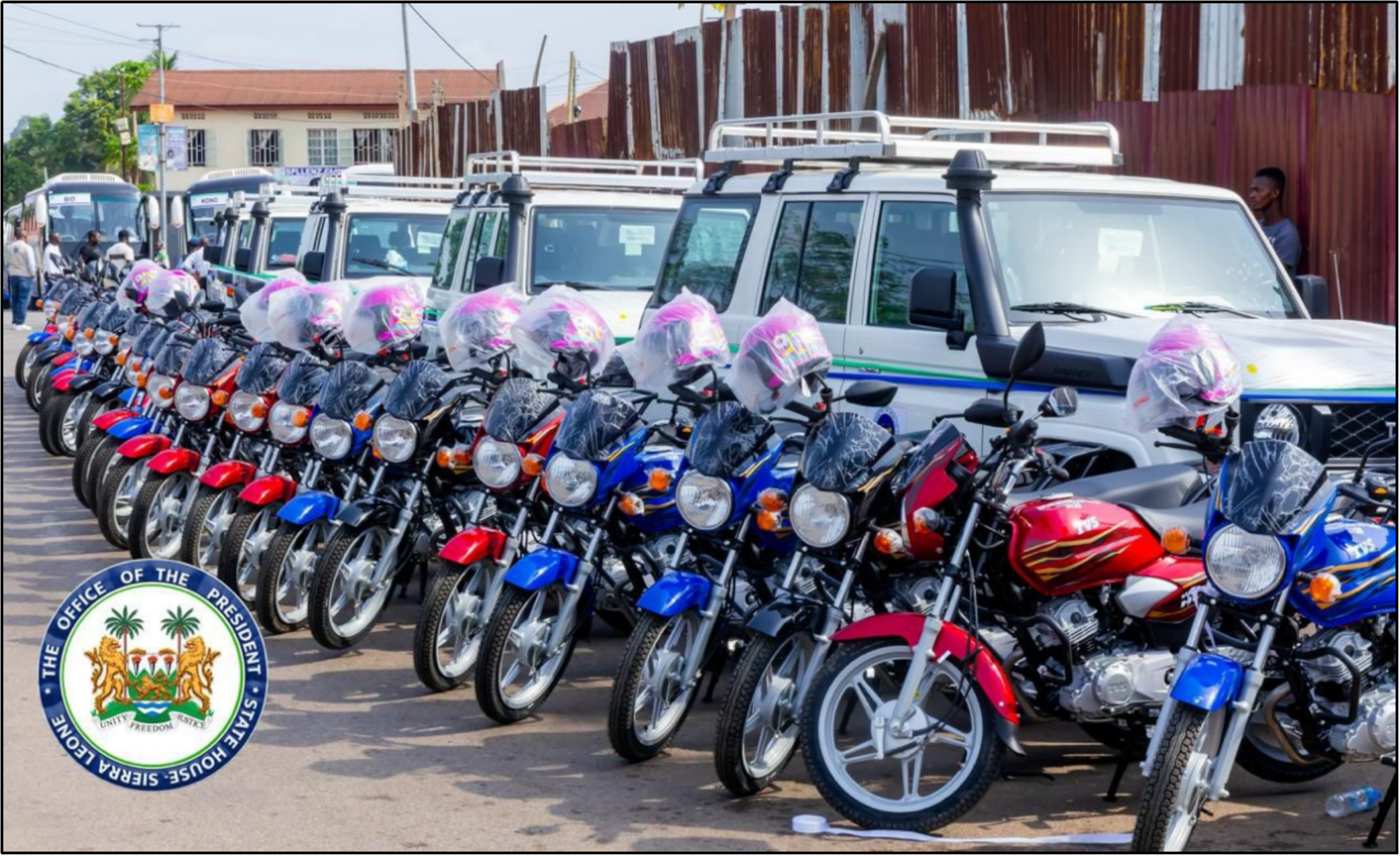
President Julius Maada Bio has officially commissioned a large fleet of vehicles and motorcycles aimed at improving healthcare delivery throughout Sierra Leone, signalling a major government effort to close long-standing transportation gaps that prevent access to services in remote and underserved areas. The newly unveiled fleet consists of 10 buses, 10 utility vehicles, one fully equipped mobile maintenance workshop vehicle, and 450 motorcycles. According to government sources, the deployment aims to improve health personnel mobility and the health system’s ability to reach previously difficult-to-serve populations.
President Bio described the initiative as a historic milestone, stating that it is the first large-scale, comprehensive mobility intervention of its kind in the country’s health sector, fully funded by the Sierra Leonean government with additional support from President Bio’s friends. He emphasised that dependable transportation is an essential component of an effective health system, allowing for faster emergency response times, expanded outreach campaigns, routine supervisory visits, and the subsequent delivery of critical services to remote communities.
The commissioning is part of the administration’s larger “300 Days of Activism” agenda, which includes lofty goals like zero preventable deaths, zero preventable infant deaths, and zero zero-dose children — the latter referring to children who have not received any routine vaccinations. According to the President, improving logistics and mobility is critical to achieving these goals because it allows health workers to conduct immunisation campaigns, maternal and child health outreach, and disease surveillance more efficiently and consistently.
“This intervention is not just about vehicles; it is about saving lives, increasing access, and providing quality healthcare where it is most needed,” President Bio stated, framing the fleet as an investment in both service delivery and human well-being. He emphasised that the move also fulfils a key campaign promise and is consistent with the administration’s human capital development agenda, which prioritises investments in health, education, and social services to drive national growth.
In addition to the transportation initiative, the President applauded the Ministry of Health’s plans to build housing for mid-level nurses and midwives in Bo. He described such measures as important for improving working conditions, increasing staff morale, and retaining skilled health personnel—all of which contribute directly to long-term improvements in service quality and access.
President Bio also used the occasion to highlight Sierra Leone’s growing ability to drive its own development, emphasising that the country has the expertise and human resources to strengthen its health-care system without relying too heavily on external assistance. He urged healthcare workers to maintain professionalism, encourage collaboration across the sector, and work together to provide efficient and equitable services.
In his closing remarks, the President reaffirmed the government’s commitment to implementing impactful and long-term initiatives that improve service delivery and citizens’ overall well-being, and he urged all Sierra Leoneans to work together and share responsibility in building a resilient healthcare system.
