
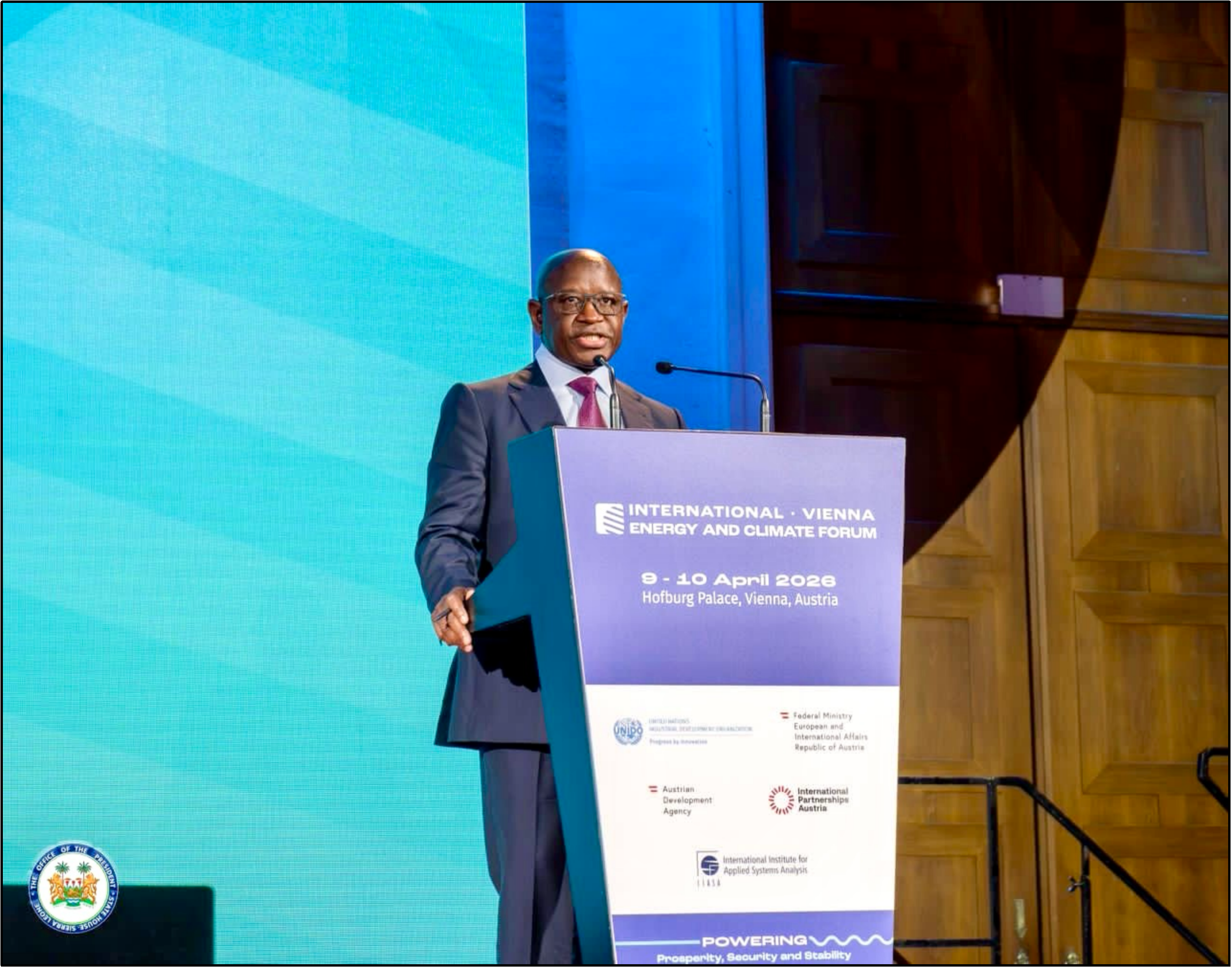
9 April 2026 — During his keynote address at the International Vienna Climate and Energy Conference, President Dr Julius Maada Bio called for increased global investment, stronger regional integration, and a decisive shift from promises to practical implementation of climate and energy commitments. Speaking as Sierra Leone’s head of state and Chairman of the ECOWAS Authority of Heads of State and Government, he urged international partners and regional leaders to prioritise projects that provide tangible socioeconomic benefits—value creation, employment, and improved livelihoods—over pledges that remain on paper.
President Bio emphasised that prosperity, security, and stability are mutually reinforcing goals, and argued that Africa must capture a greater share of the value chain associated with the global energy transition. “Africa will not be a warehouse for the global energy transition. “Our continent will be a centre of value creation and industrial growth,” he declared, urging investment policies that promote downstream processing and industrialisation rather than simply supplying raw materials.
At the regional level, the President discussed ECOWAS’ strategy for repositioning West Africa as an integrated and investment-ready economic bloc. He stated that policy alignment, infrastructure connectivity, and the creation of coordinated development corridors are critical to attracting private capital and enabling large-scale industrial projects. He highlighted the Mano River Union, which includes Sierra Leone, Liberia, Guinea, and Côte d’Ivoire, and described the potential for integrated industrial corridors that connect mining, energy generation, transportation networks, and port facilities. Those corridors, he argued, could support high-value industries such as aluminium refining and steelmaking, retaining more of the subregion’s economic benefits and creating a wide range of job opportunities.
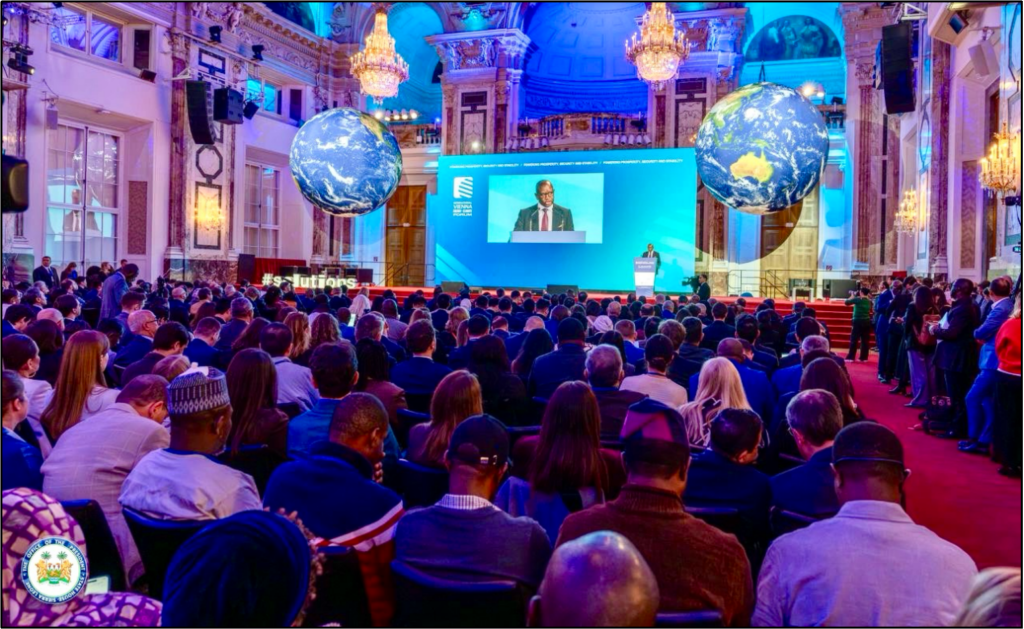
On the national front, President Bio reaffirmed Sierra Leone’s commitment to transforming its energy sector through the Mission 300 initiative, which the World Bank and the African Development Bank support. He announced the $2.2 billion Energy Compact, which aims to increase electricity access, accelerate clean energy deployment, and encourage private-sector participation. The compact establishes ambitious goals, including increasing electricity access from 36% today to 78% by 2030, expanding access to clean cooking solutions, and ensuring that every community benefits from a combination of grid extension and off-grid systems.
His address focused on the urgent need to make climate finance more accessible and affordable. President Bio warned that many technically viable and economically sound projects in Africa fail to reach financial close due to high capital costs and perceived risks, which deter investors. He urged the international community to change financing instruments, strengthen risk-sharing mechanisms, and become long-term co-investors rather than short-term funders. “Climate finance must become more accessible, affordable, and responsive to the needs of developing economies,” he emphasised.
Looking ahead, the President announced that ECOWAS will assemble and deliver a pipeline of bankable cross-border energy and industrial projects in the coming year and will host an upcoming West Africa Integration and Investment Summit focused on execution. He concluded by inviting global partners to join as co-investors in long-term, value-driven projects that will contribute to the region’s inclusive and prosperous energy transition.
