
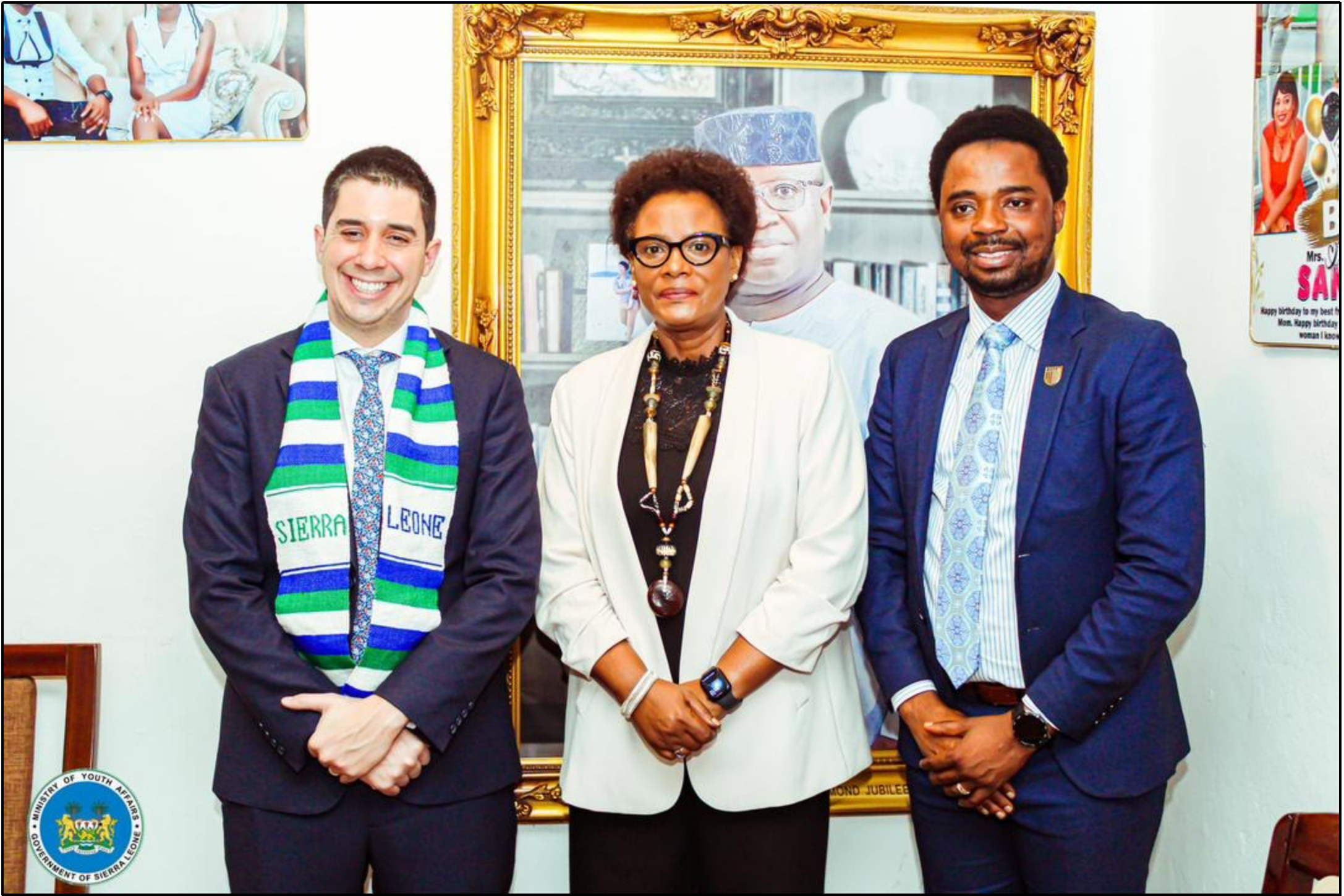
Ibrahim Sannoh, Minister of Youth Affairs, welcomed Dr Felipe Paullier, UN Assistant Secretary-General for Youth Affairs and Head of the UN Youth Office, to the Ministry’s Scan Drive office in Freetown on Tuesday. Dr Paullier, accompanied by UN Resident Coordinator Seraphine Wakana, paid his first official visit to Sierra Leone, which both sides described as an important step toward deepening cooperation on youth development and policy reform.
In a brief but symbolic ceremony, Minister Sannoh presented Dr Paullier with a Plaque of Welcome and a national sash in Sierra Leone’s green, white, and blue colours, recognising the UN’s partnership and the government’s dedication to advancing youth-focused initiatives. The meeting allowed the Minister to brief the UN official on recent national efforts to improve opportunities for young people throughout the country.
Minister Sannoh discussed the status of the country’s first Youth Development Act, which is currently being developed and aims to provide a legislative framework for coordinated youth programming as well as long-term investment in youth skills, participation, and welfare. He also described reforms aimed at putting women at the centre of youth empowerment strategies, emphasising the importance of President Julius Maada Bio’s policy of ensuring 30% female representation in public bodies. That policy, based on the Gender Empowerment and Women’s Empowerment (GEWE) framework, was presented as a critical mechanism for promoting inclusive governance and increasing young women’s access to leadership and decision-making positions.
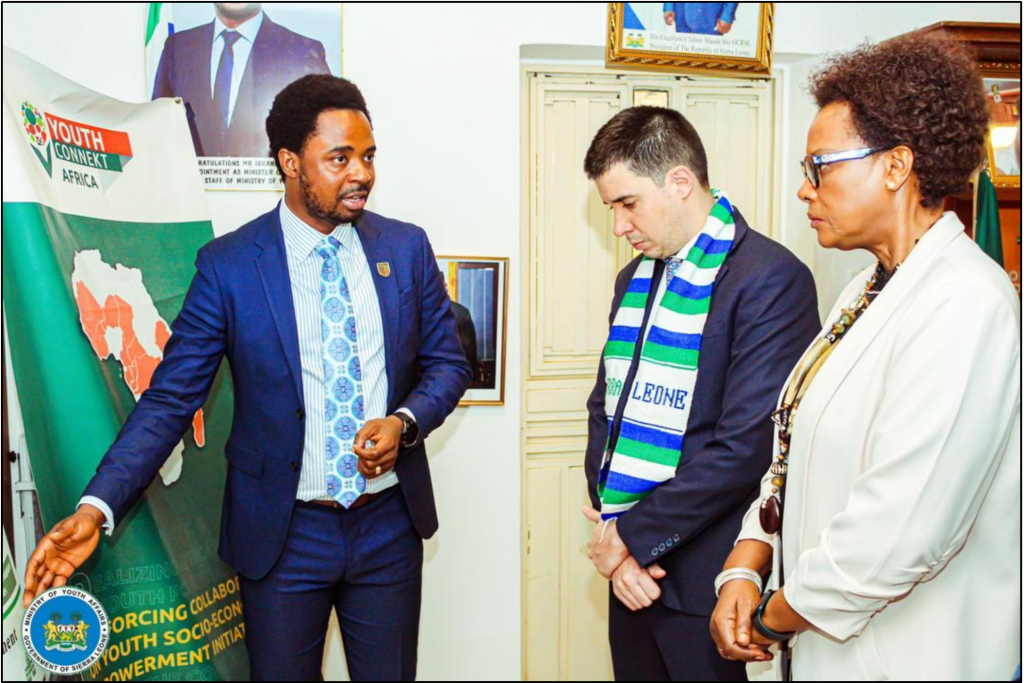
During the briefing, Minister Sannoh formally handed over the newly completed Status of Youth Report, which provides a comprehensive assessment of the conditions, opportunities, and challenges that Sierra Leone’s youth face. The report aims to inform future policy design, programming priorities, and collaborations between national institutions and international donors.
Dr Paullier praised Sierra Leone’s leadership on youth issues, congratulating President Bio and the Ministry for prioritising youth concerns on national and international agendas. He referred to the visit as “a necessary engagement,” highlighting the country’s growing reputation for progressive, youth-focused policymaking. Dr Paullier praised the Status of Youth Report as a valuable road map for both the government and development partners, and reaffirmed the UN’s commitment to assisting Sierra Leone with governance, education, innovation, and economic empowerment initiatives for youth.
Both sides emphasised that the visit is a significant step toward closer collaboration, with the UN ready to help implement national priorities that promote inclusive, forward-thinking opportunities for the country’s youth.
