

Sierra Leone has been named a founding member of the newly formed Group of Friends for the Protection of Humanitarian Personnel, a United Nations-backed diplomatic initiative designed to strengthen global efforts to protect humanitarian workers working in conflict zones and emergencies.
The Group was officially launched last week at an event co-chaired by Australia and Jordan at Geneva’s Palais des Nations. The launch brought together a broad, cross-regional coalition of UN Member States and humanitarian organisations in response to a concerning increase in attacks on aid workers around the world.
Ambassador Dr Lansana Gberie, Sierra Leone’s Permanent Representative to the United Nations in Geneva, represented President Dr Julius Maada Bio and reiterated his country’s commitment to protecting humanitarian personnel who provide life-saving assistance in some of the world’s most dangerous environments. Ambassador Gberie, drawing on Sierra Leone’s own experience with conflict, recovery, and peacebuilding, stated that the country recognises the critical role that humanitarian actors play in saving lives and restoring hope.
“We have a moral responsibility to ensure their safety as they carry out their vital work,” he said, highlighting Sierra Leone’s active participation in shaping the Political Declaration for the Protection of Humanitarian Personnel as well as the newly formed Group of Friends’ advisory mechanisms.
The Group of Friends is based on a Political Declaration adopted by the UN General Assembly in September 2025. That Declaration resulted from a year-long process initiated in 2024 by a cross-regional Ministerial Group comprised of Australia, Brazil, Colombia, Indonesia, Japan, Jordan, Sierra Leone, Switzerland, and the United Kingdom. It represents a concerted effort to translate political commitments into concrete, actionable steps to improve humanitarian staff protection, accountability, and operational security.
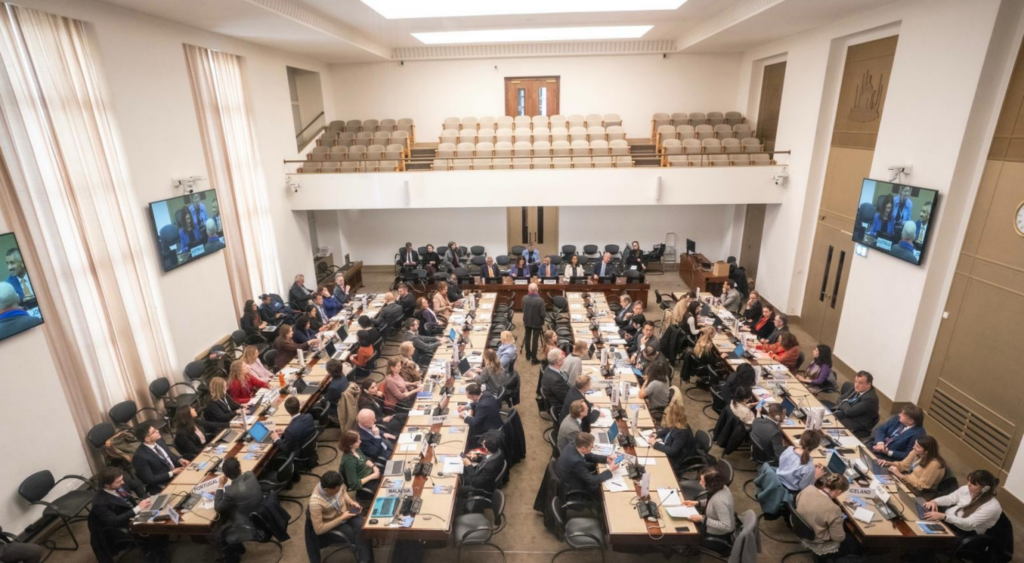
The Declaration has so far received 110 signatures, indicating a growing international consensus that attacks on humanitarian personnel not only violate international humanitarian law (IHL), but also undermine civilian protection and severely limit humanitarian access. Delegations at the Geneva launch repeatedly raised the alarm about a record number of attacks and deaths among humanitarian workers in recent years.
Speakers at the event emphasised the critical need to bridge the gap between legal protections under IHL and the harsh realities faced by aid workers on the ground. Local and national humanitarian workers, who account for the majority of casualties and face increased risks on the ground, were particularly concerned.
Humanitarian organisations such as the International Federation of Red Cross and Red Crescent Societies (IFRC), the International Committee of the Red Cross (ICRC), and the United Nations Office for the Coordination of Humanitarian Affairs (OCHA) provided testimony on operational challenges and access constraints.
And practical protection requirements. The testimonies highlighted the need for more robust measures that can be tailored to the operational contexts in which humanitarian personnel work.
Ambassador Gberie emphasised Sierra Leone’s substantive leadership role, both as a member of the core Ministerial Group that drafted the Declaration and as a member of the Advisory Group that now guides the Group of Friends’ work. He also pledged to promote the Declaration’s universality throughout Africa.
The launch also announced the creation of a Secretariat to support coordination and follow-up, which will be hosted by the IFRC in preparation for the Declaration’s first anniversary in 2026. The Group of Friends is a significant milestone in international humanitarian diplomacy, and Sierra Leone’s participation demonstrates the country’s continued commitment to multilateral action, human dignity protection, and the reinforcement of principled humanitarian response so that humanitarian personnel can work safely and effectively wherever they are needed.
