
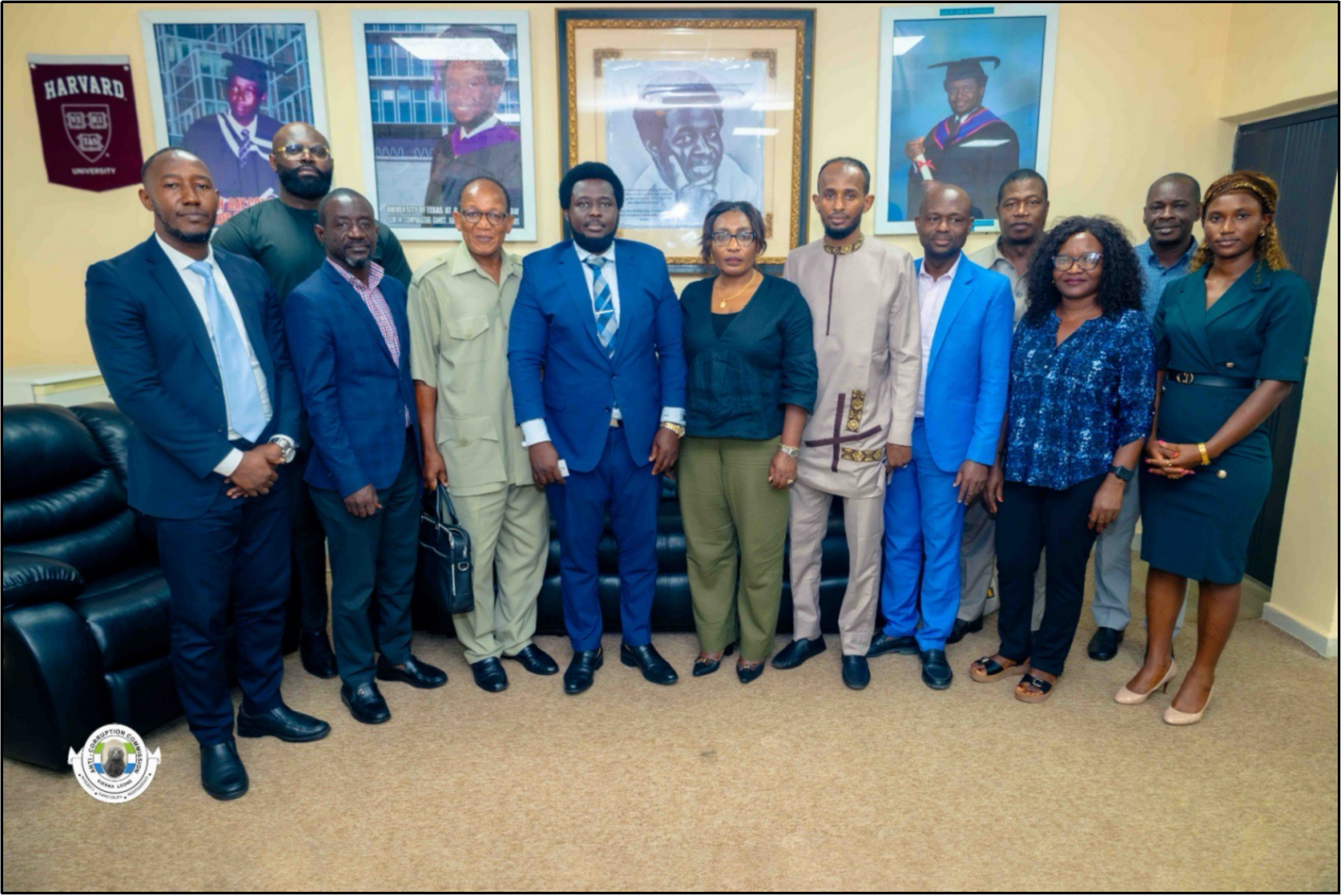
The Anti-Corruption Commission (ACC) of Sierra Leone hosted a delegation from the African Peer Review Mechanism (APRM) for a substantive discussion on the recently launched Second-Generation Country Review Report.
The meeting, held in the Commissioner’s Conference Room at Tower Hill in Freetown, was intended to strengthen mutual understanding, facilitate experience sharing, and allow the APRM team to investigate the ACC’s mandate, operations, and institutional performance as part of the national review process.
Dr Rachel Mukamunana, Director of Country Reviews at the APRM delegation from South Africa, explained that the APRM is a self-monitoring instrument established by the African Union to promote good governance and socio-economic development among member states. The Second-Generation Review prioritises institutional performance, transparency, accountability, fiscal and monetary policy, democratic governance, and key national development indicators. Dr Mukamunana emphasised the importance of involving the ACC in the review process. The delegation was directed by President Julius Maada Bio to identify gaps and gather evidence-based findings for the report.
The APRM team asked detailed questions about the ACC’s legal and institutional framework, operational structure, conviction rates, mining corruption prevention mechanisms, and the use of technology in anti-corruption efforts. The line of questioning reflected the APRM’s broader mandate to assess governance systems and identify practical ways to strengthen institutional capacity and accountability.
In his response, ACC Commissioner Francis Ben Kaifala Esq. welcomed the delegation and described the interaction as productive. He spoke candidly about the Commission’s history, recalling its status prior to 2018, when it was frequently referred to as a “toothless bulldog” with limited national and international credibility. Commissioner Kaifala credited legislative and structural reforms, particularly the Anti-Corruption Act of 2008 and its 2019 amendment, for significantly improving the ACC’s profile and effectiveness. These reforms strengthened the Commission’s powers and operational standing.
Commissioner Kaifala emphasised prevention as an essential component of the ACC’s mandate. He stated that, despite limited staffing, the Commission prioritises preventive work through its Prevention Department, which works with Ministries, Departments, and Agencies (MDAs) to strengthen systems and close loopholes that can lead to corruption. He emphasised the importance of strong laws, clear institutional frameworks, sustained presidential and political will, and active citizen engagement in reducing corruption in Sierra Leone and across Africa.
At the same time, Commissioner Kaifala recognised the ongoing resource and capacity challenges. He cited insufficient funding, a lack of vehicles, and a broader need for institutional strengthening as factors impeding the ACC’s ability to operate at full capacity. The Commission has begun adopting digital tools, such as the assets declaration system, but full digital transformation will require more resources and ongoing support.
Commissioner Ben Kaifala urged government authorities and development partners to prioritise investment in anti-corruption institutions and systems. He emphasised that progress relies on adequate resourcing, technical support, and a shared commitment to reform. The ACC-APRM engagement will inform the Second-Generation Country Review’s recommendations to improve governance and advance Sierra Leone’s national development goals.
