
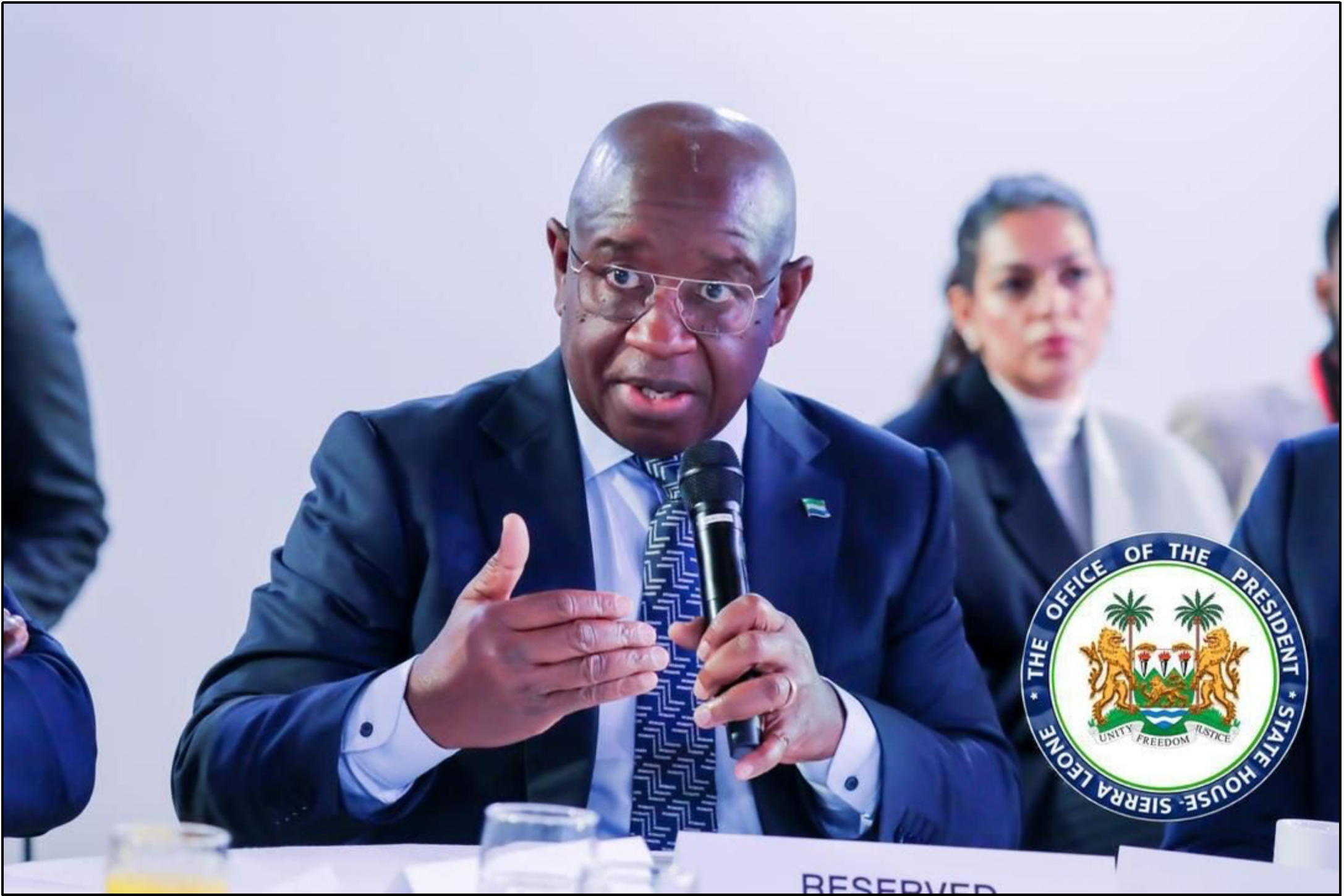
His Excellency, President Dr Julius Maada Bio, has highlighted Sierra Leone’s emergence as a continental trade reform leader, announcing the country’s historic achievement as the first to complete and publish its National AfCFTA Readiness Assessment and Schedule of Commitments, as well as making a compelling case for investors to partner with Sierra Leone’s growing digital and industrial economies.
On Wednesday, January 21, 2026, President Bio spoke as Co-Chair of the Forum Friends of the AfCFTA Breakfast Meeting on the margins of the World Economic Forum (WEF) Davos 2026. He described the milestone as a product of bold national leadership forged through years of recovery from civil war, the Ebola epidemic, and global economic shocks.
The President stated that, while the achievement was historic, Sierra Leone did not seek to stand alone, but rather to demonstrate what is possible when African countries view the AfCFTA as a blueprint for shared prosperity rather than a trade agreement. He emphasised that Sierra Leone’s readiness process went beyond compliance, serving instead as a data-driven national growth strategy that clearly identifies strengths, bottlenecks, and investment opportunities.
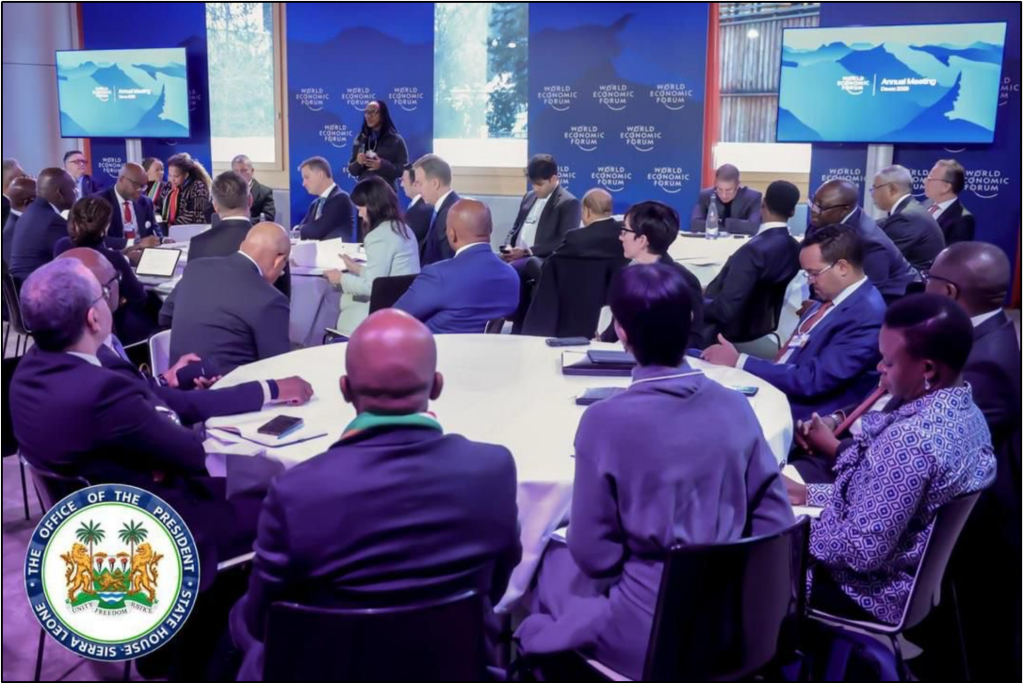
On digital trade, President Bio emphasised Sierra Leone’s commitment to laying the digital groundwork for the AfCFTA to succeed. He explained that the Readiness Assessment revealed the importance of transitioning away from paper-based systems, prompting reforms to streamline customs through digital platforms, lower transaction costs, and align digital trade regulations with those of other African Union member states. These measures, he stated, are creating a “digital highway” that allows Sierra Leonean SMEs to easily access regional and continental markets. Addressing industrial capacity, President Bio reaffirmed his government’s emphasis on value addition rather than raw commodity exports. He stated that Sierra Leone is prioritising sectors such as agribusiness and light manufacturing, which are supported by the establishment of Special Economic Zones and industrial parks with ready infrastructure and fiscal incentives.
He added that targeted investments in skill development and technical training ensure that the country’s workforce is prepared for industrialised production and resilient supply chains. The President emphasised the importance of the private sector in driving trade under the AfCFTA. He described the Readiness Assessment as a transparent prospectus for investors that reduces uncertainty while outlining policy reforms and opportunities.
The government is actively de-risking investments to attract both domestic and foreign capital by maintaining public-private dialogue, improving access to trade finance, and structuring bankable, data-backed projects. In his closing remarks, President Bio positioned Sierra Leone’s proactive AfCFTA approach as a model for the continent, emphasising that the country has successfully transitioned from potential to tangible economic activity. He invited partners and investors to join Sierra Leone’s transformation journey, declaring that the country is open for business, with real opportunities and a clear roadmap for growth.
