
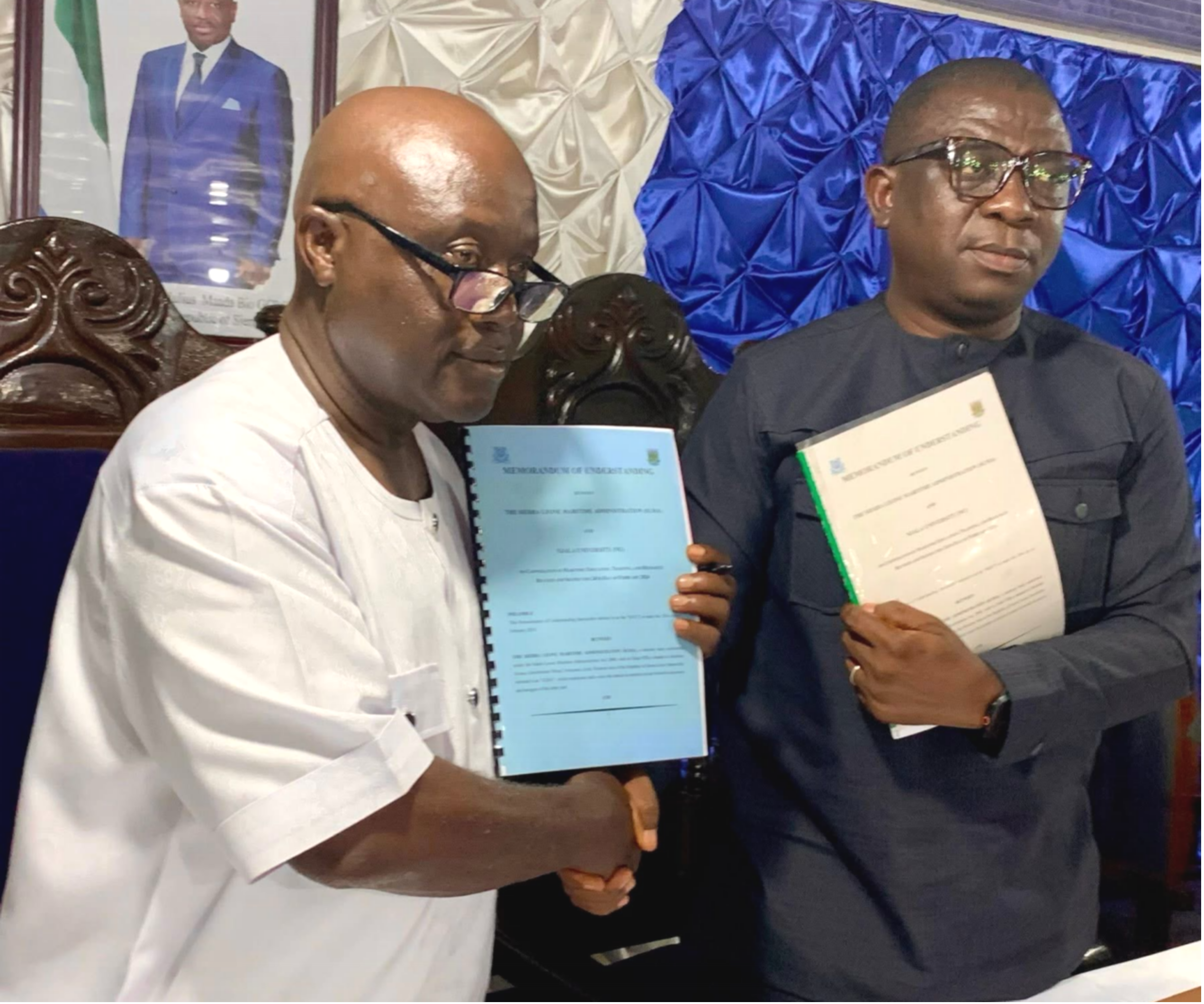
Njala University’s Bonthe Campus and the Sierra Leone Maritime Administration (SLMA) have formed a formal partnership to strengthen maritime education, applied research, and professional training throughout the country. The Memorandum of Understanding (MoU), signed on February 24, 2026, at the Njala Campus Secretariat, establishes a framework for long-term collaboration between the coastal university and the national maritime regulator to produce certified seafarers, improve research on maritime safety and governance, and align training with international standards.
The signing ceremony was presided over by Emmanuel J. Momoh Esq., Director of Higher Education at the Ministry of Technical and Higher Education (MTHE), and attendees included senior university officials, government representatives, maritime experts, staff, and students. The event emphasised a shared commitment to human capital development and to transforming education to meet industry needs and regulatory requirements better better.
“Today is more than just signing a document. “It is about developing relationships,” said Professor Bashiru Koroma, Vice Chancellor and Principal of Njala University. He described the MoU as more than just a formal agreement, emphasising that Sierra Leone’s coastal geography offers both opportunities and responsibilities. Professor Koroma stated that the Bonthe Campus is strategically located to deliver marine-related programmes and address the specific challenges and opportunities faced by coastal communities. The collaboration, he added, will provide students with practical, hands-on learning experiences while allowing the Maritime Administration to draw on academic research and creative thinking.
The agreement outlines cooperation in several priority areas. Structured internships, sea-time placements, and industrial attachments will place students in operational maritime environments; joint research initiatives focused on maritime safety, port administration, marine environmental protection, and maritime governance; and ongoing professional development and certification programs to upskill maritime personnel. The goal is to bridge the gap between theory and practice so that graduates can meet industry and international standards.
Emmanuel J. Momoh of MTHE described the agreement as a strategic milestone in maritime education. He stated that the collaboration demonstrates a national commitment to ensuring that academic programs are responsive to industry demands, regulatory standards, and international maritime conventions. “The maritime sector remains a strategic pillar of Sierra Leone’s economy,” he said, emphasizing the importance of structured collaboration between academia and industry in developing a skilled workforce capable of ensuring maritime safety, regulatory compliance, and global competitiveness.
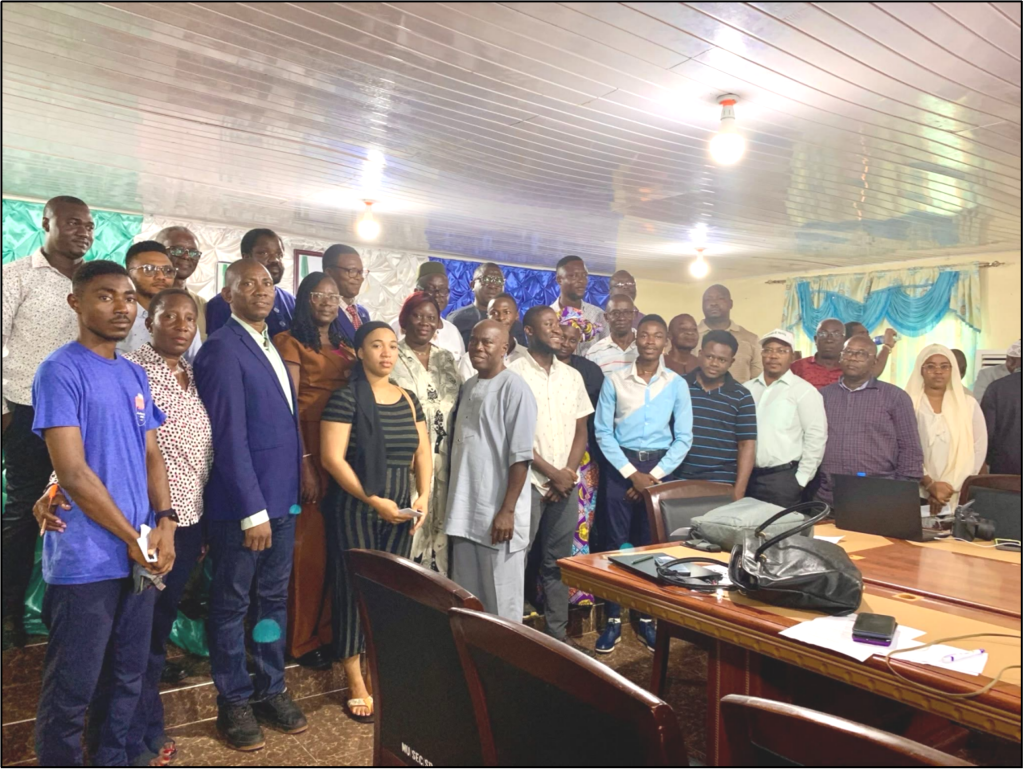
Dr. Daniel Kaitibi, Executive Director of the SLMA, emphasized both the scope of opportunity and the current capacity gap. He stated that over 600 vessels currently fly Sierra Leone’s flag, each of which must be manned and maintained by qualified personnel. While the country has the legal right to place Sierra Leoneans on these vessels, Dr. Kaitibi claims that a lack of certified local training institutions has limited the country’s ability to exercise that right. The MoU, he said, is an important step toward building domestic capacity to train and certify seafarers and maritime professionals in accordance with international standards.
Dr. Kaitibi also used the occasion to highlight the Maritime Administration’s ongoing efforts to improve maritime governance and security. He mentioned collaboration with international partners to review and domesticate maritime conventions, plans to set up rescue coordination centers, and initiatives to improve maritime security infrastructure. Such measures, he argued, would supplement education and training by improving regulatory frameworks, emergency response capabilities, and the operational environment in which maritime professionals work.
SLMA’s Director of Research, Emmanuel P. Richards, emphasized the partnership’s technical and academic dimensions. He stated that the collaboration will focus on developing accredited maritime education and training programs that adhere to the International Maritime Organization’s (IMO) Standards of Training, Certification, and Watchkeeping (STCW). Richards is confident that combining Njala University’s academic resources with SLMA’s regulatory mandate will increase capacity for seafarers and maritime professionals while also encouraging applied research on safety and environmental sustainability.
Registrar Dr. Muneer Jalloh reaffirmed Njala University’s commitment to transformative education that promotes national development. He stated that greater participation in research, training, and policy dialogue will provide students with practical skills and professional confidence, increasing their competitiveness in both national and international labor markets.
Njala’s student leaders enthusiastically welcomed the partnership. Ahmed Banton Koroma, President of the Students’ Union at Njala Campus, described the MoU as a critical link between academia and industry. He stated that students are particularly excited about opportunities for internships, sea-time placements, and career paths that will provide real-world experience in nautical sciences, shipping and logistics, maritime law, and port management.
The MoU thus represents a concerted institutional effort to align Sierra Leone’s academic capabilities with the operational and regulatory requirements of the growing maritime sector. By leveraging the Bonthe Campus’s coastal advantage and the SLMA’s role as the national maritime regulator, the partnership aims to increase access to certified training, support evidence-based policy and research, and create tangible career pathways for Sierra Leoneans into a sector that the government and stakeholders see as critical to national economic development.
