

Honourable Justice Kudirat Motonmori Olatokunbo Kekere-Ekun, Chief Justice of Nigeria, met with His Lordship Justice Komba Kamanda, Chief Justice of Sierra Leone, and his delegation at the Supreme Court Building in Abuja’s Three Arms Zone, to discuss institutional exchange and mutual learning.
Chief Justice Kekere-Ekun welcomed the Sierra Leonean delegation and described the visit as an honour and an important opportunity for knowledge sharing, recalling that she first met Justice Kamanda in Banjul, The Gambia, during the recently concluded 20th Triennial Commonwealth Magistrates’ and Judges’ Association conference. “You are very welcome. I am confident that your visit will be fruitful in terms of knowledge sharing,” she said as she introduced members of the Nigerian bench and senior judicial officials, including the Chief Judge of the Federal High Court, Honourable Justice John T. Tsoho, who was part of the hosting team.
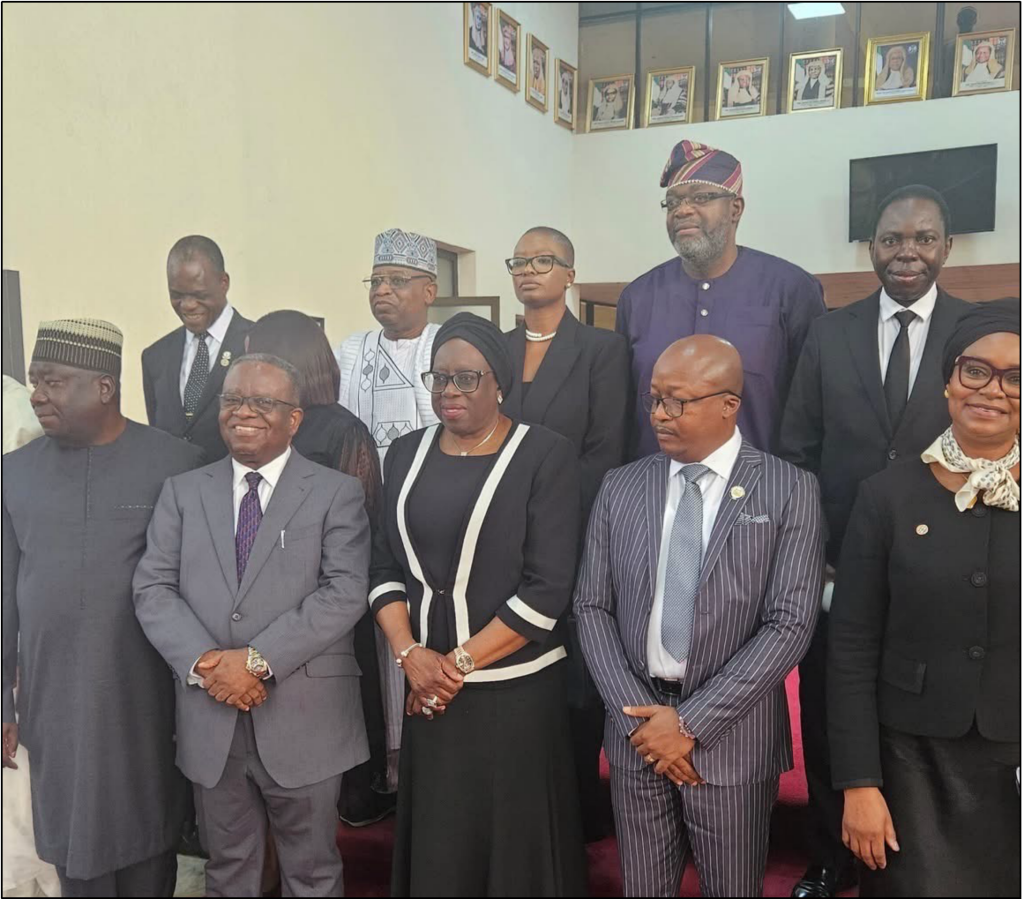
During the engagement, Chief Justice Kekere-Ekun gave an overview of the Supreme Court’s composition and administrative arrangements. She noted that the Court currently has 21 Justices, one of whom has recently retired, and confirmed that steps are being taken to fill the vacancy. She also outlined the retirement framework for Nigerian Supreme Court Justices, stating that compulsory retirement is at age 70 and voluntary retirement begins at age 65.
The emphasis was placed on improving bilateral judicial cooperation. Chief Justice Kekere-Ekun expressed her support for increased cooperation between the two judiciaries and her willingness to intervene in cases where Nigeria’s experience could help Sierra Leone. The meeting was part of a larger effort to share best practices in judicial administration, training, case management and institutional governance.
In his remarks, Chief Justice Komba Kamanda thanked the Nigerian judiciary for their warm welcome and hospitality. He explained that the visit was a judicial study tour designed to learn from Nigeria’s experiences, particularly how it has dealt with various judicial and administrative challenges. Kamanda described Sierra Leone’s judiciary as being relatively small in size, noting that judges there currently retire at age 65.
He stated that he is considering advocating for an increase to age 70 as part of a broader constitutional review by the Sierra Leone government. The Sierra Leonean Chief Justice praised the National Judicial Institute of Nigeria for its infrastructure and administrative framework, emphasising that continuous professional development is a key component of his administration. He reaffirmed his commitment to full operationalisation. He concluded by thanking Chief Justice Kekere-Ekun for the warm reception and expressed willingness to collaborate.
