
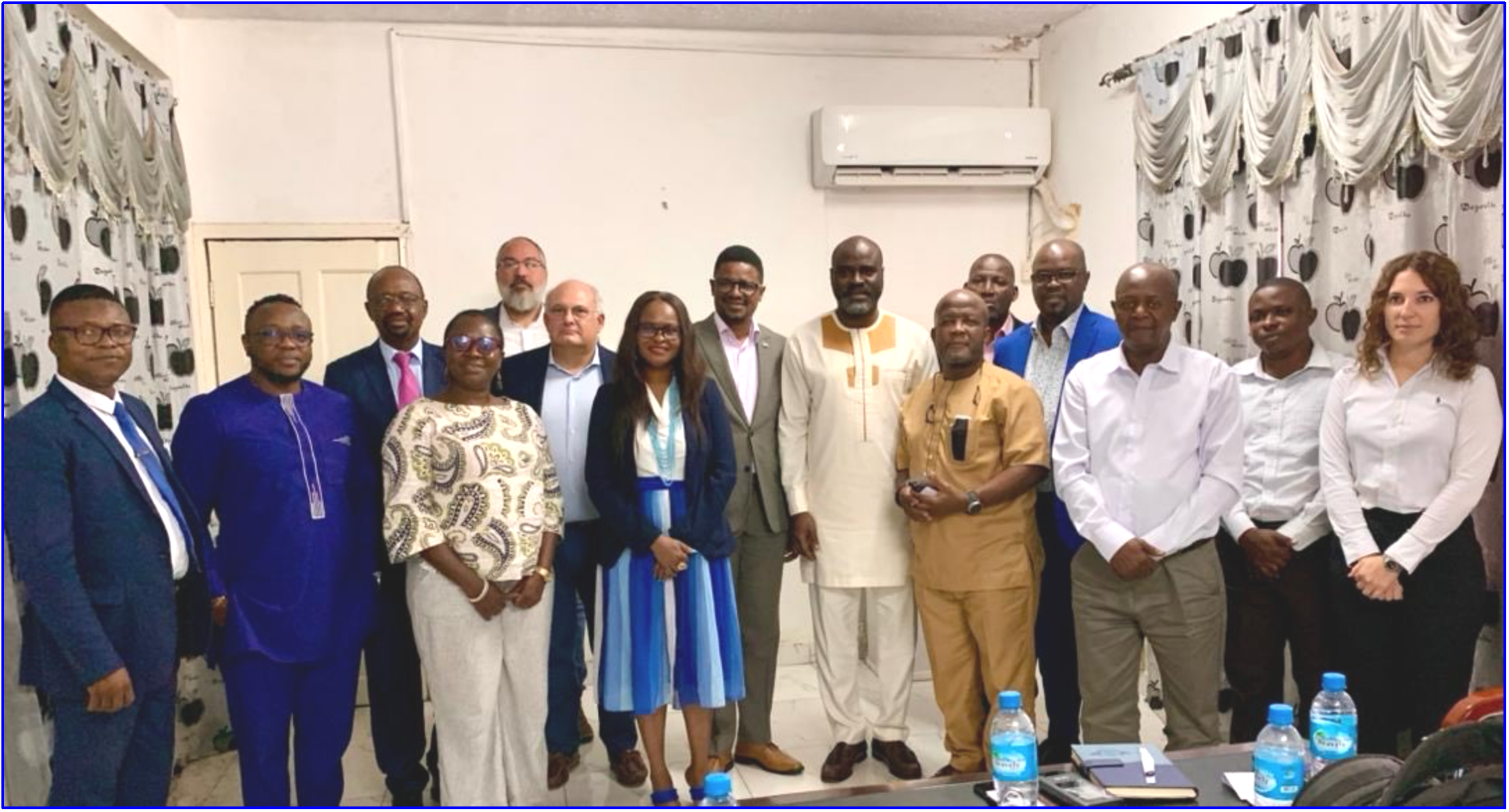
The Ministry of Technical and Higher Education (MTHE) and the Italian Association for Solidarity Among People (AISPO) have increased efforts to develop and accredit Sierra Leone’s first postgraduate haematology curriculum, marking a significant step toward strengthening the country’s capacity in blood-related clinical care, laboratory services, and research. A high-level engagement meeting, chaired by Emmanuel J. Momoh Esq., Director of Higher Education at MTHE, brought together stakeholders from the education and health sectors to plan the next steps in developing a sustainable specialisation pathway in haematology.
Dr Haja Ramatulai Wurie, Minister of Technical and Higher Education, described the meeting as a watershed moment in Sierra Leone’s medical education landscape. She emphasised that the initiative is about more than just training individual specialists; it is about building a long-term national framework for medical education, research, and service delivery that will last beyond the initial training cohorts. Her remarks emphasised the government’s commitment to integrating advanced clinical training into the higher education system.
Dr Josephus Brimah, Chief Technical and Higher Education Officer, expressed optimism that the collaboration would result in tangible improvements in medical education and health-care delivery. He highlighted the program’s potential to strengthen clinical capacity, expand diagnostic and laboratory services, and support research that is tailored to the country’s specific health needs.
AISPO’s President of Haematology, Professor Fabio Ciceri, explained that the proposed curriculum is consistent with the organisation’s long-term mission of developing blood transfusion systems and education in Sierra Leone. Professor Ciceri stated that AISPO intends to integrate clinical training, laboratory development, and postgraduate academic components to ensure the program’s comprehensiveness and sustainability, as well as its alignment with the nation’s higher education standards.
Dr Francesco Aloi, AISPO Country Director, noted that earlier phases of collaboration had already helped to improve blood banks in Freetown and other regions. He argued that advancing to postgraduate training is the logical next step in ensuring long-term capacity building and cultivating locally trained professionals capable of leading and maintaining blood and haematology services.
Senior medical and academic stakeholders at the meeting emphasised the urgent need for specialised haematology training. Prof. Kehinde Oluwadiya, Chief Medical Director of the University of Sierra Leone Teaching Hospital Complex (USLTHC), Prof. James Russell, Deputy Vice Chancellor and Principal of the College of Medicine and Allied Health Sciences (COMAHS), and Dr Mustapha Kabba, Deputy Chief Medical Officer at the Ministry of Health, all noted that Sierra Leone currently has only one practising haematologist. They advocated for a curriculum that incorporates clinical fellowship experience, academic coursework, and research training to address both service delivery and knowledge generation.
The University of Sierra Leone expressed institutional support for the effort. Vice Chancellor Prof. Aiah Lebbie reaffirmed the university’s commitment, emphasising the importance of research in complementing clinical practice. Josephus Sawyerr, Executive Secretary of the Tertiary Education Commission (TEC), recommended that the University of Sierra Leone, which already has accredited postgraduate structures, lead curriculum development to ensure timely accreditation and implementation.
To move the process forward, participants formed a technical working group to further discuss curriculum content, accreditation pathways, and implementation logistics. Sarjoh Aziz-Kamara, Deputy Minister of MTHE, concluded the session with a vote of thanks, praising all partners for their contributions to the advancement of Sierra Leone’s higher education and healthcare sectors.
