
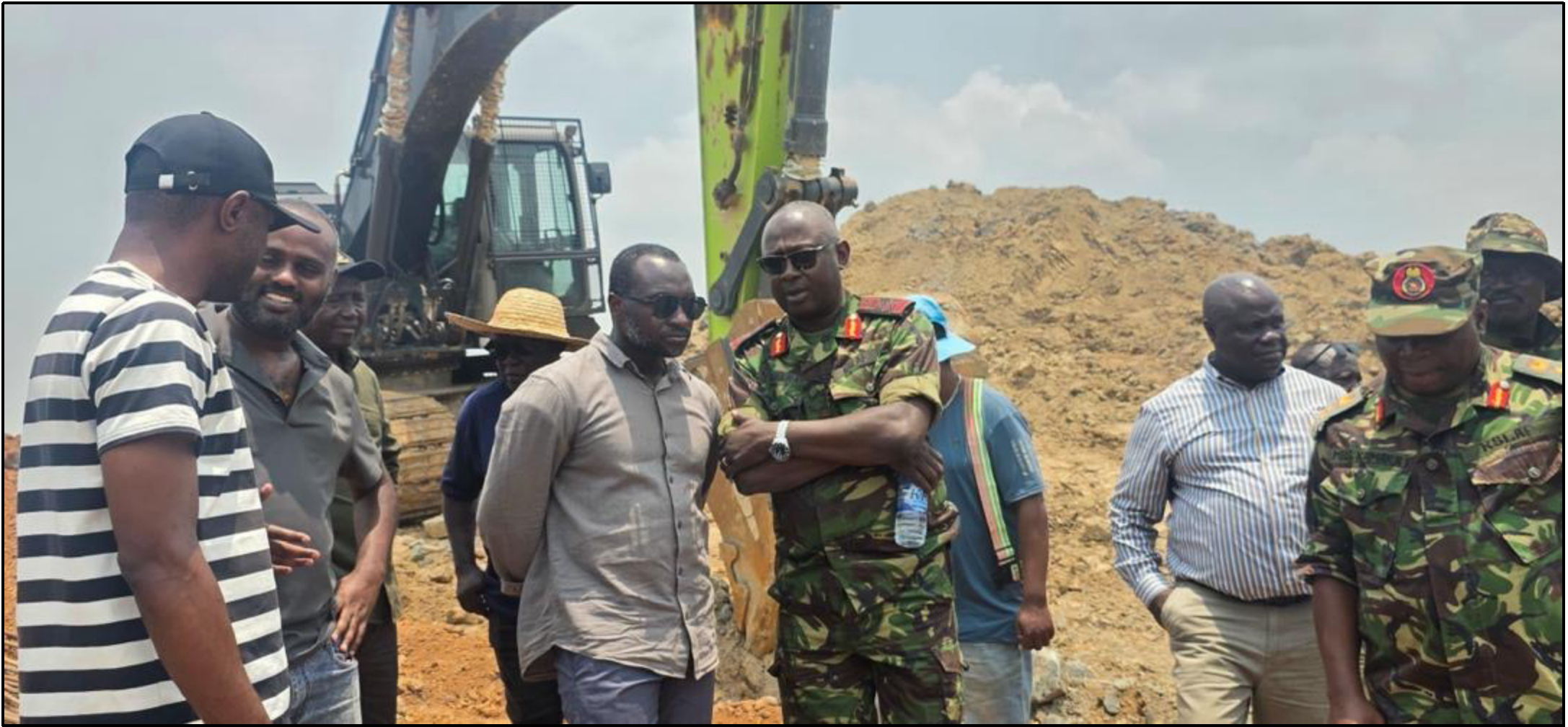
TORMABUM, BONTHE DISTRICT | 2026 — Sierra Leone’s drive for food self-sufficiency received a visible boost on Thursday, when Minister of Agriculture and Food Security Dr Henry Musa Kpaka and Chief of Defence Staff Lieutenant General Amara Idara Bangura led a high-level joint inspection of strategic rice production infrastructure in Tormabum as part of the government’s Feed Salone initiative.
The visit marks a growing operational partnership between the Ministry of Agriculture and the Republic of Sierra Leone Armed Forces (RSLAF) to boost large-scale rice production. The inspection focused on irrigation works, which officials say are critical to enabling year-round farming in the area. The team examined progress on canals, water-control systems, and land-preparation activities, with Minister Kpaka emphasising the importance of a functioning irrigation scheme in transforming Tormabum into a regional rice production hub.
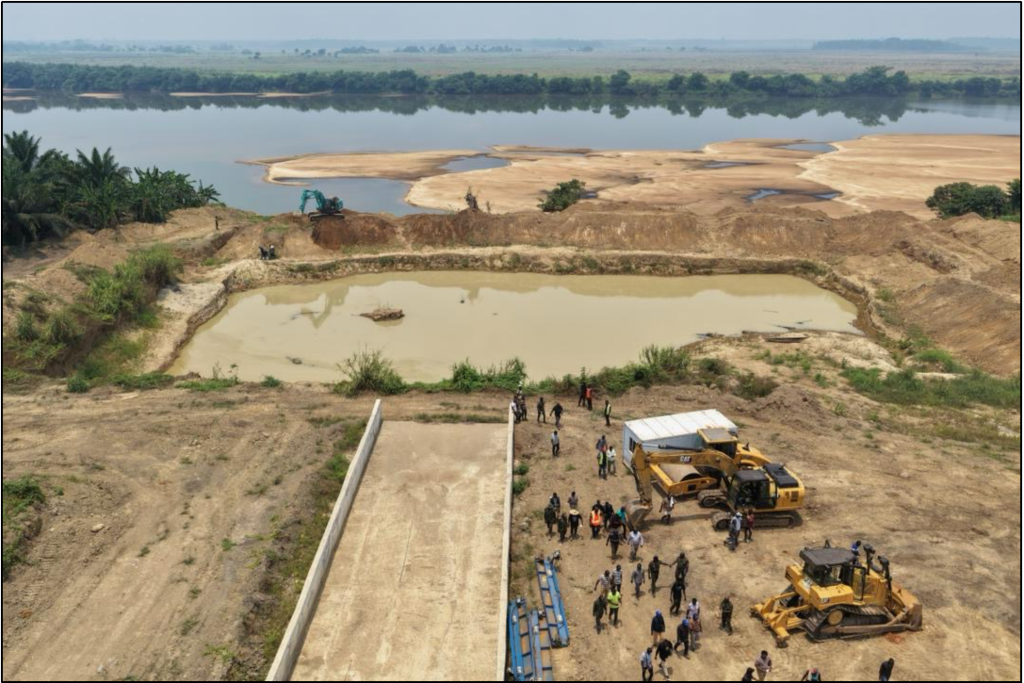
The tour also highlighted the military’s expanded role in agricultural development. The RSLAF is currently cultivating approximately 640 acres of cashew farmland, with immediate plans to expand that holding to around 1,000 acres. Furthermore, military-managed rice fields now cover more than 7,000 acres across Moyamba, Port Loko, and Tonkolili districts, indicating the Armed Forces’ strategic shift toward supporting national food systems and complementing civilian farming initiatives.
Lieutenant General Bangura confirmed the Armed Forces’ readiness to deepen their agricultural commitment, citing the availability of arable land and improved infrastructure in Tormabum as critical enablers for increasing production. He expressed an interest in increasing military-operated cultivation and logistical support to advance the Feed Salone agenda.
The delegation also toured the nearly finished Tormabum Rice Hub, an integrated facility that will provide milling, storage, and aggregation services. Once operational, officials anticipate that the hub will significantly reduce post-harvest losses, improve rice quality, and strengthen market links for both smallholder farmers and commercial producers, reinforcing efforts to make Sierra Leone more food secure.
