
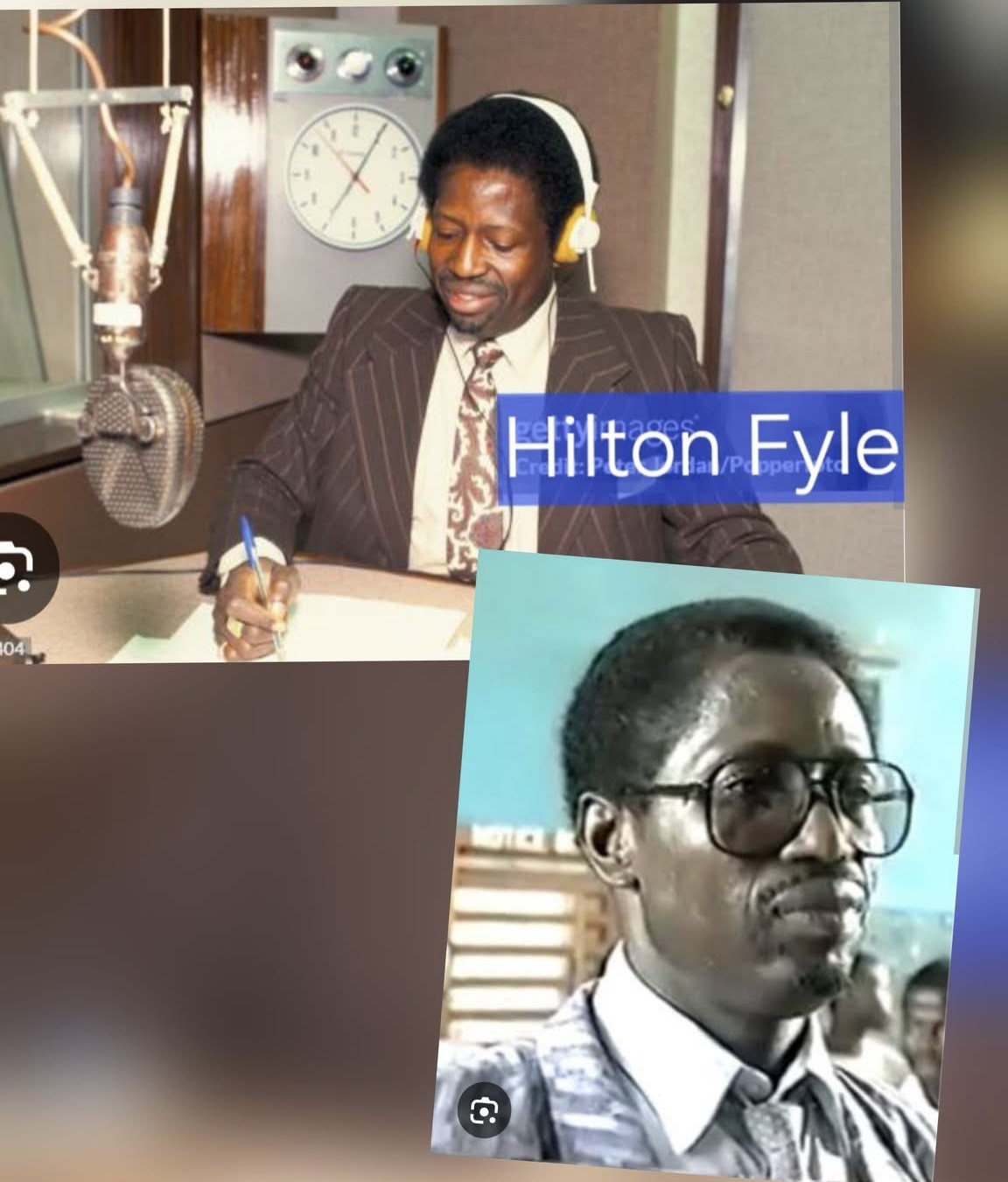
Hilton Fyle’s life is a story of imagination, bravery, and unwavering dedication to speaking truth to power. Fyle, a celebrated Sierra Leonean journalist and broadcaster, rose to prominence as the longtime host of the BBC’s Network Africa, where his distinct voice and incisive commentary reached listeners across the continent and beyond. Many Africans, both at home and abroad, saw him as a model of principled journalism, embodying professionalism, integrity, and a desire to inform the public.
However, Fyle’s abilities and influence extended far beyond the radio studio. He is also a talented musician whose songs use personal experience to document Sierra Leone’s trials and aspirations. He used music and storytelling to address themes of unity, freedom, and justice, rallying hope and resilience in the face of adversity. Whether on the air or on stage, his artistic message remained consistent: speak the truth, spread compassion, and stand up for what is right.
Fyle is also an accomplished author and filmmaker. His memoir, The Fighter From Death Row, is a deeply personal account of his time as a journalist and prisoner, chronicling the events and reflections that shaped his life.
He wrote and directed two documentaries about Sierra Leone’s civil war, Nightmare in Paradise and Sunrise in Paradise, which examine the horrors and human fortitude involved. I wrote and directed two documentaries about the horrors and human fortitude of Sierra Leone’s civil war, Nightmare in Paradise and Sunrise in Paradise. And rebuild.
Hilton Fyle, who is not afraid to confront entrenched power, has frequently used his platform to criticise political leaders for corruption, tribalism, and injustices. He openly criticised the Sierra Leone People’s Party (SLPP) for what he saw as failings during the civil war and publicly chastised officials whom he believed had betrayed the public’s trust.
Because of his willingness to speak out, he became a powerful voice of dissent, admired by many but sometimes feared by those in positions of authority. His desire to speak up made him a powerful voice of dissent, admired by many and sometimes feared by those in power. In a series of prosecutions. In 1998, he was arrested and sentenced to death on charges of treason and for using his private FM radio station “to become a mouthpiece for the military government.” On that date, he was one of 22 people formally charged with conspiring to overthrow the legitimate government. Throughout the ordeal, he maintained his innocence and emphasised the importance of free expression, even as the charges against him weighed heavily.
A dramatic turn of events occurred when rebels later captured Freetown, and Hilton Fyle regained his freedom, allowing him to continue his work and serve as a symbol of survival and resistance. Today, he is a compelling figure in Sierra Leonean cultural and political life: a broadcaster, musician, filmmaker, and writer who has faced imprisonment and accusations while continuing to use words and art to confront injustice and inspire change. His legacy serves as a reminder that the pen, microphone, and song can be powerful tools for holding power accountable and healing nations.
