
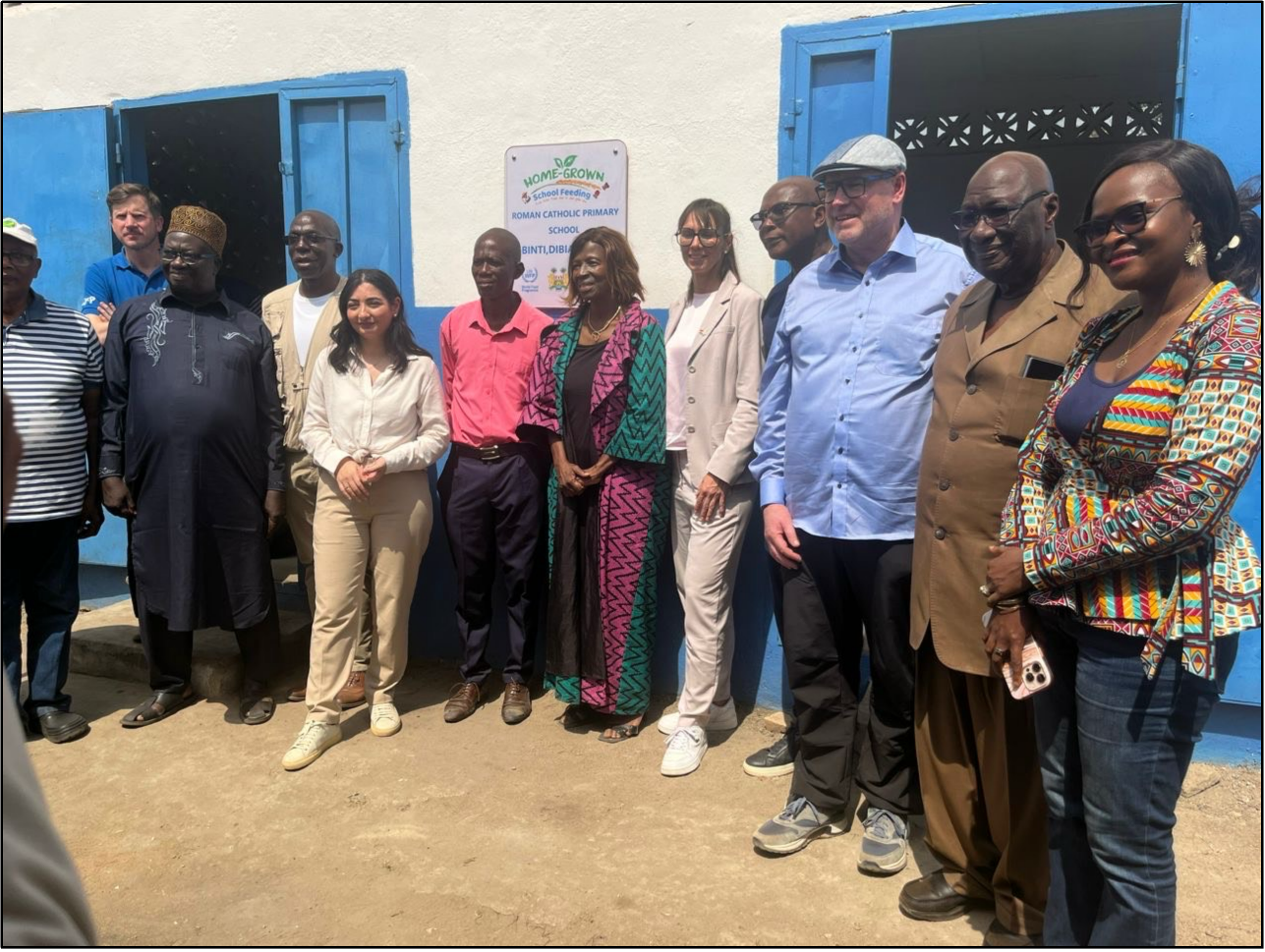
On Thursday, January 22, 2026, Ms Reem Alabali-Radovan, Minister of Planning and Economic Cooperation in the Federal Republic of Germany, led a delegation to two development project sites in Gbinti, Dibia Chiefdom in Karene District, and Newton in Western Area Rural. The visits highlighted Germany’s support for a homegrown school feeding programme in Karene District, as well as a number of rural development initiatives aimed at improving food security, livelihoods, and green skills among women and youth.
The German-funded school feeding program currently serves 25,000 primary school students across 115 schools in the Karene District. The scheme, developed in collaboration with the World Food Programme (WFP) and other stakeholders, sources rice, orange-fleshed sweet potatoes, and vegetables from local farmers. According to project officials, local procurement has injected thousands of dollars into the district’s economy and created job opportunities, particularly for women and young people working in production and supply chains.
During her visit to Gbinti, Minister Alabali Radovan inaugurated 115 newly constructed stores and kitchens funded by German aid. The kitchen features energy-efficient stoves that use 44% less firewood than traditional three-stone cooking methods, reducing household fuel consumption and relieving pressure on local wood resources.
Mr Edward Kamara, Head Teacher of the Roman Catholic Primary School in Gbinti, praised the intervention, calling the new store and kitchen a permanent investment in the school. He stated that the nutritious meals provided by the program have had a tangible impact on learning by increasing school enrollment, improving pupil concentration, and providing more opportunities for social interaction both inside and outside of the school environment. “The school feeding programme has made the students happy,” Mr Kamara said, adding that the initiative has improved the overall learning environment and raised expectations for future collaboration.
Mr Andrew Odero, WFP Country Representative in Sierra Leone, stated that increased engagement with farmers in remote areas of the country has resulted in improved programme quality. He emphasised the importance of local producers in strengthening the food supply chain as well as the initiative’s resilience.
Minister Alabali-Radovan emphasised the importance of food security for the development of future leaders, stating that well-nourished children are more capable of learning and reaching their full potential. She also emphasised the value of locally sourced food for community resilience and economic growth.
Madam Kenyeh Barlay, Sierra Leone’s Minister of Planning and Economic Development, aligned the project with the government’s development priorities. The German-supported project aligns with the administration’s “five big game changers”: education, human capital development, agriculture, technology, and youth development. It is gender-balanced. “Agriculture is the engine of economic growth,” Madam Barlay said. She emphasised that a well-fed child can learn better and expressed gratitude to the German government and partners for their support.
Mr Conrad Sackey, Minister of Basic and Senior Secondary Education, echoed those sentiments, stating that a hungry child cannot learn and that nutrition is critical for maximising a student’s potential. Local leaders, including the Paramount Chief of Dibia Chiefdom, Bai Sheka Bundu, and the Resident Minister for the North West Region, Umaru Wurie, have expressed similar support for the program.
Welthungerhilfe (WHH) and partner organisations presented a portfolio of interventions at the Newton site aimed at strengthening smallholder agriculture, agribusiness development, renewable energy solutions, land governance reforms, and youth vocational skill training. Beneficiaries at the Newton display reported significant gains over the past six years, with over 65 per cent of women with disabilities now self-employed.
According to reports, project activities will promote green skills and organic vegetable production, as well as solar installation and maintenance training. Participants reported progress toward national food self-sufficiency, with a continued emphasis on women and youths as key actors in agricultural value chains. Beneficiaries also reported advances in land management legislation and programmes aimed at encouraging young people to return to farming.
Speakers at Newton emphasised ongoing challenges, such as climate change and erratic weather patterns, as well as widespread food insecurity. According to project representatives, 82 per cent of Sierra Leoneans experience food insecurity, and partners are working with 2,500 women farm families in Moyamba District to promote commercial farming among vulnerable women. They also noted that women and youths account for roughly 75% of farmers in the country, reinforcing the need for targeted investment and additional partner support.
Minister Alabali-Radovan emphasised the importance of gender balance, knowledge sharing, and project alignment with Sierra Leone’s development priorities during her closing remarks. A vote of thanks from one of the beneficiaries emphasised the theme of unity: participants stated that the projects had strengthened community cooperation and that long-term progress necessitated collaboration.
Overall, the visits demonstrated how targeted investments in school feeding, local procurement, and integrated rural development can benefit education, nutrition, livelihoods, and environmental sustainability—while emphasising the importance of ongoing support to scale those gains.
