
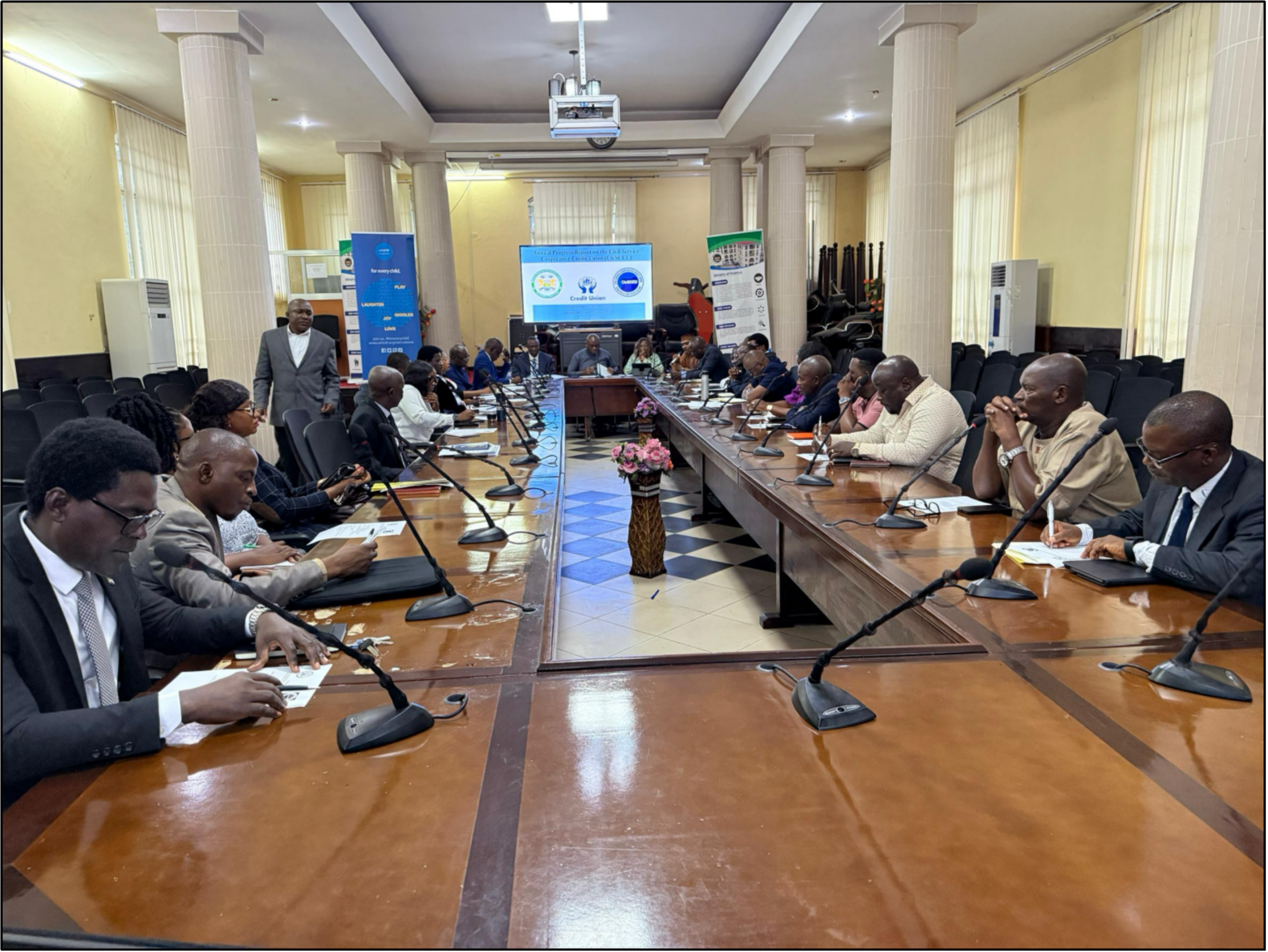
There is “no more business as usual” when it comes to bureaucratic delays in implementing crucial development projects, as the Minister of Planning and Economic Development, Madam Kenyeh Barlay, has strongly warned civil service administrators and stakeholders. “The time is now to ensure civil servants can access affordable financial services for medical needs, school and college fees, and other emergencies,” Madam Barlay said during a High-Level Stakeholder Meeting on the Operationalisation of the Civil Service Cooperative Credit Union (CivSCCU), which was held in the Ministry of Finance’s George Street conference hall.
The meeting aimed to strengthen the common goal of creating a sustainable financial institution for Sierra Leone’s civil servants, evaluate financial projections and operationalisation recommendations, and examine a one-year progress report on the CivSCCU initiative. Approximately 24,000 public sector employees nationwide are to be served by the program.
While applauding stakeholders for their dedication, Madam Barlay urged for expedited implementation, emphasising that any additional postponements would prevent civil servants from receiving critical loans and other financial assistance. She promised to convince colleagues of the pressing need for ratification by bringing the operationalisation document and the meeting’s conclusions to Cabinet “as soon as possible.” She also underlined that trust and integrity, which are essential to the cooperative movement’s success, would serve as its guiding principles.
The Minister made a direct request for administrative assistance from several government agencies. She called on the Ministry of Finance, the Accountant General’s Department, and the Human Resource Management Office (HRMO) to approve a bank account and a payroll deduction directive to facilitate deductions for loan repayments and savings, and she urged the Ministry of Trade and Industry’s Cooperative Department to expedite the registration request.
MoPED Development Secretary Ambrose James presided over the gathering, outlining its goals and praising the Secretariat’s efforts. He remarked, “We are ready to move the process forward,” praising Mr. David Abu and his team for their enthusiasm and commitment.
The one-year progress report was given by Mr. David Abu, the head of the CivSCCU Secretariat. He clarified that the process started in 2024 and outlined the CivSCCU as a different approach to bridging the financial divide that many civil servants encounter. He pointed out that membership will be necessary for permanent and pensionable civil servants and that the initiative is in line with Sierra Leone’s Medium-Term National Development Plan (2024–2030).
According to Mr. Abu’s ambitious timeline, civil servants could start saving by the end of September 2025 if administrative and regulatory procedures go according to plan. The CivSCCU intends to invest in agriculture and build affordable housing within the upcoming year. The Secretariat suggests a 70/30 loan and investment split, with 70% of savings going toward loans and 30% going toward investments. This emphasises that the program’s goal is to alleviate civil servants’ financial constraints rather than turn a profit.
“What about us civil servants?” the Deputy Accountant General, whose office has experience setting up payroll deductions for insurance companies and teachers, posed to stakeholders. He offered pro bono assistance, promised his office’s cooperation, and indicated that he would be willing to help with the required payroll procedures.
Mr. Ansu Tucker, the HRMO’s director-general, stated that the program was created in response to the realisation that a large number of civil servants currently take out high-interest bank loans. Although he emphasised that the CivSCCU would offer a respectable financial option and improved retirement results, he issued a warning that cabinet approval is still a crucial step. Mr. Tucker thanked partners for their financial and technical contributions and reaffirmed his office’s commitment.
Stakeholders praised the CivSCCU concept during a thorough Q&A session, but they also brought up several issues that require attention before a full rollout. The high rate of civil servant attrition, the need for a more thorough technical analysis of the scheme’s financial models, the rising interest rates at commercial banks (noting over 20%) compared to credit unions (approximately 9%), recent reductions in civil service wages, and the imperative need to instill integrity and trust in the scheme’s management were among the main concerns. Participants also demanded strict adherence to cooperative principles, guarantees regarding the scheme’s sustainability, and broader nationwide sensitisation and awareness-raising.
Although the organisers acknowledged that extensive stakeholder consultations have been held, they also acknowledged that additional engagement is necessary to guarantee operational success and buy-in. Several speakers underlined that everyone’s willingness to speed up administrative approvals and encourage transparency will be crucial to the event’s eventual success.
Key departments committed to pursuing the following immediate actions at the end of the meeting: completing registration, enabling payroll deduction and bank account arrangements, continuing technical refinement of the business model, and launching a national information campaign. After the meeting, stakeholders expressed optimism that the CivSCCU could soon give tens of thousands of civil servants a crucial financial lifeline with Cabinet support and administrative assistance.
