
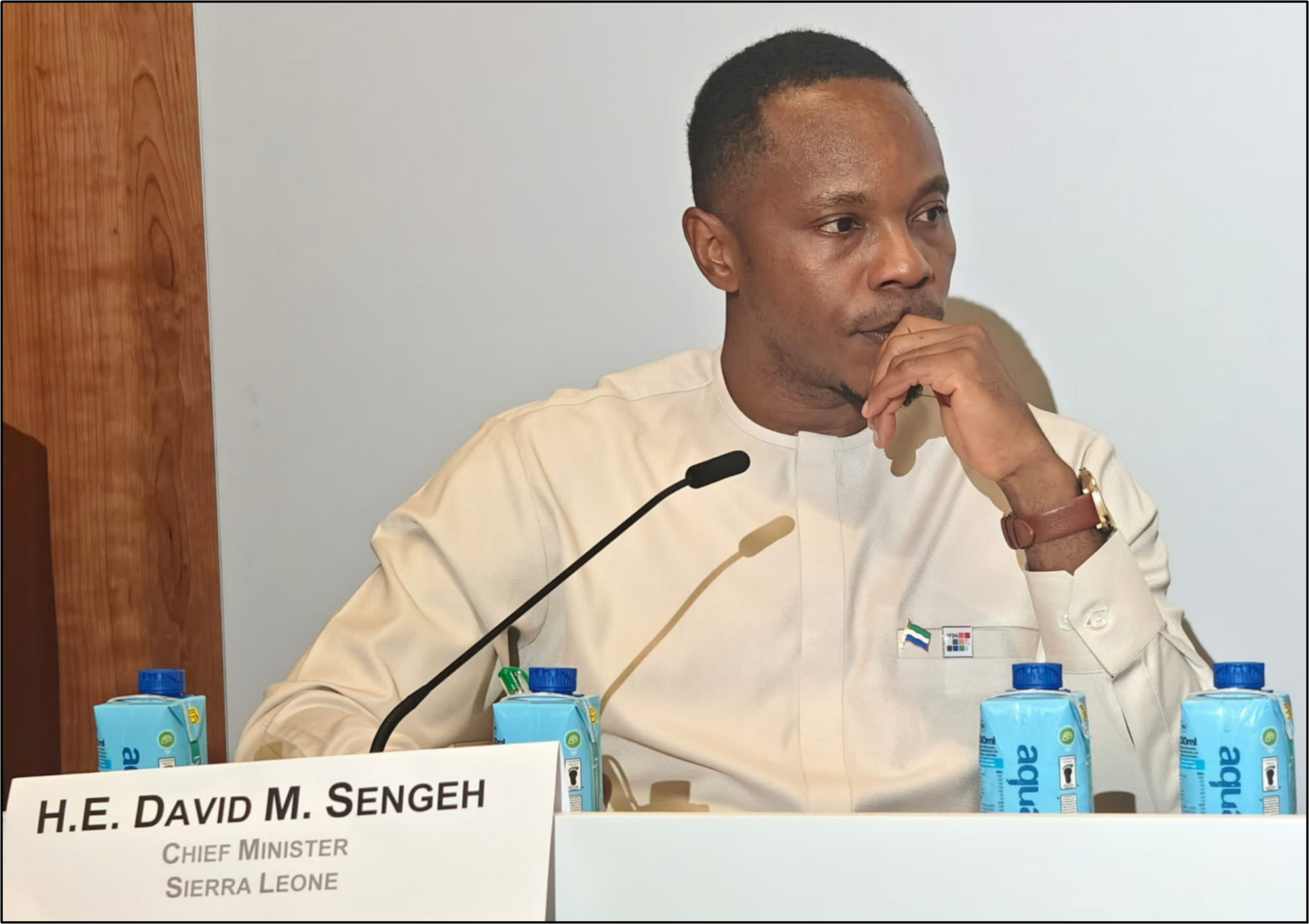
When David Moinina Sengeh became Sierra Leone’s first Chief Innovation Officer in 2018, few could have predicted the far-reaching consequences of his appointment. His tenure marked a watershed moment in how the government could use technology, data, and human-centred design to improve service delivery in a country hungry for competent, accountable leadership.
Dr Sengeh has consistently combined pragmatic problem-solving with an ambitious national vision for inclusive development in his various roles, most notably as Minister of Basic and Senior Secondary Education (MBSSE) and, following the 2023 elections, as Chief Minister appointed by President Julius Maada Bio. The Directorate of Science, Technology, and Innovation (DSTI), based in the President’s Office, was established to position science and technology as key drivers of Sierra Leone’s Medium Term National Development Plan (2020-2023).
Under Dr Sengeh’s leadership, DSTI evolved from a think tank to an operational engine that collaborates with ministries to modernise services, make data-driven decisions, and improve the transparency and efficiency of government systems. The establishment of the DSTI, as well as the appointment of a Chief Innovation Officer with extensive technical and design experience, created a one-of-a-kind opportunity for a significant shift in public administration across the country.
One of the most significant innovations launched under Dr Sengeh’s leadership is the DSTI Data Hub. This centralised platform connects the Annual School Census (MBSSE) to national examination results from the West African Examinations Council. This integration enables evidence-based policymaking and near-real-time operational decisions in education. With accurate, timely data now informing planning and evaluation, the government can better target resources, identify underperforming schools, and assess the impact of interventions.
The Data Hub demonstrates how relatively simple investments in data architecture and analytics can transform service delivery at scale.
DSTI’s collaboration with MBSSE and partners like UNICEF has resulted in a portfolio of digital education initiatives that broaden learning opportunities and strengthen teacher capacity. The Learning Passport program gives students access to curated learning materials both online and offline, which helps to fill gaps where school access and resources are limited. In addition, the establishment of Digital Learning Hubs has increased internet and computer access for students and teachers in underserved communities, providing safe, public spaces for ongoing learning and digital literacy.
Sengeh’s approach to educational reform goes beyond classroom content. He has advocated for Tech On Our Terms, a program designed to ensure that the government only invests in technologies that directly support Sierra Leone’s learning objectives. One practical example is the strategic use of Geographic Information System (GIS) tools to map educational accessibility. By visualising where schools, teachers, and students are—and are not—policymakers can identify “blind spots” in service delivery and direct resources more efficiently.
This spatial lens has helped refine policy and planning in ways that directly address learning poverty and school accessibility. The DSTI’s remit has also included public health, infrastructure, and logistics. During the COVID-19 pandemic, for example, DSTI contributed to the development of the Electronic Pass (E-PASS) Management System, which was used to manage essential travel and public health compliance. In the infrastructure domain, a Bill & Melinda Gates Foundation grant enabled the development of an Integrated GIS Portal, providing real-time, geospatially informed data to government and development partners—information critical for emergency response, infrastructure planning, and targeted service delivery.
Sengeh’s innovation has also included the creation of safe experimental spaces for cutting-edge technology. In 2019, DSTI and UNICEF established a drone corridor that serves as a sandbox for universities and private sector partners to test drone applications such as medical supply transportation and aerial mapping. These pilots are intended to increase local capacity, accelerate learning about new service delivery models, and assess the practical utility of emerging technologies in Sierra Leone’s geographical and logistical context.
A common thread among these initiatives is a strong emphasis on youth empowerment. DSTI runs programs that teach young people digital skills, promote entrepreneurship, and prepare a new generation to lead Sierra Leone’s digital transformation. Partnerships with UNICEF and other international organisations ensure that these programs reach a diverse range of communities while also aligning with broader development goals such as climate resilience and inclusion.
When Dr Sengeh became Minister of Basic and Senior Secondary Education while maintaining his position as Chief Innovation Officer, the close collaboration between MBSSE and DSTI improved. This dual role facilitated the faster translation of data and technological insights into classroom policy and practice. It also emphasised the principle that technology must be purpose-driven: digital tools should be used to achieve specific learning goals rather than for their own sake.
Sengeh gained domestic and international recognition after producing tangible results. His efforts to reform the education sector and elevate the role of innovation in government earned him international attention, including recognition at the World Government Summit in Dubai. More importantly for Sierra Leoneans, his programs have begun to reduce learning poverty by increasing access to schools, improving teacher support, and basing policy decisions on rigorous data.
Following the 2023 elections, President Bio appointed Dr Sengeh as Chief Minister, elevating him to a position that requires broad coordination across Ministries, Departments, and Agencies to carry out the government’s agenda. Sengeh’s responsibilities as Chief Minister go beyond education and innovation: he is the President and Vice President’s principal adviser, and he is responsible for ensuring that government programs are aligned, transparent, and accountable. He has emphasised pragmatic, inclusive leadership, bringing ingenuity to public administration while establishing accountability mechanisms that promote trust.
Sengeh has also applied his mediation and dialogue skills in national politics. He was instrumental in facilitating a mediated dialogue between the Bio administration and the main opposition party, the All People’s Congress, and co-signed a national unity agreement aimed at ensuring peace, electoral justice, and accountability in the post-election period. Such efforts are David Sengeh exemplifies public leadership that combines technical expertise, design thinking, and political acumen. David Sengeh exemplifies public leadership that combines technical expertise, design thinking, and political acumen.
His research demonstrates how targeted investments in data, digital tools, and human capital can lead to measurable improvements in education and public services. More broadly, his approach represents a shift in how African governments can use homegrown innovation to solve local problems on their own terms—by developing systems that are effective, equitable, and resilient.
