
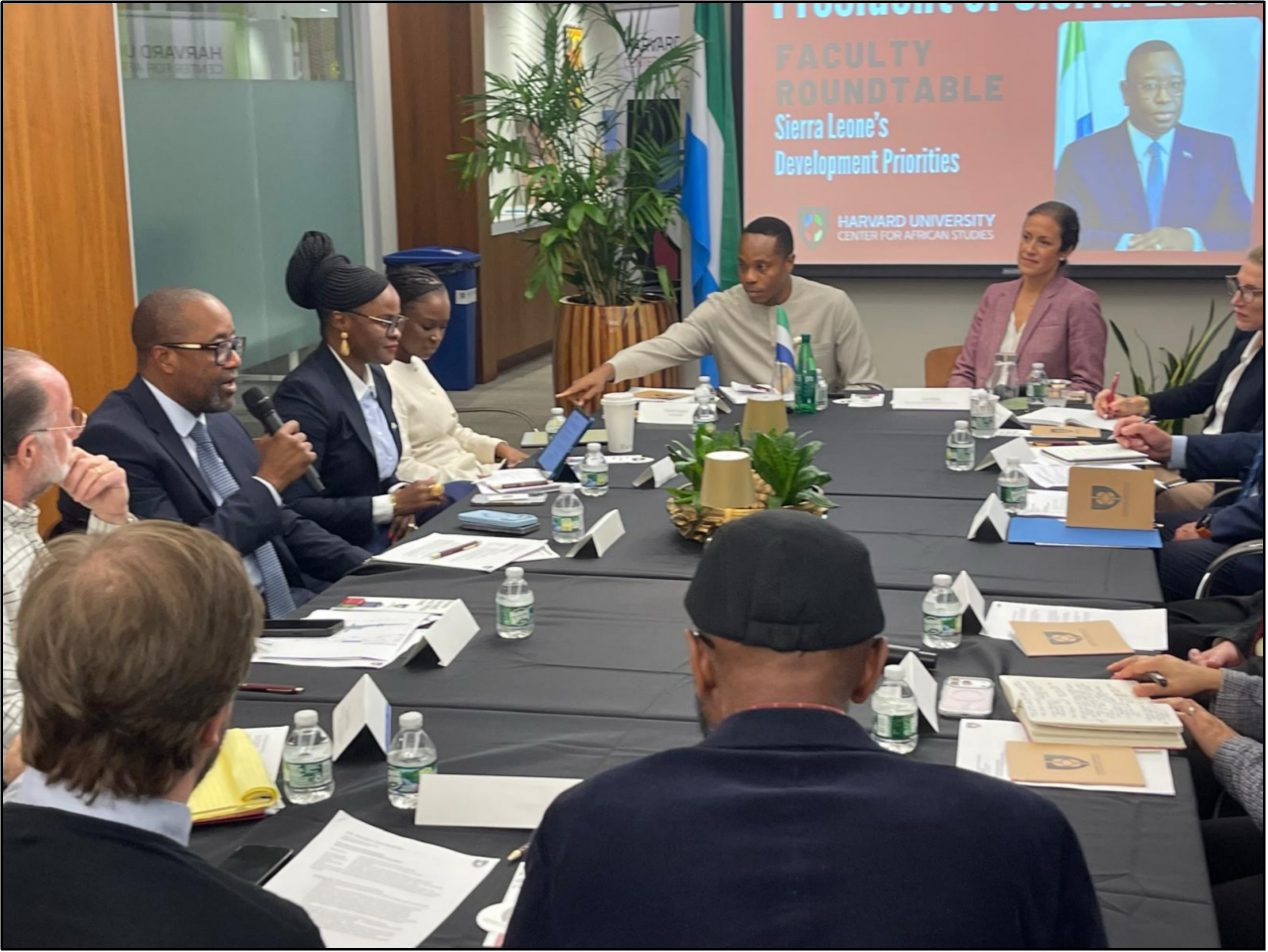
A high-level roundtable was held on 29th September 2026 between senior ministers from Sierra Leone and professors and researchers from Harvard University to discuss possible collaboration in several priority areas. Ms Zoe Marks, Oppenheimer Faculty Director of the Centre for African Studies at Harvard, convened a meeting with Sierra Leone’s cabinet members to discuss national development needs and solicit specific research, capacity-building, and policy partnerships.
Hon. Dr David Moinina Sengeh, Chief Minister of Sierra Leone, called for collaboration to fast-track progress in public health, climate change, digital education, energy and investment, artificial intelligence, technology development, and public-private partnerships. “Harvard’s research expertise and institutional capacities could help Sierra Leone to achieve its reform agenda,” Dr Sengeh said, urging researchers to continue and expand their engagements to ensure common goals are achieved.
Foreign Minister Hon. Mohamed Rahman Swarray spoke at length on the country’s diplomatic and governance priorities amid its changing economic landscape. He said negotiations on critical minerals would increase and called for specific negotiation skills training to ensure Sierra Leone secures fair, sustainable deals. Minister Swarray also stressed the need to professionalise Sierra Leone’s Foreign Service, the government’s efforts to reform health insurance and a proposed national policy on volunteerism for structured national service. He called on Harvard academics to support these efforts, offering technical assistance, training, and comparative research to help shape and implement President Julius Maada Bio’s transformative agenda.
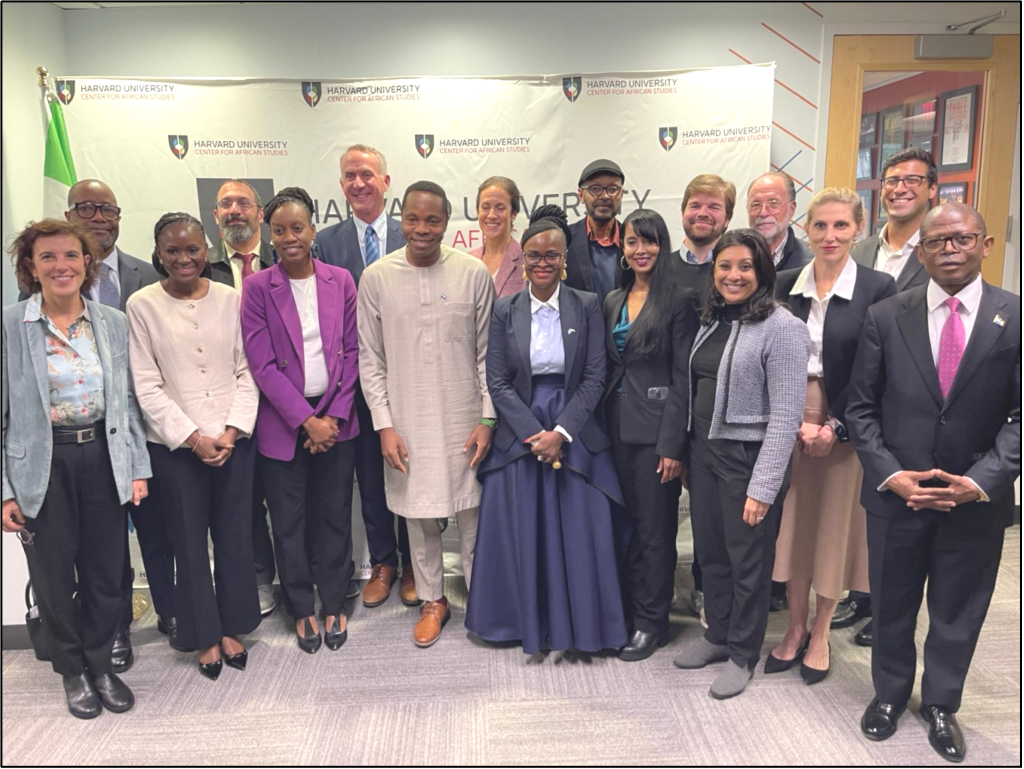
The Minister of Technical and Higher Education, Hon. Haja Ramatulai Wurie, said critical gaps in the education system needed urgent attention. She pointed out that capacity building and collaborative research will be needed to identify and address specific weaknesses, including in the medical school, to strengthen the university and vocational systems. Wurie said empirical research and partnerships with leading institutions can help to redesign curricula, improve teaching approaches and create pathways to entrepreneurship and meaningful employment for young people.
The Minister of Communications and Innovation, Hon. Salima Bah, discussed Sierra Leone’s digital space and the challenges to sector development. She said digital usage was low, affordability was a concern, and energy supply was inconsistent, and called for capacity building to increase access and adoption. Minister Bah highlighted the government’s approach toward the strengthening of the digital economy, improving tax mobilisation, particularly from telecom network companies, and the need for tax policy reforms to make revenue systems more efficient and sustainable. She advocated a national AI strategy that emphasised evidence-based data and regional collaboration, highlighting the importance of strong data systems for the country’s infrastructure.
Harvard reps pointed to work the university is currently doing in Sierra Leone, including joint research and analysis on public health issues like Mpox, where academic partnerships have produced real data and real results. During the discussion, the two sides recognised the mutual benefit which long-term partnerships can yield. This would give Sierra Leone access to technical expertise, training, and evidence to inform policy, while providing opportunities for Harvard scholars to conduct context-driven research.
The roundtable emphasised the need for long-term, interdisciplinary partnerships in public health, education, governance, technology and climate resilience to achieve Sierra Leone’s development goals. Participants pledged to scale up collaboration through capacity building, data-driven policymaking, and pilot projects at the national and regional levels.
