
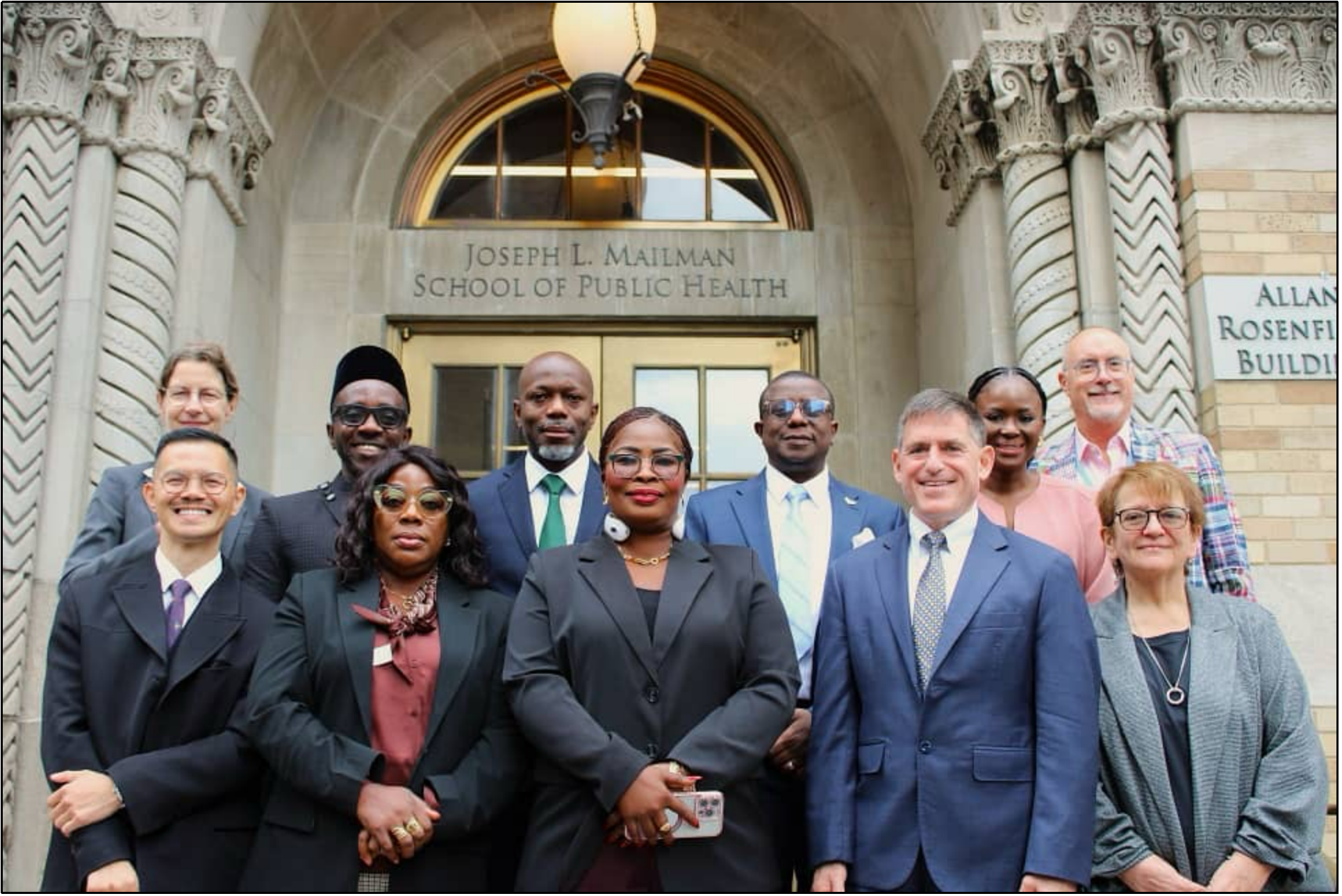
While the United Nations General Assembly packed meeting rooms and schedules across the city, a dozen or so Sierra Leone ministers stepped away from the diplomatic fray and into a Columbia University classroom for a focused executive seminar on improving how government serves citizens.
Hosted by Columbia University’s Mailman School of Public Health, the high-level seminar focused on practical approaches to translating policy into measurable outcomes. Faculty from the Heilbrunn Department of Population and Family Health led sessions on systems thinking, implementation science, and evidence-based policy and practice—tools meant to help senior leaders navigate complex problems, coordinate across agencies, and achieve outcomes.
The visit was arranged by Sierra Leone’s Minister of Information and Civic Education Chernor Bah, under a prior memorandum of understanding between his ministry and Columbia University. The timing was deliberate. President Julius Maada Bio urged ministers already in New York for the UNGA to leverage the opportunity for capacity building and their international engagements.
“UNGA is a very busy period, but President Bio encouraged and supported us to make time for learning and capacity building,” Minister Bah said. “To speed up delivery, we need to constantly improve our capability as leaders to resolve difficult issues, collaborate across government and turn policy into outcomes.”
The program was led by Chair of the Heilbrunn Department, Professor Thoại D. Ngô, and featured interactive sessions blending theory and practical applications from senior faculty. Helen DePinho, Patrick Kachur and Nicole Haberland led discussions and exercises to help ministers apply concepts like whole-of-government planning, stakeholder engagement and evidence-based decision-making to their own portfolios.
The seminar allowed Energy Minister Cyril Grant to step back and view the challenges his ministry faces from a wider, cross-cutting perspective. Grant said it gave them time to think through and discuss the whole-of-government plan in relation to their individual portfolios. “It was very fitting because we are dealing with public health issues too.”
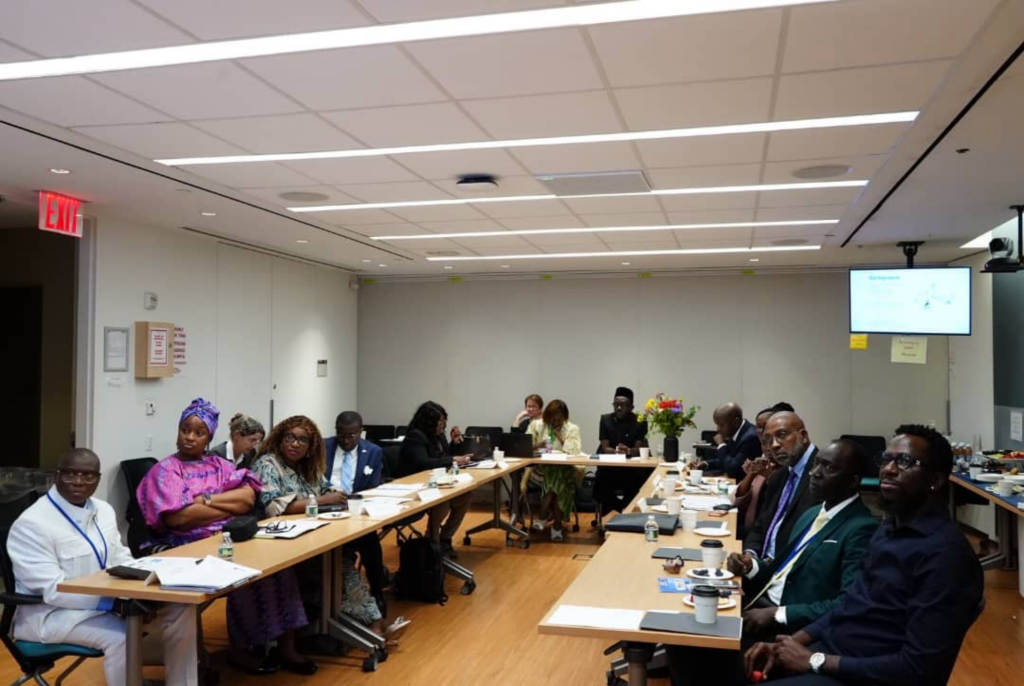
The ministers said the sessions prompted them to consider how their sectoral responsibilities connect with national priorities like health, social protection and economic development. Such a lens is central to systems thinking, a discipline that requires leaders to map relationships, anticipate unintended consequences and coordinate across ministries to bring about long-term change.
“The systems thinking module is one that I can immediately apply to my work”, said Umaru Napoleon Koroma, Minister for Employment, Labour and Social Security. It was an inspiring day for me. The lecture on systems thinking for leading a complex change was excellent and informative, and I intend to use these principles in dealing with complex issues in my ministry,” he said.
Following the seminar, Professor Ngô thanked Minister Bah for arranging the delegation’s visit and praised the ministers for taking time for focused learning amid the busy pace of UNGA week. He also reiterated Columbia’s commitment to working with Sierra Leone, highlighting the university’s role in advancing the country’s health, development and leadership goals.
The Ministry of Information and Civic Education says the exchange is an example of the practical benefit Sierra Leone aims to gain from international partnerships: access to global expertise, evidence-based tools, and capacity-building that can be used directly within government institutions. The ministry sees such partnerships as a way to strengthen public-sector leadership and improve the quality and pace of service delivery at home.
“Partnerships must ultimately add value to Sierra Leone,” said Minister Bah. Through our MOU with Columbia, we are connecting our leaders to world-class knowledge and expertise that can help us deliver better results for our people.”
This week’s lessons from the halls of cabinet to the classrooms of Columbia drove home a central point. Effective leadership demands continuous learning, and meaningful delivery demands translating that learning into coordinated action and results.
