
By Mariama Benovia Davies
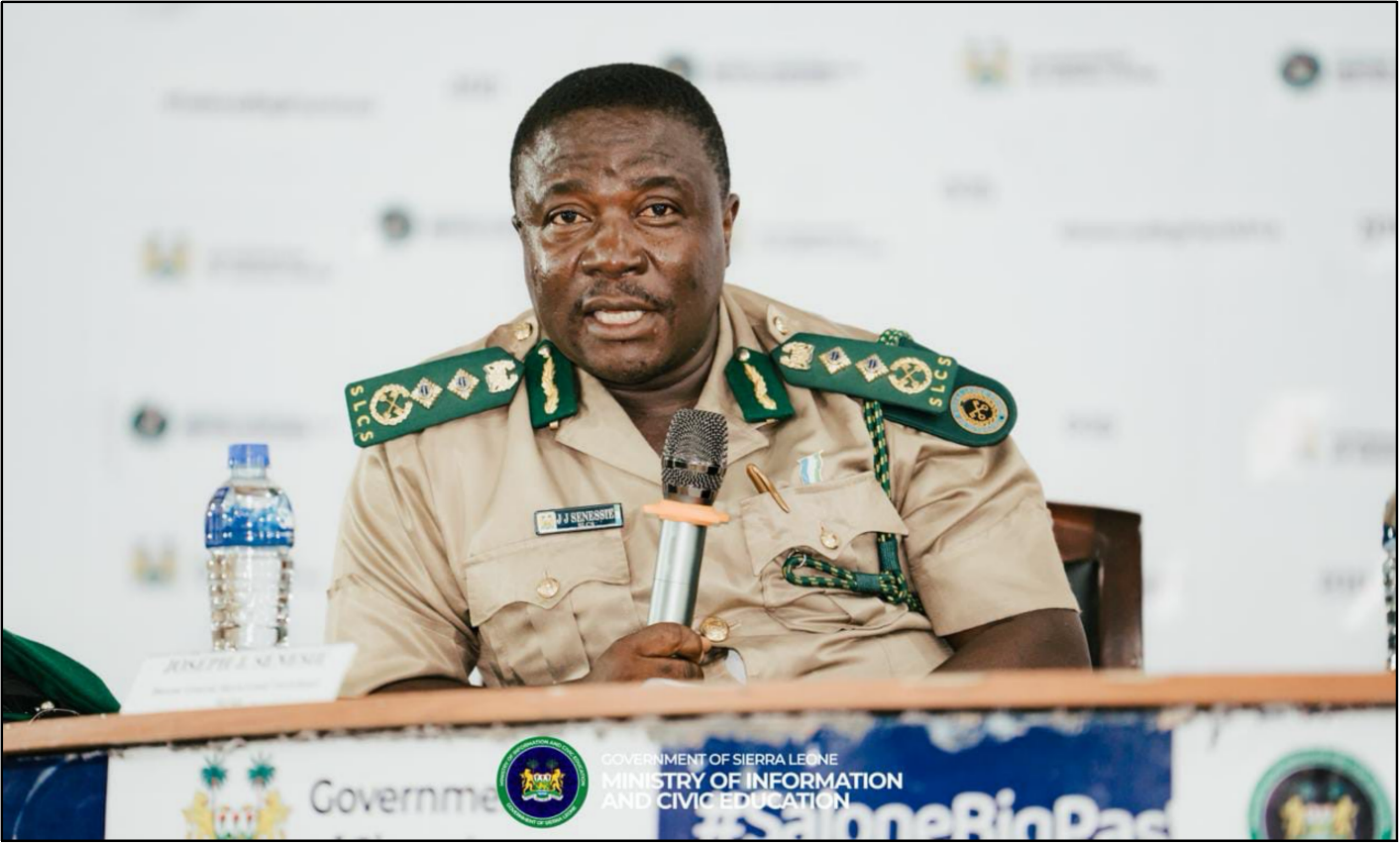
“We are seeking to transform rehabilitation by building stronger relationships with universities and expanding vocational training better to prepare persons in custody for reintegration into society,” Director General Joseph J. Senessie said at the Government’s Weekly Press Conference on 1 September 2026.
Addressing a gathering at the Miatta Civic Centre convened by the Minister of Information and Civic Education, Chernor Bah, under the theme “Fire Force, Correctional Service and the Police: What Is Being Done to Improve Citizens’ Experiences?” Mr Senessie said the transition from a traditional prison model to a correctional service in 2014 was a deliberate step toward custody, rehabilitation and reintegration.
“We have a double responsibility,’’ he said. “To ensure the safety of the public, the security and humanity of correctional environments, and to work with people in custody to address the factors that led them to commit their crimes and prepare them for responsible lives on release. “At the heart of that mission is education,” he said.
Mr Senessie said the Correctional Service wanted to work more closely with higher education institutions to create meaningful learning pathways for people serving sentences. Discussions are ongoing, particularly on a collaboration between the University of Sierra Leone and the University of Makeni, on how to support eligible persons in custody to pursue formal academic programs and obtain recognised qualifications while in custody.
“We have to provide education for those who may be in custody for many years,” he said. He added that long-term confinement should not mean lost opportunities for personal and professional development. “People in custody and serving long sentences should have access to learning and qualifications that will improve their chances when they are released,” he said, adding that the Service hopes to make academic education a structured part of rehabilitation, including programs that lead to certificates recognised by national institutions.
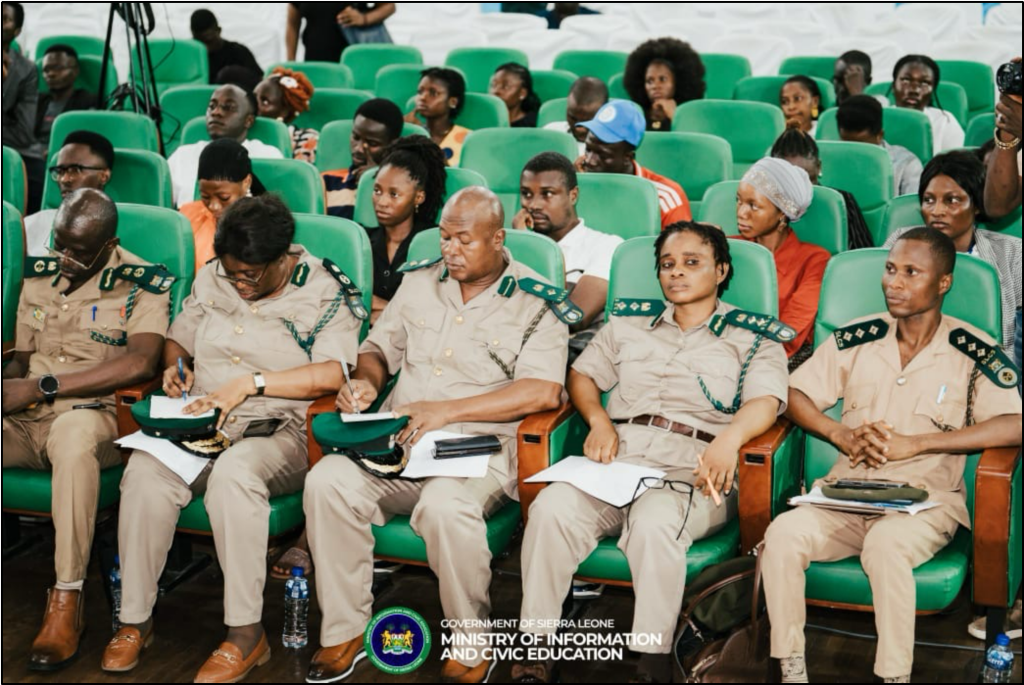
The Director General, however, stressed the need to complement formal education with practical skills training. Trades, agriculture, enterprise skills – vocational programs are being prioritised so that people leave correctional facilities with skills to earn an income and support families on release. “The Service’s larger goal is to foster self-reliance and positive community reintegration, and this practical approach fits in with that,” he added.
Mr Senessie said welfare and human rights protection are also core priorities. The Correctional Service is committed to humane treatment and respect for the fundamental rights of persons in custody, as well as the safety of persons in custody and officers. The Service remains engaged with human rights organisations, prison monitoring groups, and advocates to increase transparency and oversight.
Mr Senessie said the Service is addressing systemic problems, including overcrowding and access to justice, through better case management and modern technologies. We are developing electronic information management systems that may include artificial intelligence and other digital tools to improve records management and make critical information more accessible and organised. We will hire a consultant to help us develop and enhance these systems.
The Director General also stressed the importance of learning from international experience, including reforms in countries such as Kenya, as Sierra Leone adapts best practices to build a more modern correctional system.
Mr Senessie said the ultimate goal is to ensure that every person in the custody of the Sierra Leone Correctional Service can return to society as a useful, productive and peaceful citizen. “Collaboration with universities, vocational training, welfare measures, human rights protections and better correctional management can go a long way in strengthening rehabilitation and reintegration outcomes and giving people in custody a real chance at a positive second start,” he said.
