

Baomahun, Valunia Chiefdom, Bo District | August 2026 — Rev. Dr Jonathan Titus-Williams, Deputy Minister of Planning and Economic Development, led the National Steering Committee of the National Development-Induced Resettlement Directorate (NDIRD) on a monitoring visit to the FG Gold Mining Company Limited’s Baomahun Gold Project in a key oversight exercise at Sierra Leone’s first large-scale commercial gold mine.
The mission was conducted in partnership with several government ministries and agencies and assessed FG Gold’s compliance with the National Development-Induced Resettlement Act, 2023, and applicable international safeguards and standards, including those of the International Finance Corporation (IFC) and the Food and Agriculture Organisation (FAO). The main focus was on resettlement and compensation of Project-Affected Persons (PAPs) and measures to restore and sustain livelihoods disrupted by project activities.
The delegation comprised Development Secretary Ambrose James; Director of Planning, Policy and Projects Mr Abu Bakarr Jalloh; representatives from the Ministry of Lands, Housing and Country Planning; Ministry of Environment and Climate Change; Ministry of Gender and Children’s Affairs; and technical staff of the NDIRD. The group’s mandate was to ascertain the status of past, ongoing and planned resettlement activities for the project, including physical displacement, compensation and livelihood restoration. It also aimed at determining the number of affected communities and PAPs and verifying the company’s compliance with national and international standards.
The mission began with a safety briefing and a separate engagement session with PAPs to allow the government delegation to hear firsthand from affected persons about their experiences with the mining company. Positive views were expressed by several PAPs on compensation and livelihood restoration, but outstanding needs and concerns were also highlighted.
Community issues ranged from immediate resettlement issues to infrastructure and social services such as roads, schools, water supply, electricity and agricultural support. The NDIRD team said although some of these requests are outside the legal scope of resettlement processes, they can still be flagged to the company for consideration as part of wider community development and corporate social responsibility initiatives.
Speaking to PAPs and other stakeholders, Deputy Minister Rev. Dr Jonathan Titus-Williams lauded the community’s cooperation with the resettlement process and emphasised the government’s dual role to protect the interests of the affected communities and to provide a conducive environment for investors. “We are here in your interest as beneficiaries, but in the interest of the company as investors,” he said, stressing the need for balance so that the two sides can live together in peace and share the benefits of development. He reiterated that the mandate of the mission was to ensure compliance with the NDIR Act, 2023, especially the provisions on resettlement, compensation and livelihood restoration.
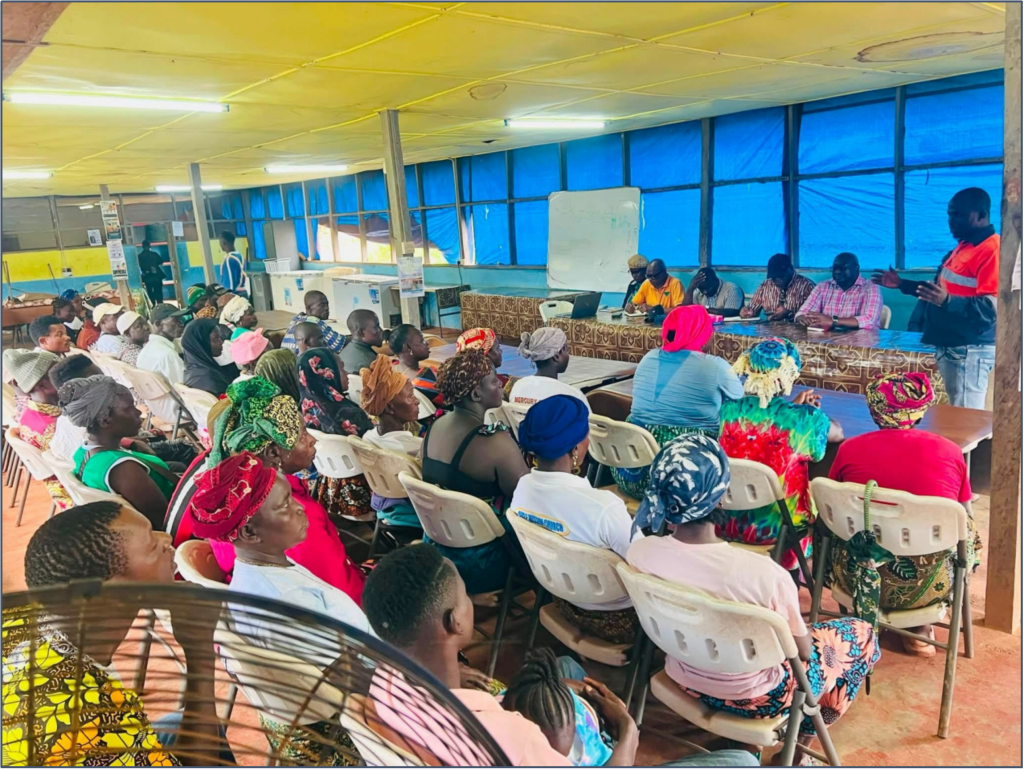
The Development Secretary, Ambrose James, who is from the region, said development must be pursued peacefully, transparently and responsibly. He called on all parties concerned to be honest and truthful and stressed that it is the duty of the Directorate to ensure that those affected are fairly compensated and that the necessary procedures are followed. “Effective resettlement is not about compensation,” he said, adding that long-term livelihoods and welfare should be at the heart of any resettlement programme.
Members of the National Steering Committee stressed the need for due diligence, fairness and strict compliance with the procedures, especially regarding land and crop compensation, environmental safeguards, social safeguards, gender issues and protection of children. These priorities have been developed in response to specific community concerns over outdated crop valuation rates, adequacy of compensation for physical resettlement and the need for youth employment opportunities.
Following this, the NDIRD delegation held a formal meeting with the FG Gold management, where the company provided updates on construction progress at Baomahun and activities related to resettlement. Presentations addressed the company’s approach to the implementation of the Resettlement Action Plan (RAP), compensation mechanisms, livelihood restoration measures and environmental and social safeguards. The discussions centred on the practical implementation of the RAP, company compliance with the NDIR Act and applicable international standards and clarifying outstanding issues that require continued engagement between the company, government and affected communities.
The delegation then went to the Baomahun project site, where they saw first-hand the ongoing construction, operational and environmental management activities and gained a better understanding of the potential implications of project operations for nearby communities.
The next day, the delegation travelled to Magbirie Village in Marampa Chiefdom, Port Loko District, where Development Secretary Ambrose James held a stakeholder meeting with the chiefdom speaker, town chief, community elders and residents who have connections to the Marampa Mines. Similar issues were raised by members of the community at Baomahun, including compensation for crops, physical resettlement and outdated rates of valuation for crops and employment for young people. The development secretary told the attendees that their concerns were noted and will be followed up in further engagements with the mining company and other stakeholders, urging residents to remain calm and patient as the ministry continues its oversight.
The monitoring mission is part of the broader commitment of the government to undertake development-induced resettlement in a transparent, lawful and socially responsible manner that protects the rights and livelihoods of affected persons and fosters an enabling environment for responsible investment.
