
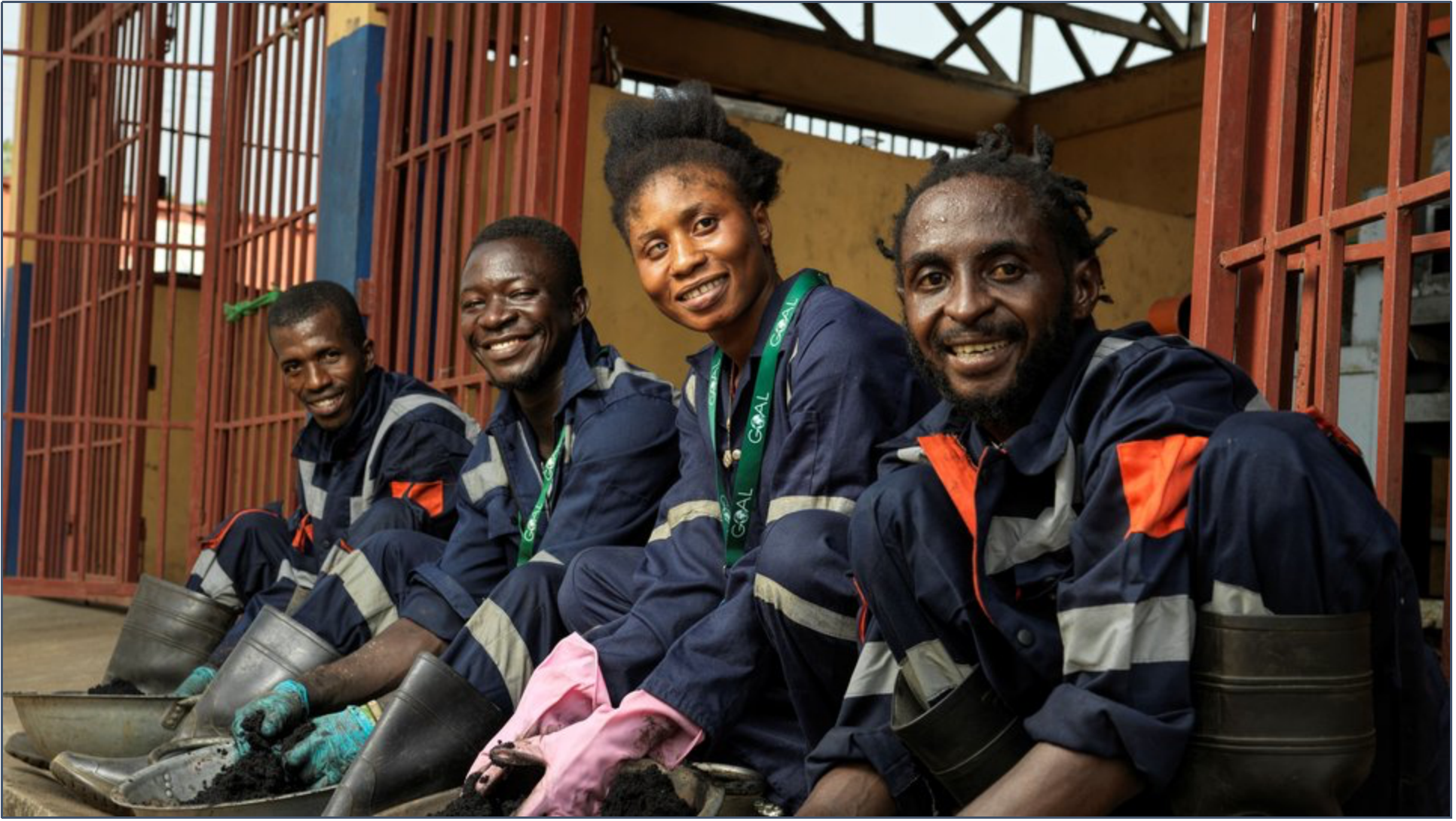
Kingtom, one of Freetown’s most densely populated and climate-vulnerable districts, has been plagued by unmanaged waste, tidal flooding, and repeated disease outbreaks for years. Untreated liquid waste is often washed through informal settlements, contaminating homes and increasing exposure to climate-related health hazards as sea levels rise and rain becomes more erratic. In response, an Irish Aid-supported, locally led intervention is changing the city’s approach to protecting people, livelihoods and the environment.
Since 2021, GOAL has been operating Sierra Leone’s first urban waste-to-energy facility in partnership with Freetown City Council, WaterShare Ireland, the UK Foreign, Commonwealth and Development Office (FCDO) and Irish Aid. The facility is built on reclaimed land from the old Kingtom dumpsite and safely treats over 20% of Freetown’s liquid waste, turning recovered materials into compost, biogas and clean-burning fuel briquettes.
The briquettes are designed to replace charcoal and burn longer, reducing household energy costs and helping mitigate deforestation. Their use reduces demand for wood fuel and improves air quality in homes and communities, thereby helping to mitigate climate change. The plant is producing compost that is beneficial to urban and peri-urban agriculture and biogas that is an alternative source of energy. Many local benefits from waste that was once a threat to public health.
The transformation is apparent in the neighbourhoods surrounding the old dump. Floodwaters that once pushed waste back through alleyways have markedly receded, and better waste management has reduced residents’ exposure to waterborne diseases exacerbated by climate change. The facility has also given former waste pickers who once scavenged the dumpsite dignified and stable employment: former waste pickers He now has a job as a plant operator, contributing to the household’s resilience and coping ability over the long term.
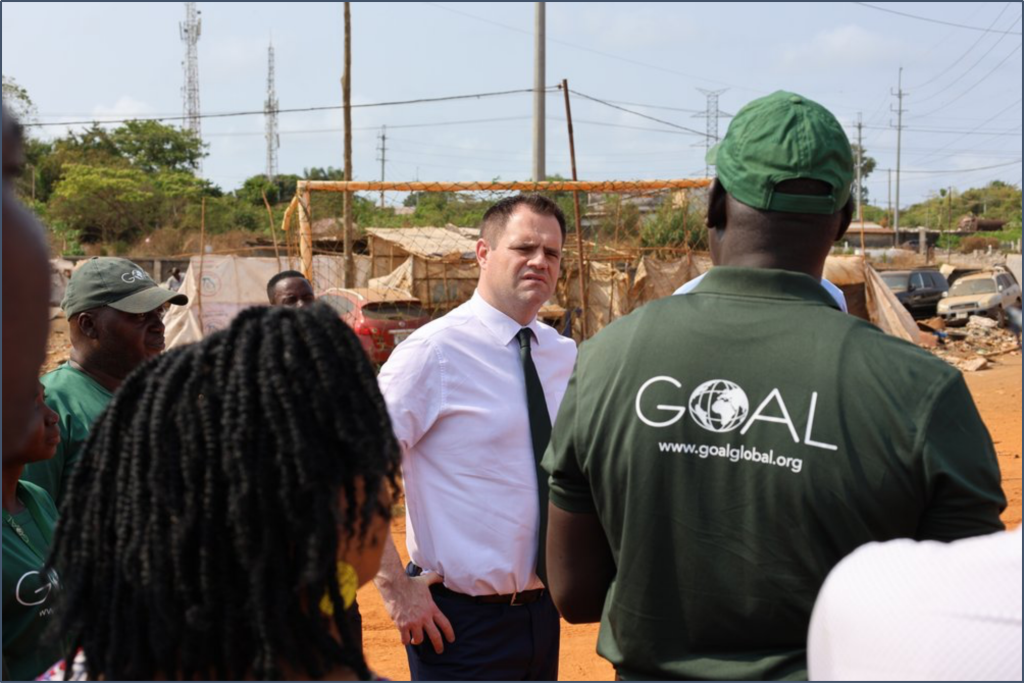
This project was intentionally designed as a city-owned and -managed initiative so the climate-responsive services it provides will outlast external aid. The pragmatic community-driven model has attracted attention from across the region. Delegations from Liberia and Ghana have visited the site to learn from the model, which could be replicated throughout West Africa.
In a city under increasing climate pressure, this Irish Aid-funded waste-to-energy project shows how integrated, locally governed systems can save lives, protect livelihoods and build a more sustainable future for vulnerable urban populations.
