
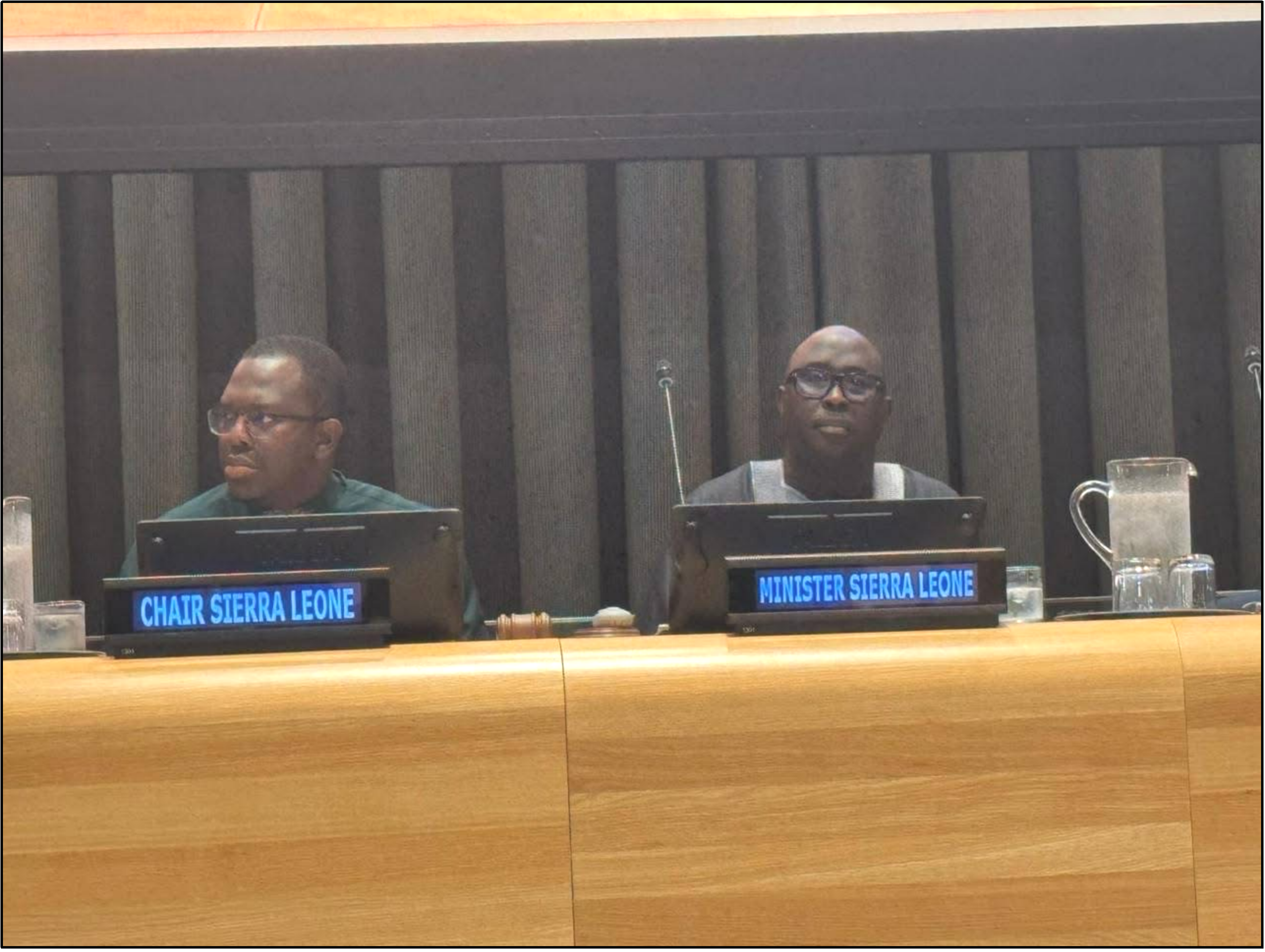
Sierra Leone’s Minister of Trade and Industry, H.E. Alpha Ibrahim Sesay, speaking at the celebration of ECOWAS Day, held at the United Nations Trusteeship Council Chamber on 26 June 2026, highlighted the importance of economic integration and trade in building peace and resilience in West Africa. The ECOWAS Group of Ambassadors in New York and the ECOWAS Permanent Observer Mission organised a meeting to mark the 51st anniversary of ECOWAS and the 20th anniversary of the UN Peacebuilding Fund, bringing together senior UN officials, regional commissioners, ministers, development banks, private sector leaders and civil society.
The keynote address was delivered by His Excellency Dr Julius Maada Bio, President of Sierra Leone and Chair of the ECOWAS Authority of Heads of State and Government, whose good wishes were conveyed by the Chair of the ECOWAS Council of Trade Ministers, Minister Sesay. In his keynote address, Minister Sesay made a strong point. Integration is not only a development tool, but one of the most enduring pillars of peace. “West Africa is a community of over 450 million people and a combined purchasing power economy of some $3.4 trillion and a projected growth of 7.1 per cent by 2027,” he said. Yet the region faces acute challenges of insecurity, violent extremism, climate shocks, youth unemployment and economic fragmentation.
Five decades after integration, intra-ECOWAS trade is only 12% of total trade compared to the levels of Asia (58%) and Europe (67%). But he said the necessity of a single market was already clear in the day-to-day cross-border activities of traders, much of it informal. He argued that policy should formalise and foster the demand, not suppress it.
Minister Sesay connected economics to fragility, also highlighting the scale of the toll that climate change is taking, costing African economies between 5 and 15% of GDP per year, and the scale of food insecurity in the region. Intra-regional trade is estimated at $10 billion a year, showing how regional markets can boost food security and stability. “An area where food can be moved efficiently across borders is an area that is harder to destabilise,” he told delegates.
He pointed out that addressing women and youth. Women are estimated to account for 74% of informal cross-border traders in West Africa. The author argues that to enhance trade facilitation, simplified procedures, women-friendly border infrastructure and harassment protections should be treated as core economic policies rather than secondary welfare measures. Youth unemployment is the defining challenge of the region, he warned, saying that integration that does not create opportunities for young people is doomed to fail.
His argument was borne out by the reforms in Sierra Leone. The minister underlined the importance of regional integration and the development of value chains to overcome structural vulnerabilities, such as the dependence on exports of raw commodities (iron ore represents 55% of exports in 2024) and the import of rice. He also detailed the actions of his administration including the migration of customs to ASYCUDA World, the establishment of an electronic single window, the implementation of the ECOWAS Common External Tariff, and a commitment to implement 82.8% of the provisions of the WTO Trade Facilitation Agreement by 2027. He informed the audience that Sierra Leone ratified the AfCFTA in 2019 and will set up a National Implementation Committee with the AfCFTA Secretariat and the UN Economic Commission for Africa in June 2025. Programmes such as Feed Salone were key in transforming the country’s food import bill into domestic production, jobs and exports – outcomes that also meet regional market goals.
Much of the event centred on finance and the complementarity of regional and multilateral instruments for peacekeeping. The ECOWAS Peace Fund and the UN Peacebuilding Fund are mutually reinforcing, one African ownership and solidarity, the other risk-tolerant funding at scale,” said Minister Sesay. The UN Peacebuilding Fund, which has disbursed over $1.4 billion since its inception, is facing a replenishment gap of some $500 million, he said. He called on partners to close the gap in how peacebuilding finance is framed as trade-enabling finance. Investments that strengthen governance stability, institutional resilience and reduce the risk premium for private investment are vital to enable regional trade and private sector engagement in fragile settings.
Minister Sesay ended by urging the UN system, donor governments and multilateral development banks to prioritise trade infrastructure and economic opportunity as critical peacebuilding investments. He urged the European Union, African Union, World Bank and African Development Bank to harmonise their instruments with the regional integration agenda and to channel much-needed climate adaptation funding to the region. He sold Sierra Leone to the private sector as an attractive growth story, and called for fair-term partnerships with Sierra Leone.
The event was organised around two substantive pillars: a panel moderated by H.E. Lamin Dibba on the ECOWAS and UN peace funds as a catalyst for peace and economic resilience, with contributions from UN and ECOWAS officials and experts; and a second panel on economic integration, regional connectivity and private sector engagement with contributions from UNDP, the ECOWAS Directorate of Trade and UNCITRAL. The interactive session, chaired by H.E. Mohamed Dabo, Permanent Representatives of the ECOWAS Member States and Partner Delegations, highlighted the common interest in trade-led pathways to stability in the region.
West Africa: Deeper Economic Integration Key to Long-Term Peace, Trade Minister Tells UN News.
Sierra Leone’s Minister of Trade and Industry, H.E. Alpha Ibrahim Sesay, speaking at the celebration of ECOWAS Day, held at the United Nations Trusteeship Council Chamber on 26 June 2026, highlighted the importance of economic integration and trade in building peace and resilience in West Africa. The ECOWAS Group of Ambassadors in New York and the ECOWAS Permanent Observer Mission organised a meeting to mark the 51st anniversary of ECOWAS and the 20th anniversary of the UN Peacebuilding Fund, bringing together senior UN officials, regional commissioners, ministers, development banks, private sector leaders and civil society.
The keynote address was delivered by His Excellency Dr Julius Maada Bio, President of Sierra Leone and Chair of the ECOWAS Authority of Heads of State and Government, whose good wishes were conveyed by the Chair of the ECOWAS Council of Trade Ministers, Minister Sesay. In his keynote address, Minister Sesay made a strong point. Integration is not only a development tool, but one of the most enduring pillars of peace. “West Africa is a community of over 450 million people and a combined purchasing power economy of some $3.4 trillion and a projected growth of 7.1 per cent by 2027,” he said. Yet the region faces acute challenges of insecurity, violent extremism, climate shocks, youth unemployment and economic fragmentation.
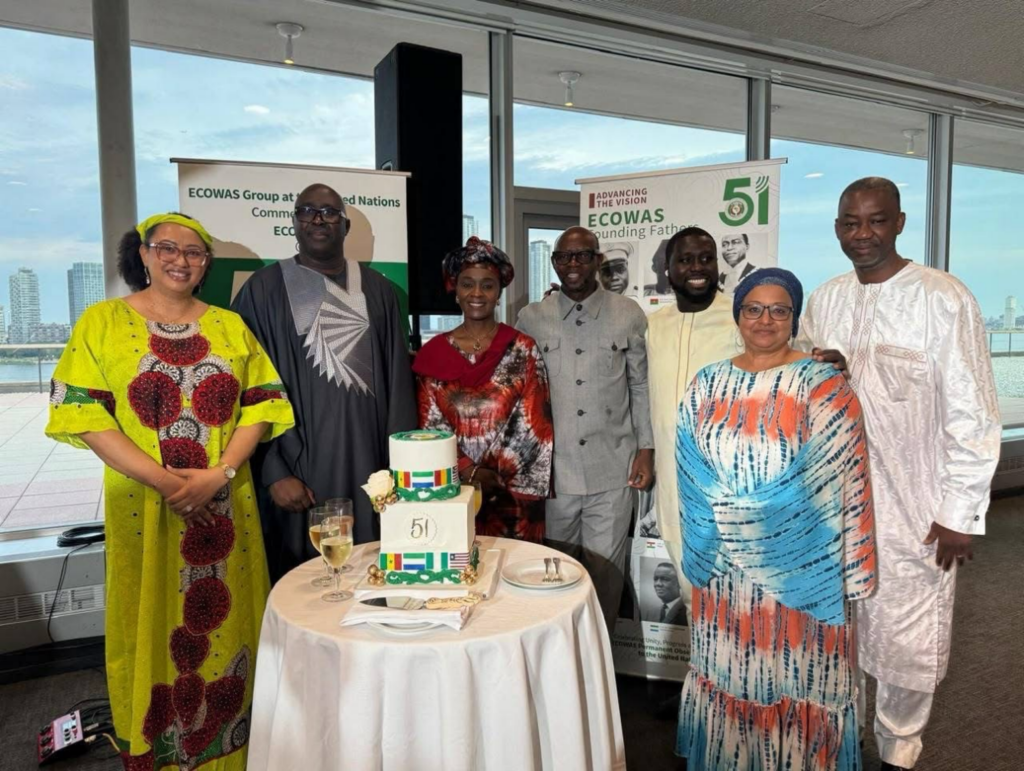
Five decades after integration, intra-ECOWAS trade is only 12% of total trade compared to the levels of Asia (58%) and Europe (67%). But he said the necessity of a single market was already clear in the day-to-day cross-border activities of traders, much of it informal. He argued that policy should formalise and foster the demand, not suppress it.
Minister Sesay connected economics to fragility, also highlighting the scale of the toll that climate change is taking, costing African economies between 5 and 15% of GDP per year, and the scale of food insecurity in the region. Intra-regional trade is estimated at $10 billion a year, showing how regional markets can boost food security and stability. “An area where food can be moved efficiently across borders is an area that is harder to destabilise,” he told delegates.
He pointed out that addressing women and youth. Women are estimated to account for 74% of informal cross-border traders in West Africa. The author argues that to enhance trade facilitation, simplified procedures, women-friendly border infrastructure and harassment protections should be treated as core economic policies rather than secondary welfare measures. Youth unemployment is the defining challenge of the region, he warned, saying that integration that does not create opportunities for young people is doomed to fail.
His argument was borne out by the reforms in Sierra Leone. The minister underlined the importance of regional integration and the development of value chains to overcome structural vulnerabilities, such as the dependence on exports of raw commodities (iron ore represents 55% of exports in 2024) and the import of rice. He also detailed the actions of his administration including the migration of customs to ASYCUDA World, the establishment of an electronic single window, the implementation of the ECOWAS Common External Tariff, and a commitment to implement 82.8% of the provisions of the WTO Trade Facilitation Agreement by 2027. He informed the audience that Sierra Leone ratified the AfCFTA in 2019 and will set up a National Implementation Committee with the AfCFTA Secretariat and the UN Economic Commission for Africa in June 2025. Programmes such as Feed Salone were key in transforming the country’s food import bill into domestic production, jobs and exports – outcomes that also meet regional market goals.
Much of the event centred on finance and the complementarity of regional and multilateral instruments for peacekeeping. The ECOWAS Peace Fund and the UN Peacebuilding Fund are mutually reinforcing, one African ownership and solidarity, the other risk-tolerant funding at scale,” said Minister Sesay. The UN Peacebuilding Fund, which has disbursed over $1.4 billion since its inception, is facing a replenishment gap of some $500 million, he said. He called on partners to close the gap in how peacebuilding finance is framed as trade-enabling finance. Investments that strengthen governance stability, institutional resilience and reduce the risk premium for private investment are vital to enable regional trade and private sector engagement in fragile settings.
Minister Sesay ended by urging the UN system, donor governments and multilateral development banks to prioritise trade infrastructure and economic opportunity as critical peacebuilding investments. He urged the European Union, African Union, World Bank and African Development Bank to harmonise their instruments with the regional integration agenda and to channel much-needed climate adaptation funding to the region. He sold Sierra Leone to the private sector as an attractive growth story, and called for fair-term partnerships with Sierra Leone.
The event was organised around two substantive pillars: a panel moderated by H.E. Lamin Dibba on the ECOWAS and UN peace funds as a catalyst for peace and economic resilience, with contributions from UN and ECOWAS officials and experts; and a second panel on economic integration, regional connectivity and private sector engagement, with contributions from UNDP, the ECOWAS Directorate of Trade and UNCITRAL. The interactive session, chaired by H.E. Mohamed Dabo, Permanent Representatives of the ECOWAS Member States and Partner Delegations, highlighted the common interest in trade-led pathways to stability in the region.
