
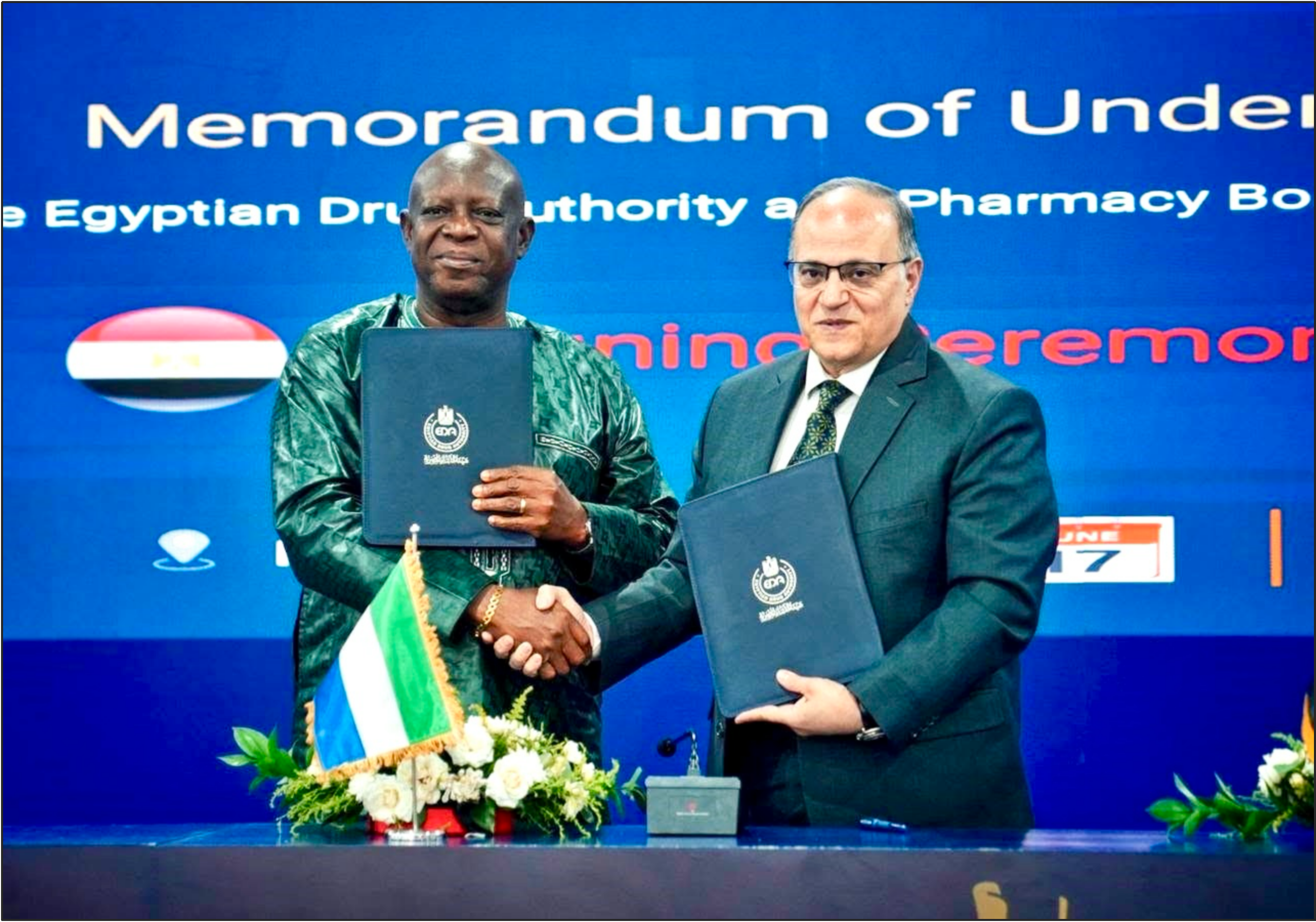
The Egyptian Drug Authority (EDA) and Sierra Leone’s Pharmacy Board have signed a memorandum of understanding to strengthen pharmaceutical regulatory cooperation, capacity building, and technical expertise exchange. On the sidelines of the fifth Africa Health ExCon 2026, EDA Chairperson Ali El Ghamrawy and Pharmacy Board of Sierra Leone Chairperson James Peter Komie signed the agreement, which was witnessed by Sierra Leone’s Ambassador to Egypt, Sadiq Sillah.
The MoU establishes a framework for closer bilateral collaboration with the goal of strengthening regulatory oversight and improving the quality and safety of medical products available to the populations of both countries. It is consistent with the EDA’s overall strategy of broadening strategic partnerships across Africa and promoting greater coordination among national regulatory agencies.
“We are committed to broadening strategic partnerships with African regulatory bodies to support regulatory integration and pharmaceutical security across the continent,” El Ghamrawy stated at the signing. He emphasised that increased collaboration could help harmonise regulatory approaches, facilitate the exchange of technical know-how, strengthen institutional capacity, and improve access to safe, effective, and high-quality medical products.
Ambassador Sadiq Sillah praised the EDA’s leadership role in African pharmaceutical regulation and Egypt’s willingness to share regulatory expertise and support pharmaceutical development across the continent. He also mentioned Sierra Leone’s desire to encourage increased Egyptian investment and commercial presence in its domestic pharmaceutical market.
James Peter Komie, for his part, emphasised the value of learning from the EDA’s extensive experience in regulatory policy, inspections, training, and capacity-building initiatives. He stated that the partnership would play an important role in developing Sierra Leone’s pharmaceutical sector and advancing public health objectives.
The memorandum outlines several specific areas of collaboration, including collaborative work on pharmaceutical product registration, standardised regulatory inspections, enhanced pharmacovigilance, joint training programs, and workforce development. By addressing these issues, the signatories hope to improve the efficiency and effectiveness of their regulatory systems, raise quality standards, and encourage institutional excellence.
Aside from bilateral activities, the agreement indicates a shared interest in promoting regional regulatory integration. The partners intend to investigate ways to promote mutual recognition, build regulatory trust, and support the advancement of pharmaceutical regulatory frameworks throughout Africa, thereby contributing to a more coordinated and resilient continental ecosystem for medicines regulation.
Officials from both sides described the MoU as a practical step toward long-term collaboration that will benefit patients, healthcare providers, and national health systems, while also positioning Egypt and Sierra Leone as active participants in the larger movement toward stronger, more harmonised pharmaceutical governance in Africa.
