
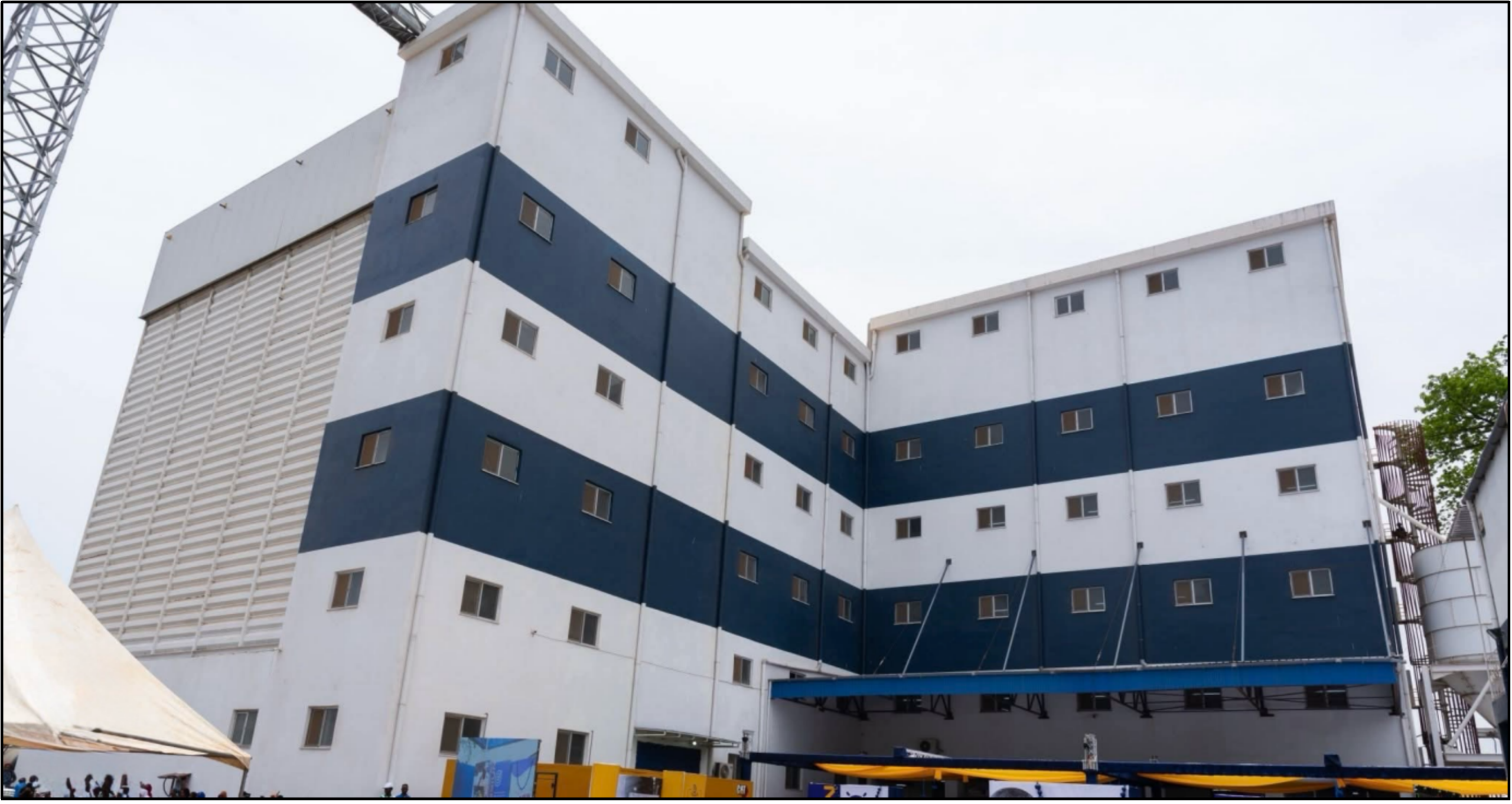
Cline Town, Freetown, 2026 — President Dr Julius Maada Bio officially commissioned a modern flour milling facility operated by Sierra Leone Flour Mill on Thursday, describing the investment as a vote of confidence in the private sector’s growth and Sierra Leoneans’ productive capacity.
The new plant, owned by businessman Alhaji Amadu Juldeh Sowe, is expected to significantly increase domestic flour production, strengthen national food security, and reduce the country’s reliance on imported goods. According to company management, production capacity at the facility has been increased from 200 metric tonnes to 600 metric tonnes, a threefold increase that the company claims will help lower prices and improve supply in Sierra Leone and neighbouring markets such as Liberia and Guinea.
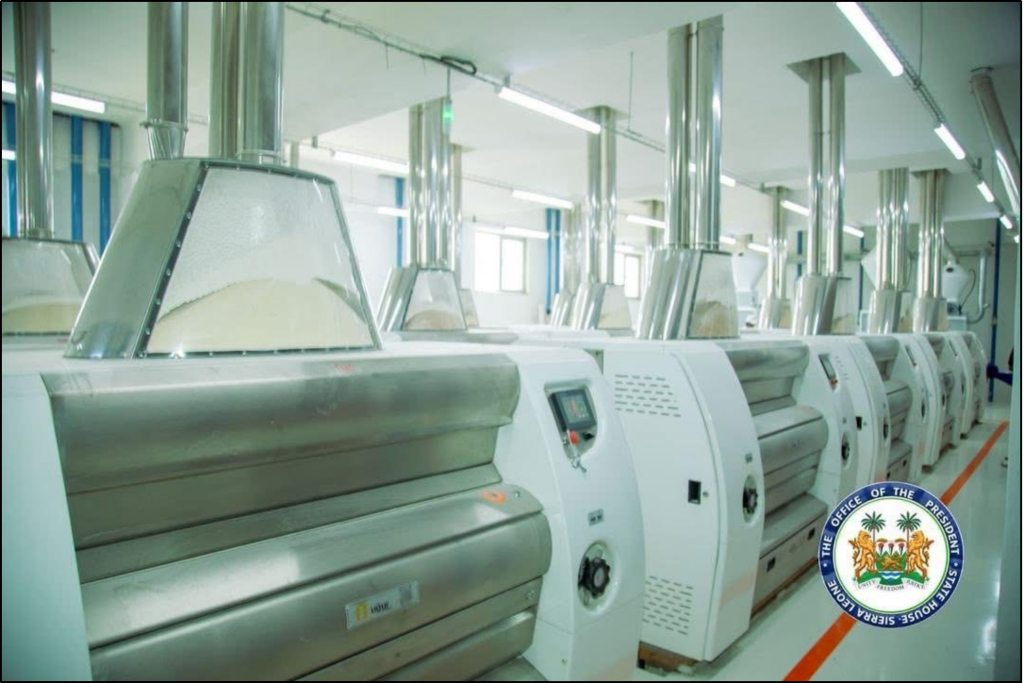
During the commissioning ceremony in Cline Town, President Bio described the project as a critical milestone in his administration’s industrial transformation agenda. He described the investment as consistent with the government’s efforts to convert locally available raw materials into finished goods, diversify the economy, and increase national productivity. “This is more than just the installation of infrastructure or the announcement of a private investment. The President stated, “It is the continuation of a national story of resilience, renewal, and economic sovereignty.”
President Bio also reflected on the country’s flour production history, noting that the original flour mill, established in 1968 as the Freetown Flour Mill by Seaboard West Africa Limited, was once a symbol of Sierra Leone’s industrial ambitions. After years of decline, the facility’s rebirth and expansion restores local production capacity, he said, allowing the country to compete more aggressively in the regional agro-processing market.
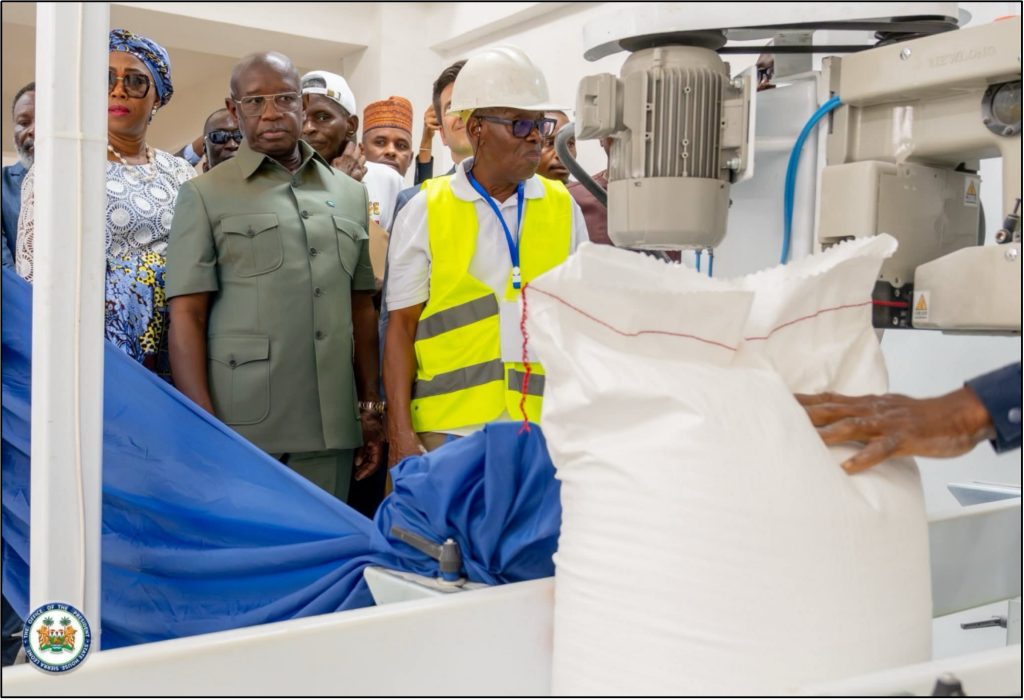
Alhaji Amadu Juldeh Sowe, chief executive officer of Sierra Leone Flour Mill, thanked President Bio for policies that he said created an enabling business environment, including reforms and tax breaks that aided the project. Sowe used his own journey from local baker to factory owner as an example of what disciplined entrepreneurship and supportive policy can achieve.
Abdu Muwonge, World Bank Country Manager for Sierra Leone, also addressed attendees, describing the project as an example of increased collaboration between the government, development partners, and the private sector. He stated that the mill benefited from World Bank-facilitated financing and technical support and was in line with the country’s Feed Salone strategy, which aims to increase domestic food production and processing.
Stakeholders at the event emphasised the mill’s ability to create jobs, lower import bills, and encourage additional investment in agro-processing. The facility’s commissioning represents another step forward in Sierra Leone’s larger push for industrialisation, economic diversification, and increased food self-sufficiency.
