
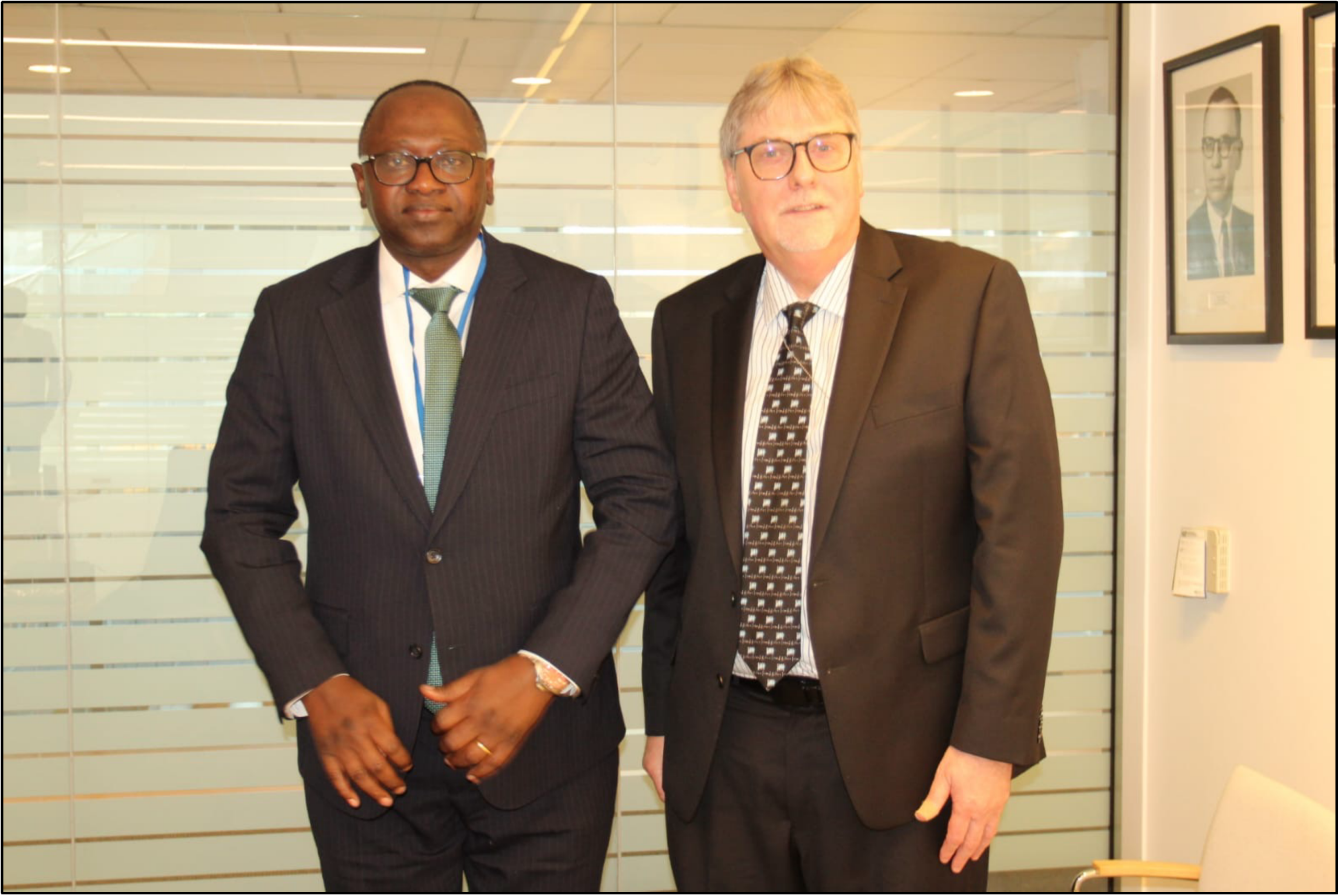
Sierra Leone’s Minister of Finance, Sheku Ahmed Fantamadi Bangura, led a high-level delegation to the International Monetary Fund and World Bank Group Spring Meetings in Washington, DC (April 13-18, 2026), to advocate for support measures to mitigate the economic impact of the ongoing Middle East crisis. The delegation included senior government and central bank officials such as the Ministers of Energy and Basic and Senior Secondary Education, the Financial Secretary, the Governor and Deputy Governor of the Bank of Sierra Leone, and Chief Economists from both the Ministry of Finance and the Bank of Sierra Leone.
Minister Bangura began a series of technical and policy-level engagements by meeting with the Director of the IMF’s Fiscal Affairs Department. Speaking on behalf of President Julius Maada Bio, the Minister expressed formal gratitude for FAD’s technical assistance, which he described as critical in strengthening Sierra Leone’s public financial management framework. He cited collaboration on several specific reforms and capacity-building initiatives, such as the revision of the Public Financial Management Act in 2016, the updating of the Public Procurement Act in 2016, improvements to cash management and forecasting systems, and the transition to Government Finance Statistics 2014 standards.
The Minister emphasised that the government’s commitment to sound macroeconomic policies over the last two years has resulted in tangible gains. Sierra Leone, he said, has had low inflation, a stable exchange rate, a positive primary fiscal balance, and a sustainable interest-rate environment for government securities. At the same time, Minister Bangura warned that the recent Middle East crisis poses a serious threat to these hard-won achievements, stating that supply disruptions and higher commodity and food prices could quickly erode macroeconomic stability and reverse progress on poverty reduction and food security.
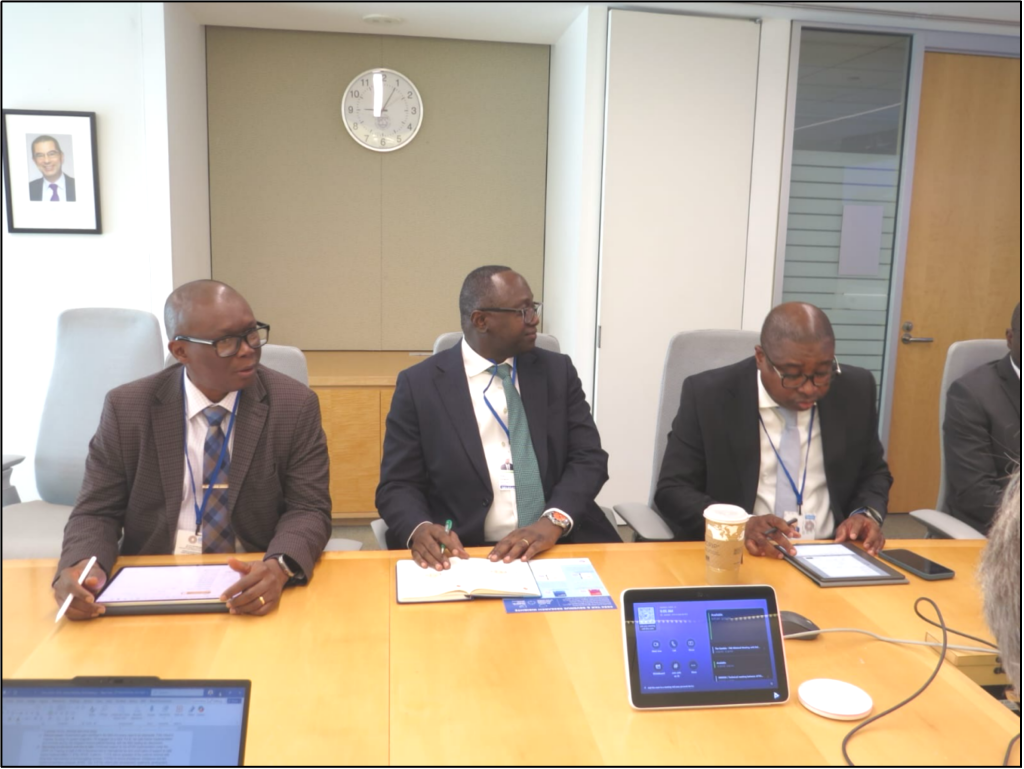
In his discussions with the FAD Director, Minister Bangura requested that the IMF continue to provide technical assistance, particularly in strengthening Sierra Leone’s mining capacity. He emphasised the importance of assistance with transfer pricing practices, the design and implementation of advance pricing agreements, a safe harbour regime, and a technical review of tax legislation. He identified several reform priorities, including a review of the Income Tax Act of 2000, the Excise Act of 1998, and a midterm review of the government’s Medium Term Revenue Strategy (2023-2027). The FAD Director acknowledged the Minister’s guidance, confirmed ongoing collaboration, and stated that the Department had given positive consideration to requests for additional technical engagement.
Minister Bangura also consulted with Sierra Leone’s resident IMF country team. He updated the Mission Chief, Mr Christian Saborowski, on recent economic developments and expressed concern that the Middle East crisis has resulted in a significant shift in the country’s existing framework under the IMF-supported Extended Credit Facility (ECF). The Minister explained that the government is actively taking mitigation measures, but he asked what additional assistance the IMF could provide to developing countries experiencing similar shocks.
Mr Saborowski informed Minister Bangura that the IMF is acutely aware of the difficult environment in which many developing and low-income countries find themselves, as well as the crisis’s potential to exacerbate food insecurity and poverty. He advised, however, that in Sierra Leone’s case, the focus should remain on meeting the program’s Quantitative Performance Criteria and Structural Benchmarks by the end of April, so that the third review under the ECF arrangement can be completed in June 2026. The Mission Chief’s guidance emphasised the delicate balance between providing flexibility for country-specific shocks and maintaining program credibility through the timely implementation of agreed-upon policy actions.
In parallel, the Minister met with Dr Zarau W. Kibwe, Executive Director of the World Bank Group’s Africa West I Constituency, to discuss financial and operational options for assisting Sierra Leone in dealing with the spillover effects of the Middle East crisis. Minister Bangura stated that the country portfolio with the World Bank is performing well and that discussions were underway to use the World Bank’s Rapid Response Option (RRO) to fund measures aimed at ensuring food security, protecting vulnerable households, and preserving critical public services.
Dr Kibwe and World Bank officials expressed their willingness to collaborate with Sierra Leone on practical, time-bound interventions that align with the Bank’s crisis response instruments, while also considering the country’s ongoing reform commitments and portfolio performance.
Sierra Leone’s leadership sought technical and financial support from global institutions during the Spring Meetings in order to strengthen resilience, maintain macroeconomic stability, and protect poverty reduction gains in the face of an uncertain international shock. The Minister’s outreach focused on a two-pronged strategy: continue to implement sound domestic fiscal and structural reforms while obtaining timely international assistance—both program and project-based—to mitigate the crisis’s short-term effects.
