
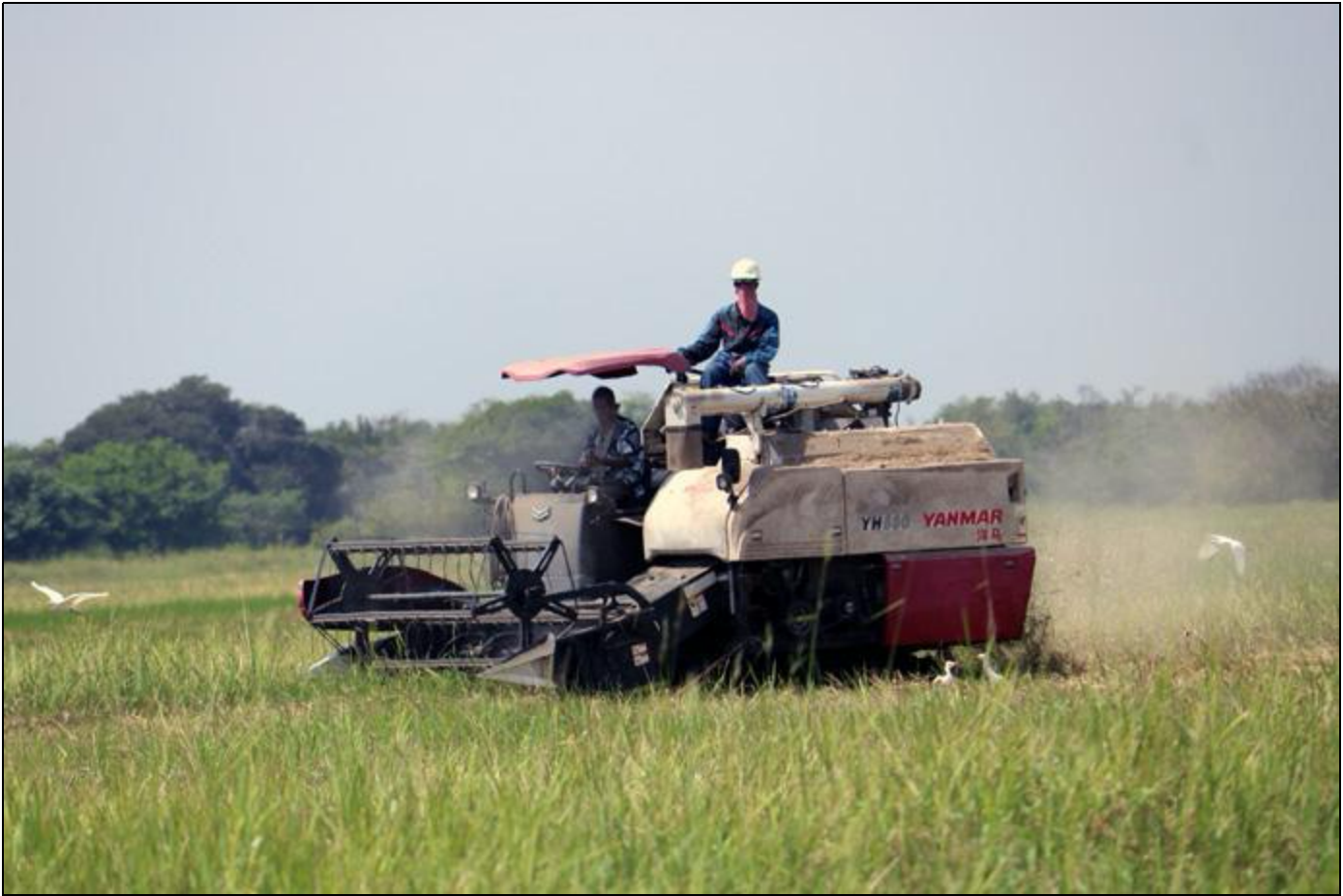
Sierra Leone’s government has taken a significant step toward strengthening national food security by paying a high-level visit to the Torma Bum Rice Project, which is now in full operation as part of the Feed Salone Agenda. On Thursday, Dr Henry Musa Kpaka, Minister of Agriculture and Food Security, led a delegation that included the Chief of Defence Staff, Lieutenant General Amara Idara Bangura, civil society representatives, and senior media members to assess progress on one of the country’s most ambitious agricultural initiatives.
Torma Bum, located in a fertile agricultural zone, is being developed into an agro-industrial hub that will combine large-scale rice cultivation, modern irrigation, on-site processing, warehousing, and marketing. The initiative’s central goal is to build four standard irrigation systems capable of supporting approximately 4,000 hectares of rice farmland. Project supporters claim that these systems will be Sierra Leone’s first large-scale irrigation scheme of this kind, allowing for year-round cultivation and a significant increase in productivity.
Pavi Fort is constructing the irrigation works with funding from the Islamic Development Bank and the Sierra Leone government. The African Development Bank has invested $34 million over five years in the overall project, which includes complementary operations in Kambia District. The Feed Salone Agenda calls for the financing packages to reduce the country’s reliance on imported rice, improve food self-sufficiency, and stimulate rural economic growth.
During the site visit, Dr Kpaka stated that this was his third trip to Torma Bum this year and that he was pleased with the tangible progress made in land preparation, irrigation work, and the emerging modern rice processing centre. “I am pleased to see that ploughing is continuing, irrigation work is progressing, and the processing centre is taking shape,” he said, noting that the government is constructing integrated agricultural hubs that serve as full ecosystems for rice production.
The minister emphasised that the project’s ambitions go beyond rice. He explained that Feed Salone aims to develop complementary value chains—livestock, vegetables, and other crops—so that hubs like Torma Bum can support diverse rural economies. He added that there is room and opportunity for private-sector participation, and that the government intends to solicit bids to attract investors to the site.
Military involvement in the project was a major theme during the visit. Lieutenant General Amara Idara Bangura described Torma Bum as both impressive and strategic, and stated that the Republic of Sierra Leone Armed Forces would increase its agricultural engagement with the site’s resources. The military intends to deploy equipment and cultivate approximately 5,000 acres at Torma Bum, making the complex a hub for their production activities. Lieutenant General Bangura cited the armed forces’ previous involvement in cashew plantations in other regions, framing rice expansion as part of efforts to improve military self-sufficiency while contributing to national food supplies.
Project Coordinator Abdulai Bum Wai provided technical context, stating that Torma Bum is being implemented in three stages. Phase one focuses on infrastructure, including irrigation systems, storage facilities, and road networks. The second phase focuses on technology development, specifically seed improvement led by the Sierra Leone Agriculture Rice Research Institute, to provide farmers with high-quality seed. The third phase focuses on production, processing, and job creation, with the ultimate goal of establishing an agro-industrial cluster that brings together farmers, processors, and markets.
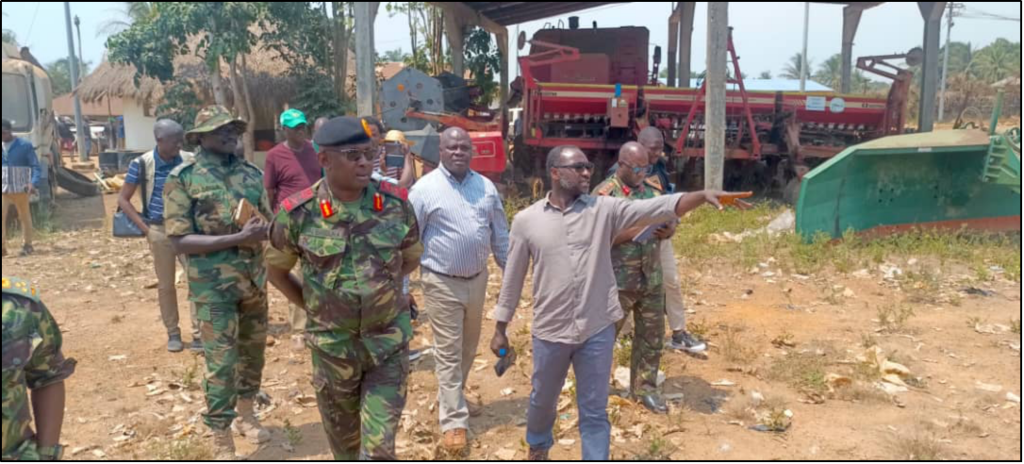
Modern storage and processing facilities, such as paddy rice milling, drying systems, and agrochemical support services, are already in place. Officials stated that these facilities should significantly reduce post-harvest losses while also improving the quality and marketability of locally produced rice. The Rice Agro Industrial Cluster (RAIC) model that underpins the project is intended to integrate production, processing, and marketing into a single value chain, with plans for a standard processing factory capable of packaging rice for distribution throughout the country.
Stakeholders emphasised the importance of irrigation to the project. While initial timelines called for the irrigation systems to be completed within a year, project managers recognised that the large scale and technical complexity required deliberate, careful execution. When completed, the four systems will be a “game changer,” allowing for up to three rice harvests per year in addition to vegetable production, increasing yields and boosting farmer incomes.
As the tour ended, participants expressed hope that Torma Bum could serve as a model for agricultural transformation across the country. Officials are optimistic that the project will play a critical role in achieving Sierra Leone’s food security goals and catalysing rural economic development, thanks to coordinated government leadership, international financing, increased military engagement, and opportunities for private investment. Torma Bum is a tangible example of Sierra Leone’s renewed commitment to agricultural self-sufficiency, as well as the potential for strategic investment, innovation, and collaboration to unleash the country’s agricultural capacity.
