
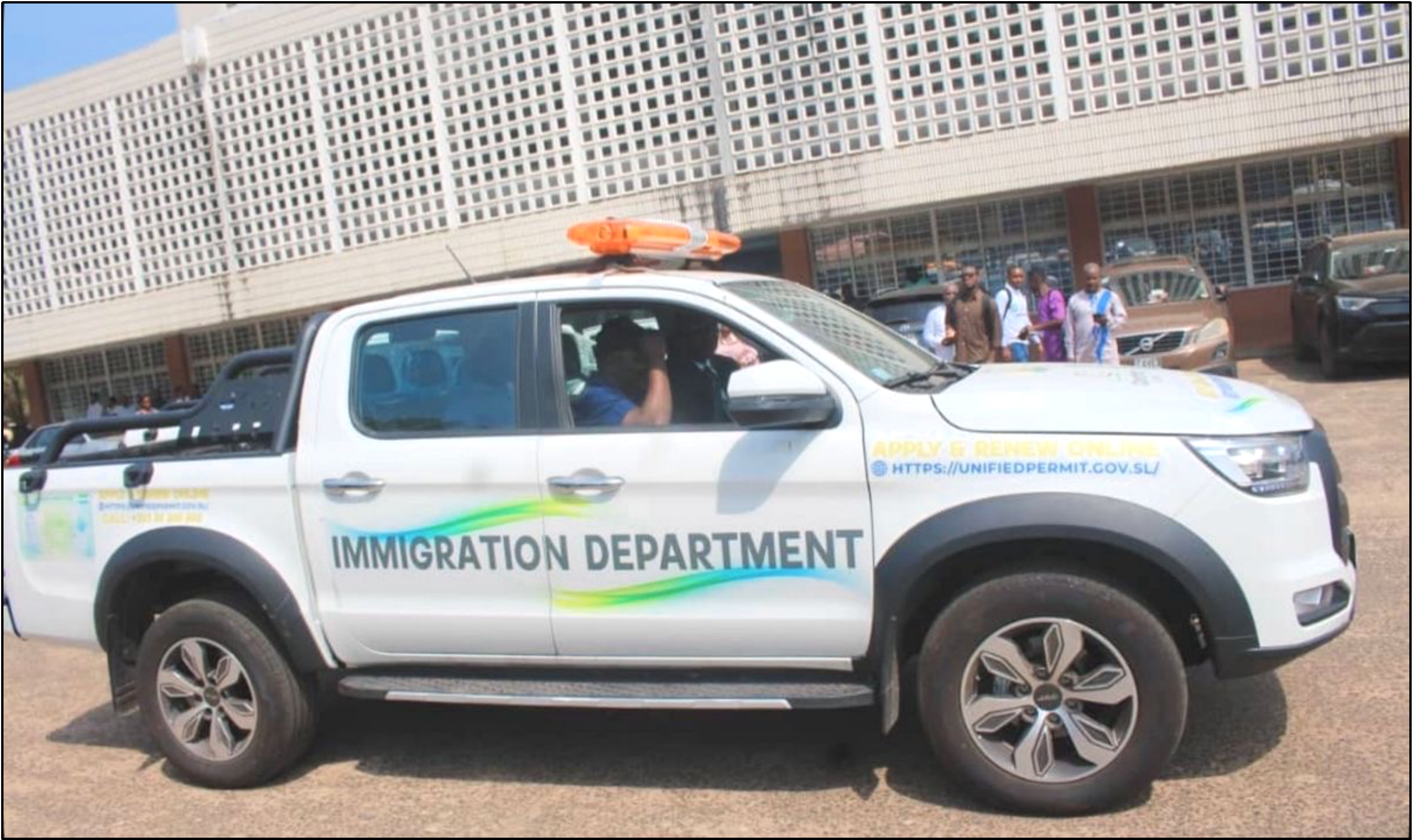
Sierra Leone’s government has unveiled a fleet of seventeen vehicles and twenty motorcycles to support nationwide enforcement and service delivery for the newly implemented Unified Resident and Work Permit system. The unveiling took place on Tuesday, March 31, 2026, at the Youyi Building and was made possible through a collaboration among the Ministry of Employment, Labour, and Social Security (MELSS), the Sierra Leone Immigration Department, and Constrat Systems.
On 8 May 2025, Parliament unanimously ratified a 15-year Build-Operate-Transfer (BOT) agreement led by Honourable Mohamed Rahman Swaray, Minister of Employment, Labour and Social Security. Constrat Systems was contracted to design, build, and co-manage Sierra Leone’s first unified digital Resident and Work Permit platform, which became operational on January 1, 2026. The platform was integrated with the National Civil Registration Authority (NCRA) to strengthen identity verification and administrative coherence.
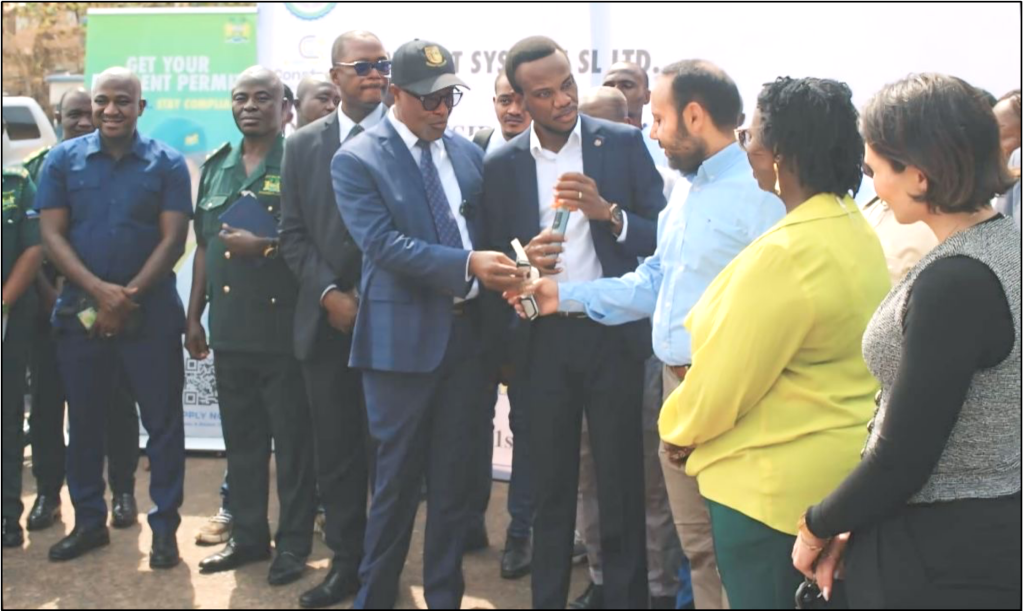
The new vehicles and motorcycles will improve field mobility for compliance teams, improve inter-agency coordination, and enable real-time permit status monitoring across all districts, according to officials. The equipment connects the unified platform’s digital functions with on-the-ground enforcement, resulting in more efficient inspections, follow-up, and response to non-compliance.
Minister Swaray, who spoke at the ceremony, framed the initiative as part of a larger push to improve institutional capacity and transparency. “This initiative reflects the government of His Excellency President Julius Maada Bio’s commitment to strengthening institutional capacity and ensuring that our systems are responsive, transparent, and aligned with national development priorities. He emphasised the importance of establishing a well-regulated labour market to promote both economic growth and national interests.
Moses Tiffa Baio, the Chief Immigration Officer, emphasised the strategic importance of integrating digital systems with operational enforcement. “This deployment strengthens our national capacity for effective migration management digitalisation in accordance with President Bio’s Big Five Game Changers and the Sierra Leone Immigration Transformation Master Plan.” “We are increasing compliance, improving security oversight, and ensuring a more accountable and coordinated approach to residency and security administration by integrating digital systems with operational enforcement,” he said.
The unveiling comes after a 90-day grace period for non-nationals to regularise their status expired on March 31, 2026. Effective April 1, 2026, all non-nationals must have biometric Resident and Work Permits issued through the unified system, as the paper-based exchange window has closed. Applicants can still apply through the official online platform or designated offices, but authorities warn that non-compliance will result in enforcement action.
Significant penalties have been approved for defaults under the new Act: a USD 3,000 fine for each defaulter (employee and employer) for Resident Permit offences, and a USD 5,000 fine for each defaulter (employee and employer) for Work Permit offences. Compliance teams will conduct nationwide audits in collaboration with security agencies to ensure that the new legal requirements are followed.
The government advises employers and non-citizens to apply for permits through the official portal at www.unifiedpermit.gov.sl. Authorities emphasised that starting April 1, 2026, the biometric permit issued through the unified platform will be the only legally recognised permit form.
