
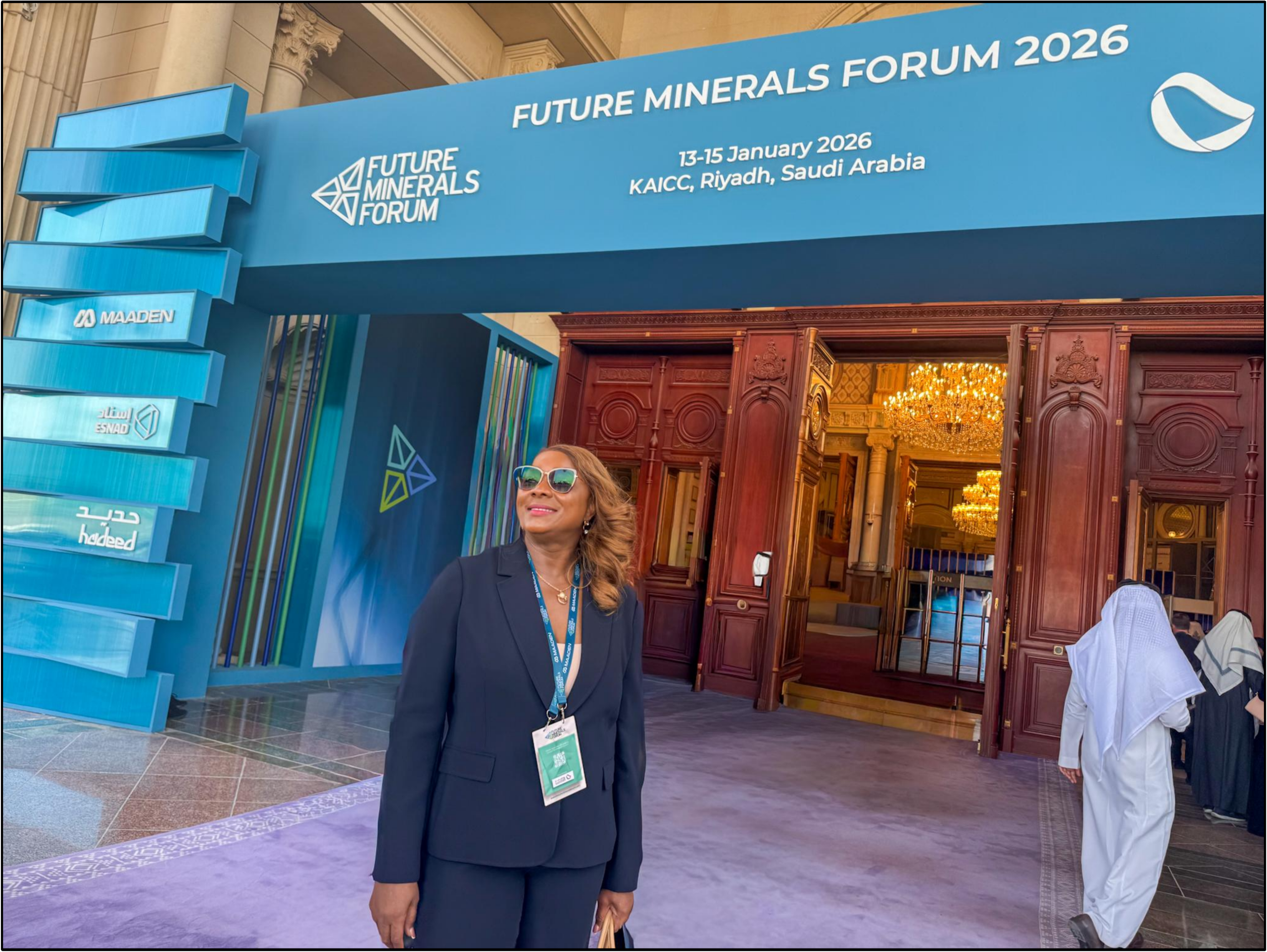
Aminata Kamara joined other global leaders, policymakers, and investors in Riyadh, Saudi Arabia on 13th January to 15th January, 2025 for the Future Minerals Forum (FMF) 2026, where conversations centered on one unavoidable theme: the future of mining will be shaped as much by human capital as well as AI.
“The discussions were heavily focused on human capital development, with a strong focus on AI. Right now, Sierra Leone has yet to tap out into AI in mining but we must,” Kamara said.
A Global Conversation Sierra Leone Cannot Afford to Miss
Across panels at FMF, artificial intelligence (AI) was framed not as a distant concept, but as an inevitable force that will redefine exploration, operations, and efficiency in mining.
Worldwide, mining companies are seeing AI work for them. About 65 percent of mining companies are already investing in AI technologies to improve operational efficiency. AI-driven automation has been shown to reduce labour costs by up to 30 percent while boosting productivity in parts of the mining operations.
From shortening exploration timelines to enabling remote-controlling operations, AI is already reshaping how mines function globally.
Kamara has seen this firsthand. During a visit to Illuka Resources in Australia shortly after its acquisition of Sierra Rutile in 2016, she observed highly automated systems where mining operations were controlled remotely by a single operator.
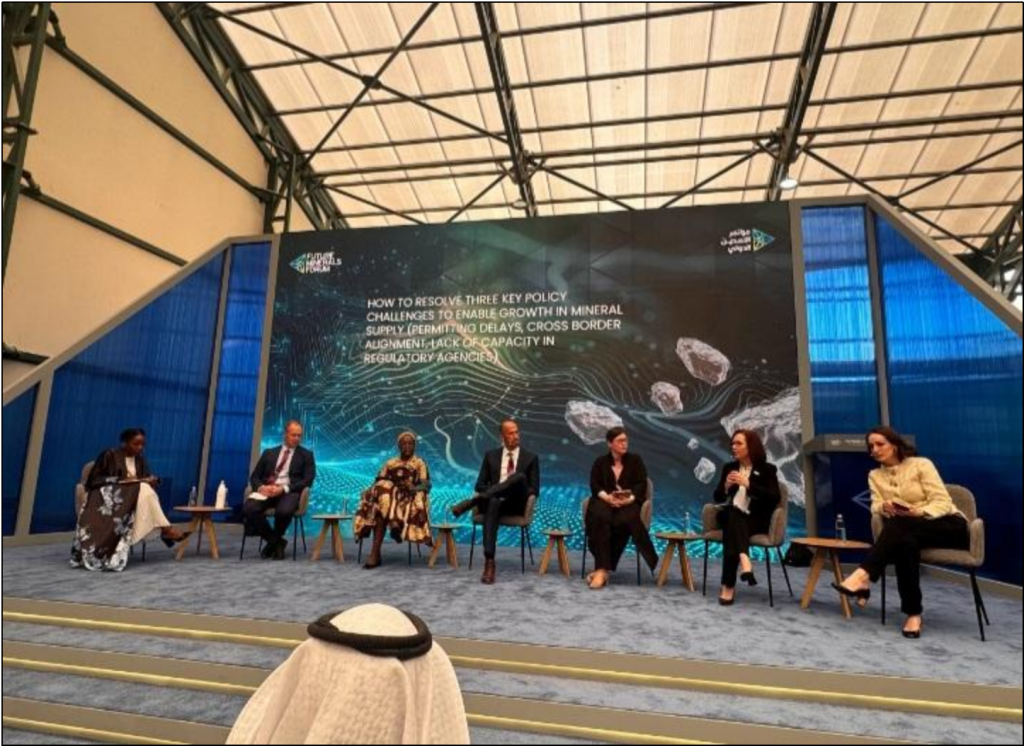
A panel discussion at the Future Minerals ForumLimiting Sierra Leone’s mining sector workforce, is its structure. She estimates that roughly 80 percent of employees in mining companies are unskilled, low-skilled or semi-literate/illiterate.
“Many, including policymakers, fear that if you increase the use of AI technology, you risk putting people out of work, especially in mining communities where mining companies are often the only employer or main source of income.”
Yet Kamara rejects the idea that technology and employment must be in conflict. Instead, she argues that poor planning and lack of medium/long term vision, not AI, is the real threat.
“It’s a company’s deficiency if workers become redundant as a result of enhanced technology. That means poor manpower planning and lack of long term strategic vision,” she says plainly.
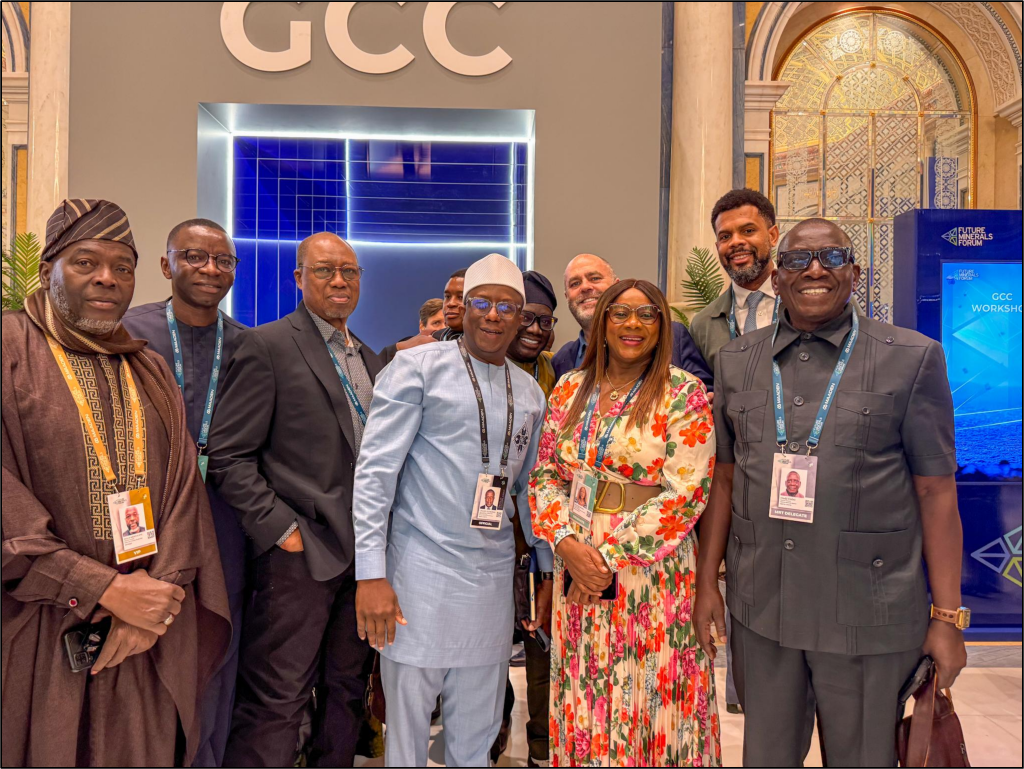
Aminata Kamara with Abdul Aziz Turay, Deputy Ambassador to the Kingdom of Saudi Arabia; Alhaji Mustapha Turay, Chairman National Minerals Agency; Umaru Napoleon Koroma, Deputy Minister of Mines and Mineral Resources; Alhaji Hadji Dabo, Director General, National Minerals Agency, and other delegatesWhy Governance, Not Just Technology, Matters
Kamara’s perspective is shaped by years in senior leadership roles at Sierra Rutile Limited and later Marampa Mines Limited, where she oversaw corporate affairs, human resources, government relations, and ESG engagement during periods of ownership transitions and regulatory scrutiny.
Her experience has taught her that governance and leadership failures often masquerade as technology problems.
At FMF, there was a clear message: AI adoption must be governed by long-term workforce strategy, not short-term efficiency gains. Kamara also emphasized that even the most technologically advanced mines still require people.
“There are no fully automated mines in the world; not even in Australia or Canada that are more technically advanced. You still need boots on the ground.”
Rather than replacing workers, Kamara advocates for re-skilling and multi-skilling them. She offered practical examples:
While some processing roles may become automated, human labour will remain essential in areas such as sampling, instrumentation, fabrication, electrical work, plumbing, and maintenance. These are tasks technology cannot perform independently.
“You move people. You build their capacity. You train them across departments so they are productive throughout their shift.”
Kamara has seen this work, albeit with a select few.
“It starts with mindset. The individual has to want to grow. Then the organization must identify and invest in them.”
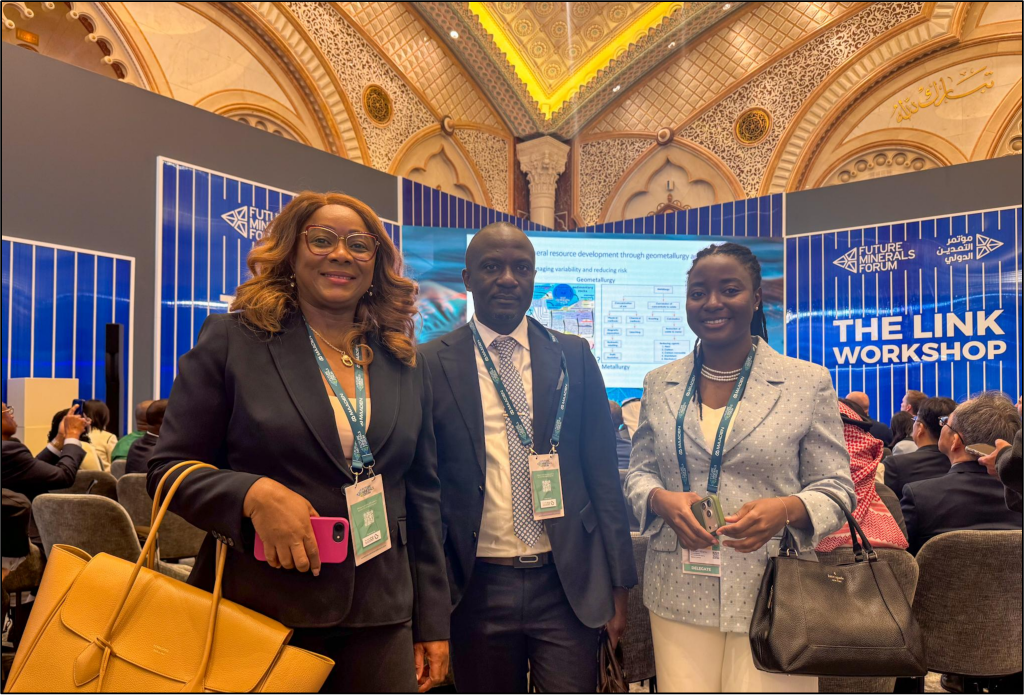
Aminata Kamara, Joseph Lebbie, the Deputy Director of Geological Survey and Mariam Khanu, Mining Engineer at the National Mineral Agency present at the Future Minerals Forum The Role of the Sierra Leonean Government
Kamara believes governments also have a critical role to play, not through heavy-handed regulation, but through targeted incentives.
Drawing from her experience in the U.K., she cited vocational training schemes where employees received tax breaks and other incentives at national level for employers who commit to ‘Investors in People’ through job creation and investing in practical certification programmes for their employees from apprenticeship to senior level roles.
She argues that similar incentives could encourage mining and other companies in Sierra Leone to take on apprentices, graduate trainees, and semi-skilled workers; particularly engineers who graduate with limited practical exposure to mines.
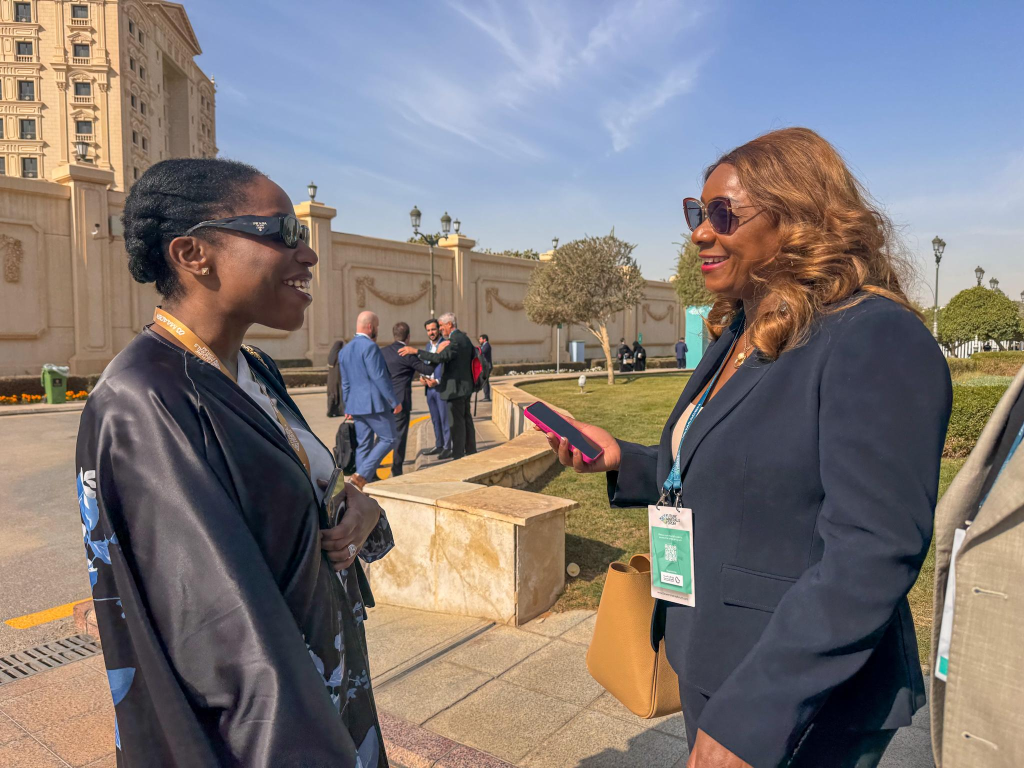
Aminata Kamara (right) in a conversation with Stacy Hope, Former MD Women in Mining UK at the Future Minerals Forum “You have graduate engineers who have never been to a mine, let alone have practical experience prior to gaining their degrees. That gap can be closed if companies are incentivised to train and build capacity.”
Kamara is clear-eyed about timelines. Sierra Leone, she estimates, may be 10 to 15 years away from fully-automated mining systems. But preparation cannot wait.
“Human capital development is never short-term. If you want results in 10 years, you must invest now.”
For Kamara, this is not a technical issue, it is a governance and strategic leadership one. Extractive industries, she argues, often fall into a “mine and move” mindset, overlooking the long-term value of people.
“You see why some mines last 50 years. It’s because the development of individuals is paramount to the success of a company.”
Kamara’s reflections at the Future Minerals Forum are grounded not in theory, but in lived leadership shaped by her background in banking, mining, corporate governance, and people policy.
As Sierra Leone positions itself for future investment in the extractive sector, her message is clear: technology without people is not progress.
The future of mining, she argues, belongs to countries and companies that understand that governance, skills, and human capacity must evolve alongside innovation, not after it.
