
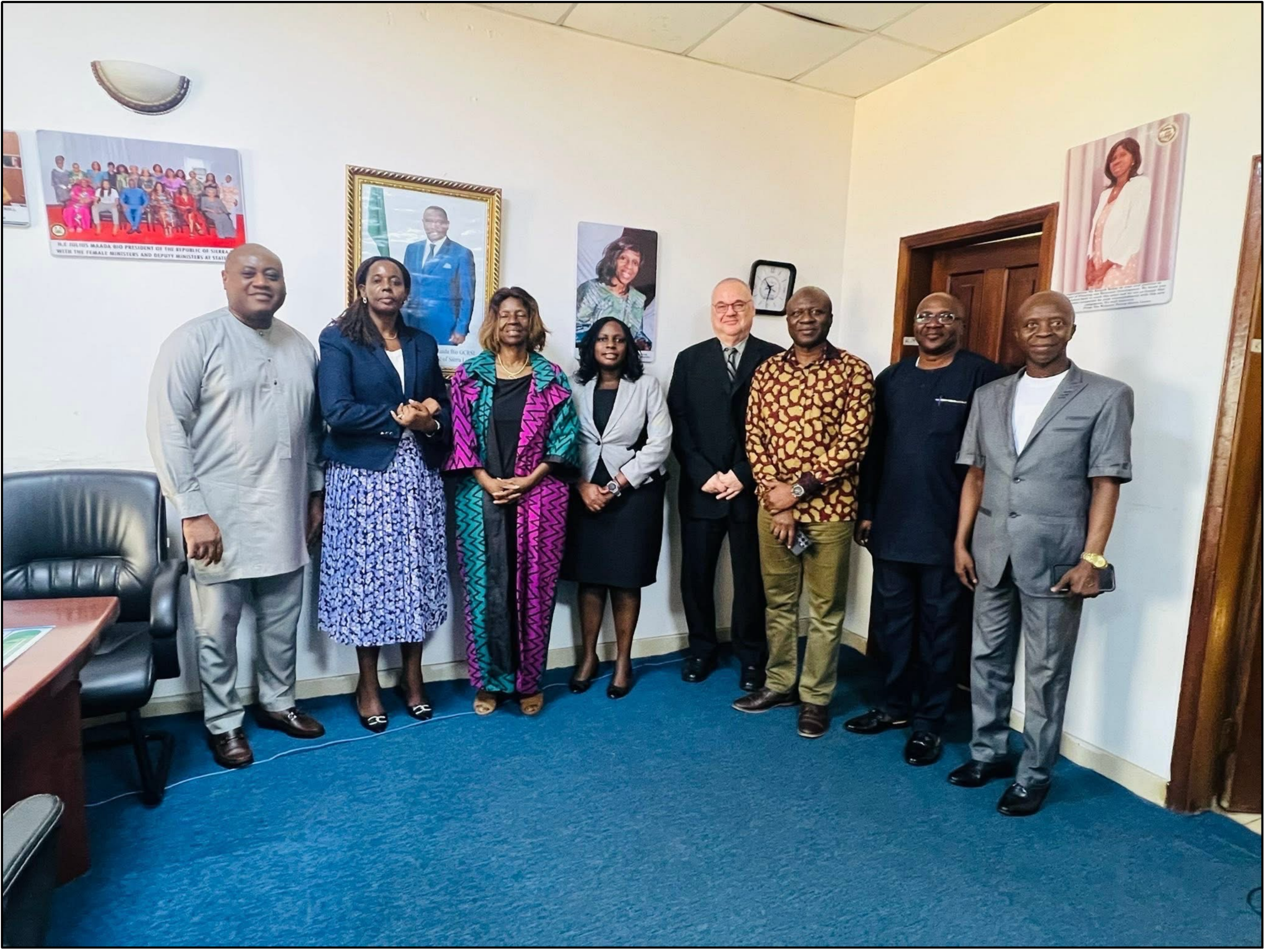
Freetown, Sierra Leone, January 2026— The MoPED collaborated with AFRITAC West 2, supported by the International Monetary Fund, to conduct a ten-day Technical Assistance Mission from January 12-21, 2026. The mission aimed to improve alignment between national development priorities, public investment planning, and the national budget. The engagement sought to strengthen institutional capacity within MoPED’s Directorates of Planning and Public Investment, improve coordination with the Ministry of Finance (MoF), and ensure that strategic plans are consistently translated into funded and implemented projects.
The mission began with a courtesy call from Madam Kenyeh Barlay, Minister of Planning and Economic Development, who reaffirmed the government’s commitment to speeding up reforms that will improve project readiness, strengthen public investment management, and close enduring capacity gaps in the national planning function. Madam Barlay listed a number of real-world obstacles to implementation, such as poor results frameworks, delayed project costing, and a lack of technical expertise for project evaluation. In order for planning to lead to concrete implementation and outcomes, she emphasised the necessity of strict adherence, improved internal coordination, and a quicker rate of reform.
To assess the overall government landscape, the mission held a series of consultative meetings with the Financial Secretary and Budget Directorate at the Ministry of Finance, as well as senior MoPED officials. These sessions looked at the legal, institutional, and procedural frameworks that currently connect national development goals to public investments and the budget. The team reviewed recent changes to the budget preparation process and identified coordination issues between MoPED and MoF that impede effective planning-budget integration.
The mission also held structured technical meetings with a number of Ministries, Departments, and Agencies (MDAs). Officials from those entities presented on sector planning processes, project appraisal and costing methodologies, prioritisation and approval mechanisms, project integration into the Medium-Term Expenditure Framework (MTEF), and collaboration with development partners. MDA feedback reinforced several cross-cutting issues identified by the mission, including inadequate project preparation and readiness, fragmented treatment and management of externally funded projects, and a limited use of national planning frameworks during project design and appraisal.
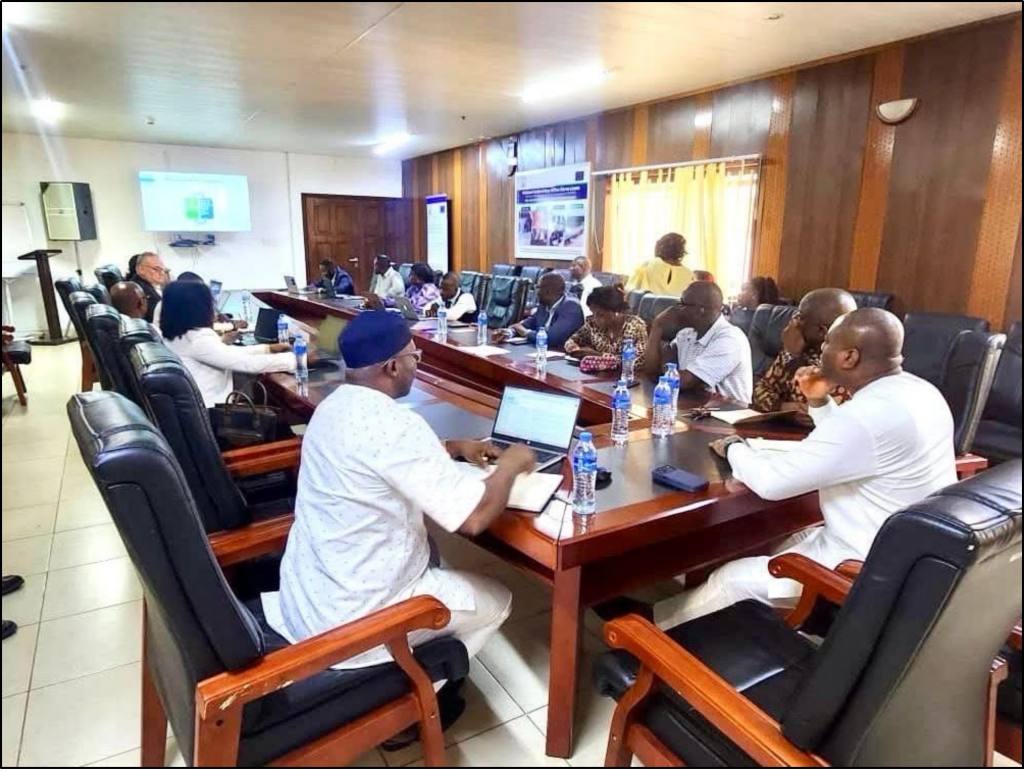
The mission included a technical capacity-building workshop with MoPED’s Directorates of Planning and Public Investment, the MoF Budget Directorate, and representatives from selected MDAs. Presentations by MoPED directorates and the Public Financial Management Directorate clarified institutional mandates, described existing planning and budgeting processes, and identified coordination bottlenecks. The AFRITAC West 2/IMF delegation provided technical guidance and shared international best practices, using comparative experiences — including lessons from Rwanda — to demonstrate ways to improve coordination across policy planning, public investment, budgeting, and monitoring and evaluation.
The mission team was led by AFRITAC West 2 Public Financial Management Regional Advisor Ms Rehemah Namutebi, with support from IMF Fiscal Affairs Department short-term experts Ms Gertrude Aerone Basiima and Mr Gerhard Steger. They collaborated with national counterparts to identify practical reform steps that can be implemented in the near future to boost planning credibility, investment efficiency, and development outcomes.
MoPED and the AFRITAC West 2/IMF team decided on a set of priority reform actions during a final wrap-up session. Among the main recommendations are the following: establishing a standing coordination mechanism that regularly brings together development planning, public investment, and budget preparation; replacing the traditional Budget Call Circular with a Joint Planning and Budget Call Circular to institutionalize planning–budget alignment; and introducing a strategic phase into the budget preparation cycle starting in March, to be jointly coordinated by MoPED and MoF.
The mission suggested bolstering the Public Investment Plan (PIP) by making sure it includes thorough project information, including precise costs, identified financing gaps, timelines, and related fiscal commitments, to enhance project selection and execution. In order to improve accountability and performance tracking, participants also decided to formalise yearly project portfolio reviews. Making sure that every project, both domestically and internationally funded, enters and is monitored through a single national Public Investment Management system that is in line with the National Development Plan is another top priority.
Proposed operational measures include accelerating capacity building in project appraisal, feasibility analysis, and investment preparation, as well as upgrading flagship projects to an investment-ready status through focused feasibility studies backed by a Project Preparation Facility. The mission also emphasised the need for institutional and legal changes, such as clearly giving the Minister of Planning and Economic Development authority over public investment management and development planning, as well as enshrining planning-budget alignment requirements in legislation.
MoPED and the IMF/AFRITAC West 2 team reaffirmed their commitment to working together as the government implements these reforms. The mission’s findings are expected to inform immediate actions to improve planning credibility, increase the efficiency of public investments, and strengthen development outcomes across government.
