

Sierra Leone’s Minister of Technical and Higher Education met with His Excellency Dr Mohamed Bin Mubarak Juma, Bahrain’s Minister of Education, last week to discuss how the two countries can collaborate in education.
Dr Juma welcomed the Sierra Leonean delegation and outlined Bahrain’s strategic priorities for transforming the country’s education ecosystem. He emphasised that the Ministry of Education is focusing on early childhood development, improving school-level education, and expanding polytechnic options. The Bahraini minister highlighted a portfolio of projects aimed at improving general education, technical and vocational education and training (TVET), and higher education, referring to them as part of a long-term national approach to quality learning.
Dr Juma’s remarks included a focus on the Ministry’s ongoing work on curriculum reform, teacher capacity development, and expanding digital learning opportunities. He stated that these reforms are intended to create modern, inclusive learning environments that provide equitable opportunities for all learners, assisting students in progressing to higher education or transitioning directly into the labour market with relevant skills.
Senior Bahraini officials gave a series of presentations outlining the country’s educational transformation, citing its historical trajectory, regional and global achievements, and an evidence-based policy framework. Sessions examined how research and development, educational technology, TVET programs, and teacher training initiatives are integrated to prepare educators and students for the demands of a knowledge-based economy.
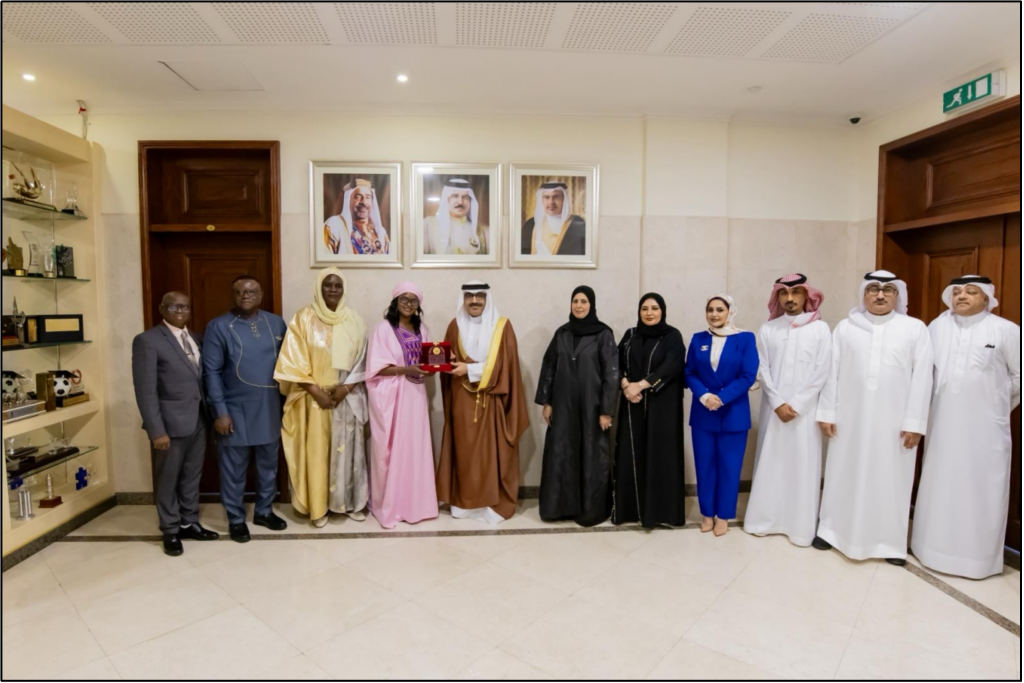
Dr Wurie responded to Bahrain’s outline by stating that Sierra Leone is eager to identify partnership opportunities that will accelerate the development of the country’s education sector, with a focus on tertiary education, TVET, and polytechnic expansion. She expressed gratitude for Bahrain’s hospitality and the opportunity to study Bahraini models in higher education and technical training, noting that Sierra Leone hopes to adapt best practices to its own circumstances.
Dr Wurie framed education as a key component of Sierra Leone’s human capital agenda, linking it to President Dr Julius Maada Bio’s Big Five Game Changers. She emphasised the importance of investing in technology and digitisation to improve learning outcomes, and she identified women’s empowerment through education as a top priority. The minister detailed strategic initiatives already underway in Sierra Leone, such as the implementation of open distance learning platforms and the establishment of a National School of Postgraduate Studies, which aim to strengthen capacity and build a sustainable education system.
Both ministers agreed that strategic collaboration can lead to mutually beneficial outcomes, with Dr Wurie advocating for partnerships that provide practical opportunities for student exchange, curriculum development, faculty training, and joint research.
Dr Wurie and her team visited the Sheikh Khalifa Bin Salman Institute of Technology and Bahrain Polytechnic to get a firsthand look at Bahrain’s TVET implementation. The institutes displayed a wide range of technical and vocational programs designed to provide students with practical, industry-relevant skills.
Courses in artificial intelligence and robotics, graphics and technology, mechanical engineering, and renewable energy generation were on display as examples of how TVET contributes to Bahrain’s technological and industrial development while also preparing graduates for the workforce.
Dr Wurie was accompanied by Her Excellency Haja Ishata Thomas, Non-resident Ambassador of Sierra Leone to the Kingdom of Bahrain; Mr Mohamed Sheikh Kargbo, Permanent Secretary; Mr George Dambo, Student Secretary at the Ministry of Technical and Higher Education; and Mr Abu Bakarr Ismail Mbayoh, Third Secretary and Arabic translator at Sierra Leone’s Embassy in the State of Kuwait.
The meetings and site visits concluded with both parties expressing optimism about future dialogue and concrete follow-up actions to strengthen cooperation in higher education, TVET, teacher development, and digital learning initiatives.
