
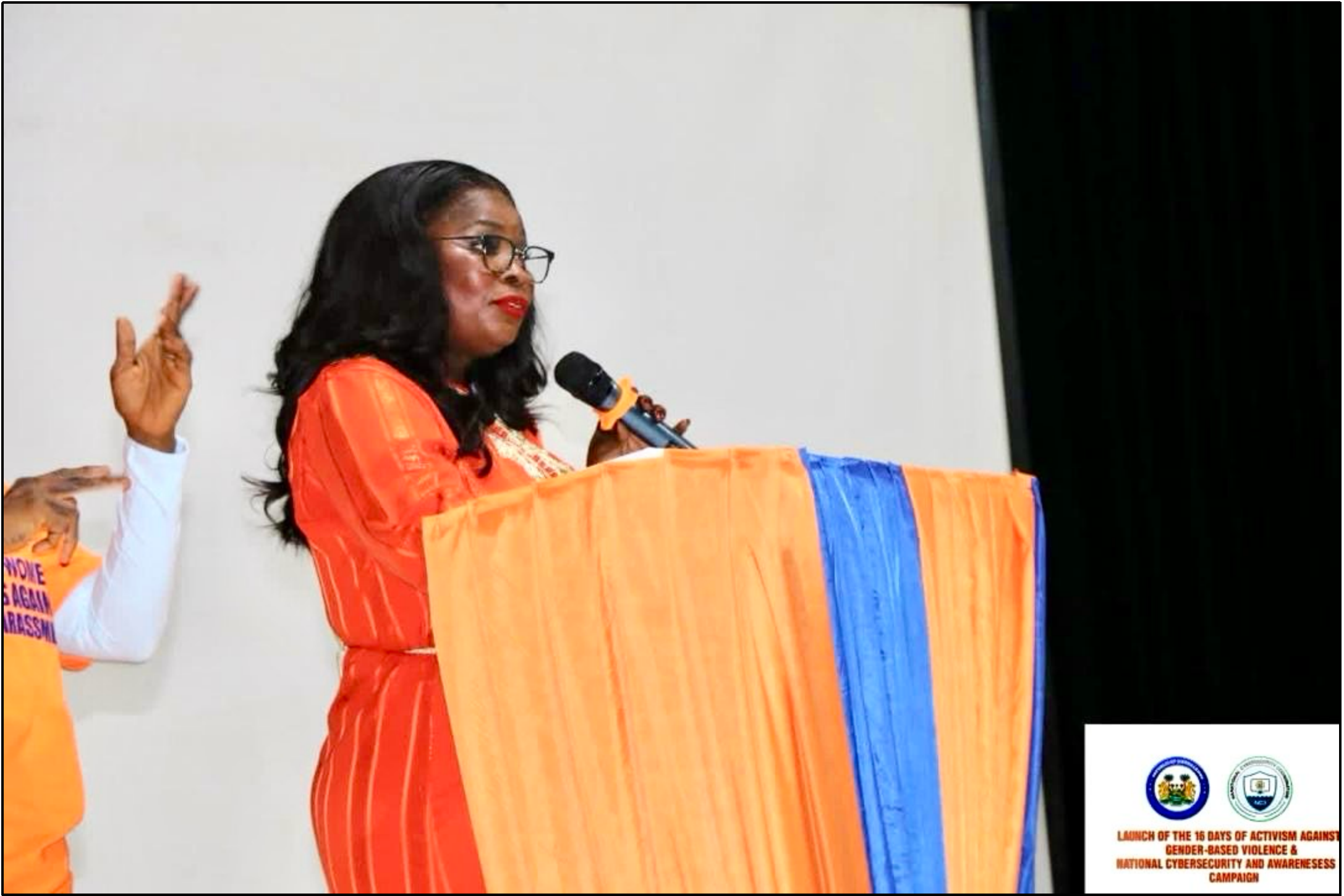
Sierra Leone’s government, security, and civil society partners launched the 16 Days of Activism Against Gender-Based Violence (GBV) and National Cybersecurity and Awareness Campaign on Tuesday, reaffirming their commitment to addressing online harassment of women and girls.
The Ministry of Gender and Children’s Affairs hosted the ceremony at Aberdeen’s Freetown International Conference Centre, which was organised in collaboration with the National Cybersecurity Coordination Centre (NCCC) and other stakeholders. The overarching theme for the activism period is “Unite!” The overarching theme for the activism period, “Unite! End Digital Violence Against All Women and Girls,” was supplemented by the public awareness slogan, “Encourage responsible digital behaviour and empower women and girls to claim their space online.”
Dr David Moinina Sengeh delivered the keynote address, in which he apologised to victims of online harassment and bullying and recognised the harm caused by digital abuse. He stated that technology has created extraordinary opportunities while also introducing new risks that have eroded privacy and silenced voices. “No nation can prosper without prioritising women and girls,” Dr Sengeh said, emphasising that the government rejects all forms of violence against women and girls and must ensure they have the opportunity to reach their full potential for the country’s development.
The Chief Minister highlighted a number of recent advances aimed at protecting women and girls while also strengthening the country’s digital infrastructure. He highlighted Sierra Leone’s rapid improvement in cybersecurity standing, citing the country’s rise to the tenth-ranked African country in its cybersecurity stage in five years, as well as a significant increase in mobile phone coverage from 72 per cent to 98 percent. He urged citizens and institutions to ensure that technology serves humanity rather than the other way around, calling for a collaborative effort to make the digital world safer and more equitable.
Chernor C. Bah, Minister of Information and Civic Education, who chaired the event, framed cybersecurity as both a human rights and security issue, and assured that online rights and safety are critical to preserving dignity and enabling full participation in civic life.
Dr Isata Mahoi, Minister of Gender and Children’s Affairs, emphasised that the launch aimed not only to provide a platform for women and girls to express themselves, but also to mobilise concrete action. The Child’s Rights Act 2025 and the establishment of a Model Sexual Offences Court are among the measures implemented to protect survivors and prevent abuse. Mahoi also drew attention to institutional steps such as the Office of the Attorney General and Minister of Justice’s harmonisation and review of GBV laws, as well as the establishment of a One Stop Centre to Consol. Dr Mahoi cautioned that laws and programs alone cannot eliminate violence. She identified persistent gaps, most notably the lack of a forensic laboratory and an insufficient number of Safe Homes for survivors, and urged all Sierra Leoneans to join the fight, treat survivors with compassion, and report perpetrators.
The Inspector-General of Police, William Fayia Sellu, has urged unity in action across government and security agencies. The Inspector-General of Police, William Fayia Sellu, has urged government leaders to work together to combat gender-based violence (GBV) in the digital sphere, which can have serious mental health consequences. Girls are especially vulnerable.
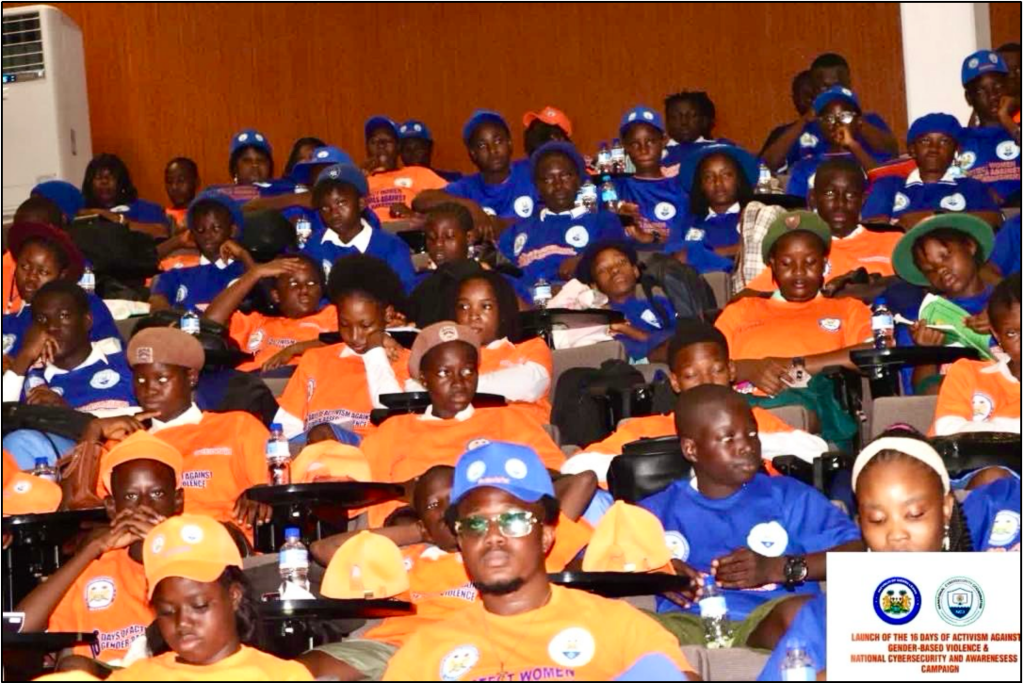
Other speakers agreed that technology should be used for empowerment, not harassment. They highlighted the rapid rise of online abuses such as cyberbullying, stalking, identity theft, and doxxing, emphasising the importance of preventive measures, timely response mechanisms, and institutional capacity building.
Mr Victor Sesay, Coordinator of the National Cybersecurity Coordination Centre, presented an overview of the national cybersecurity and awareness campaign. He reminded the audience that the NCCC was founded in 2016 to raise national awareness, strengthen networks and computer systems, create guidelines, and safeguard critical digital infrastructure. Mr Sesay identified gaps, risks, and opportunities in the national digital ecosystem, citing three legal instruments that guide the centre’s work. Participants reported ratification of the Data Protection Act and ongoing capacity-building training for the judiciary and security sector.
The event was well-attended and featured a panel discussion, a public commitment pledge, a question-and-answer session, and singing of the National Anthem and pledge. Mr Boakai Hindowa Bindi, Deputy Minister of Gender, gave the vote of thanks, and organisers described the launch as a significant step toward raising awareness and creating a safer online environment for women and girls. The government, UN, and civil society partners reaffirmed their commitment to continuing collaboration to prevent digital violence and protect the dignity and futures of women and girls in Sierra Leone.
