
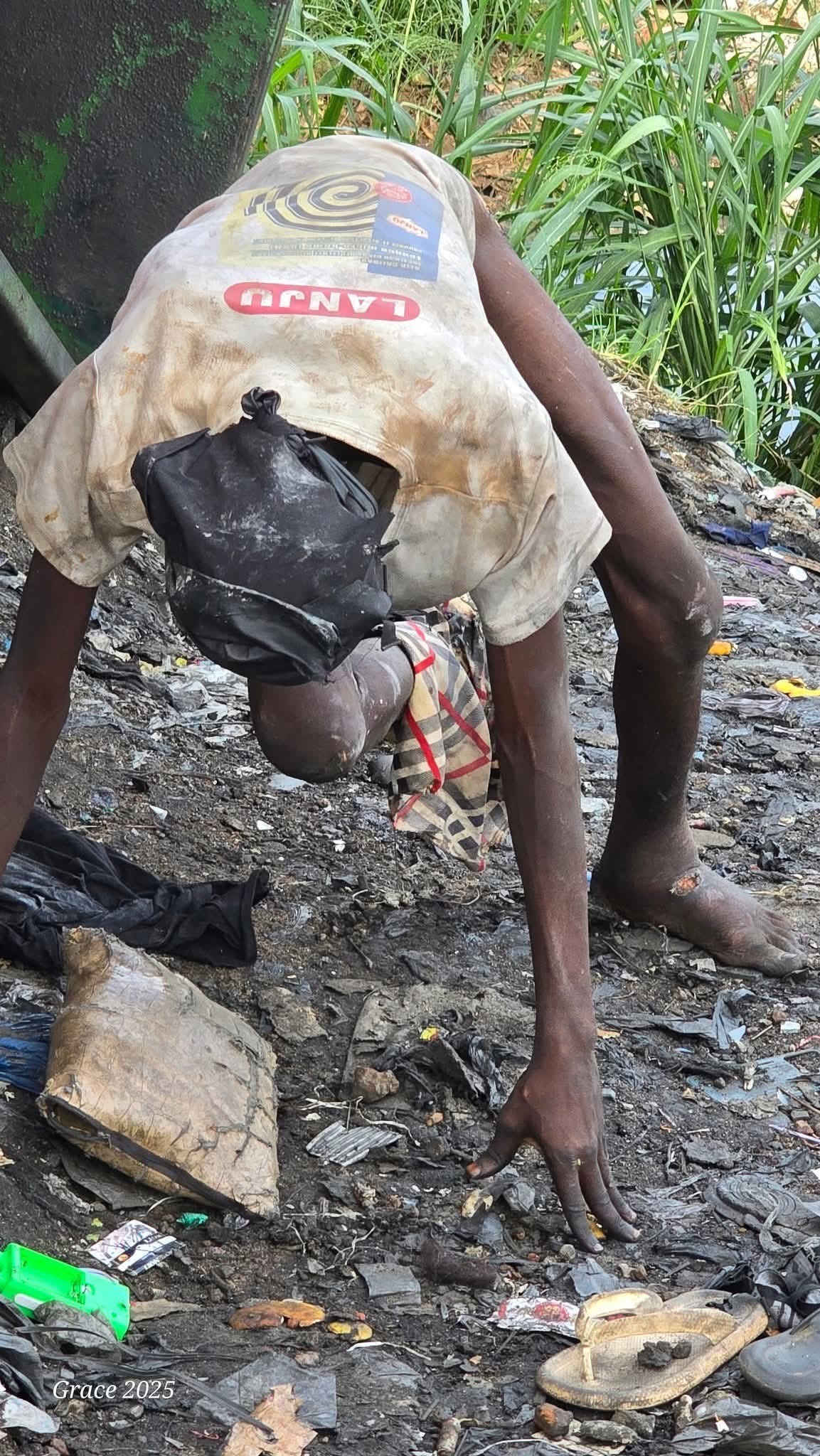
In the blistering heat of Freetown, tired young men gather in clusters on street corners, their limbs swollen and eyes glazed — a visible manifestation of a growing public health emergency. The substance at the centre of this human wreckage is known locally as kush, a cheap, highly toxic synthetic drug that has spread from obscurity to crisis in the space of a few years. Kush is believed to have appeared in Sierra Leone around 2016, but its human toll has accelerated sharply since. Between 2020 and 2023, the country’s only psychiatric hospital recorded 1,865 admissions linked to the drug, a dramatic rise that has strained already limited mental-health resources. Clinicians in Freetown warn that the problem is growing, with doctors estimating that hundreds of users have died from organ failure associated with kush in recent months.
The typical victims are young men aged roughly 18 to 25. For many of them, kush is not a recreational indulgence but a chemical reprieve from hunger, trauma and inexorable social marginalisation. Where opportunities are few and public services scarce, synthetic drugs can move from curiosity to routine refuge in months. Sierra Leone’s outbreak fits a broader global pattern: synthetic substances tend to flourish in communities where economic exclusion and weak safety nets create fertile ground for addiction.
Part of Kush’s danger lies in its accessibility. Joints are reportedly sold for as little as 20 pence on the street, making the drug available even to people with little money. Once dependence takes hold, users can spend the equivalent of about £8 a day — a crippling sum in a country where average incomes barely exceed £4,000 a year. That daily expenditure can push households deeper into poverty and make recovery even harder.
The composition of kush, according to multiple reports, reads like a catalogue of harm: a base of cannabis laced with synthetic opioids such as fentanyl, mixed with formalin (a solution used in embalming) and, in some accounts, ground human bone. Whether every batch contains all of these ingredients is unclear, but the presence of potent opioids and toxic additives explains the severe organ damage, unpredictable behaviour, overdoses and psychiatric complications seen in clinics and on the streets.
In response to the mounting crisis, President Julius Maada Bio has described kush as a “death trap,” declaring a national emergency and calling the epidemic an “existential crisis” for Sierra Leone. The declaration reflects alarm at both the scale of harm and the speed of spread, but it also highlights a hard truth: enforcement or crackdowns alone cannot resolve a problem rooted in poverty, trauma and social neglect.
Public-health advocates and community leaders argue that the response must be multi-pronged: expanded addiction treatment and mental-health services, harm-reduction initiatives, better regulation of precursor chemicals, and long-term investment in education, jobs and social protection for young people. International cooperation on illicit synthetic opioids and technical support for health systems will also be important.
Kush’s grip on Sierra Leone is not a random wave of criminality; it is a symptom of deeper social failure. For those who take it, the drug offers temporary relief from a bleak present — but at the cost of long-term destruction. Addressing the crisis will require sustained political will and resources to give young people real alternatives to chemically induced escape.
