
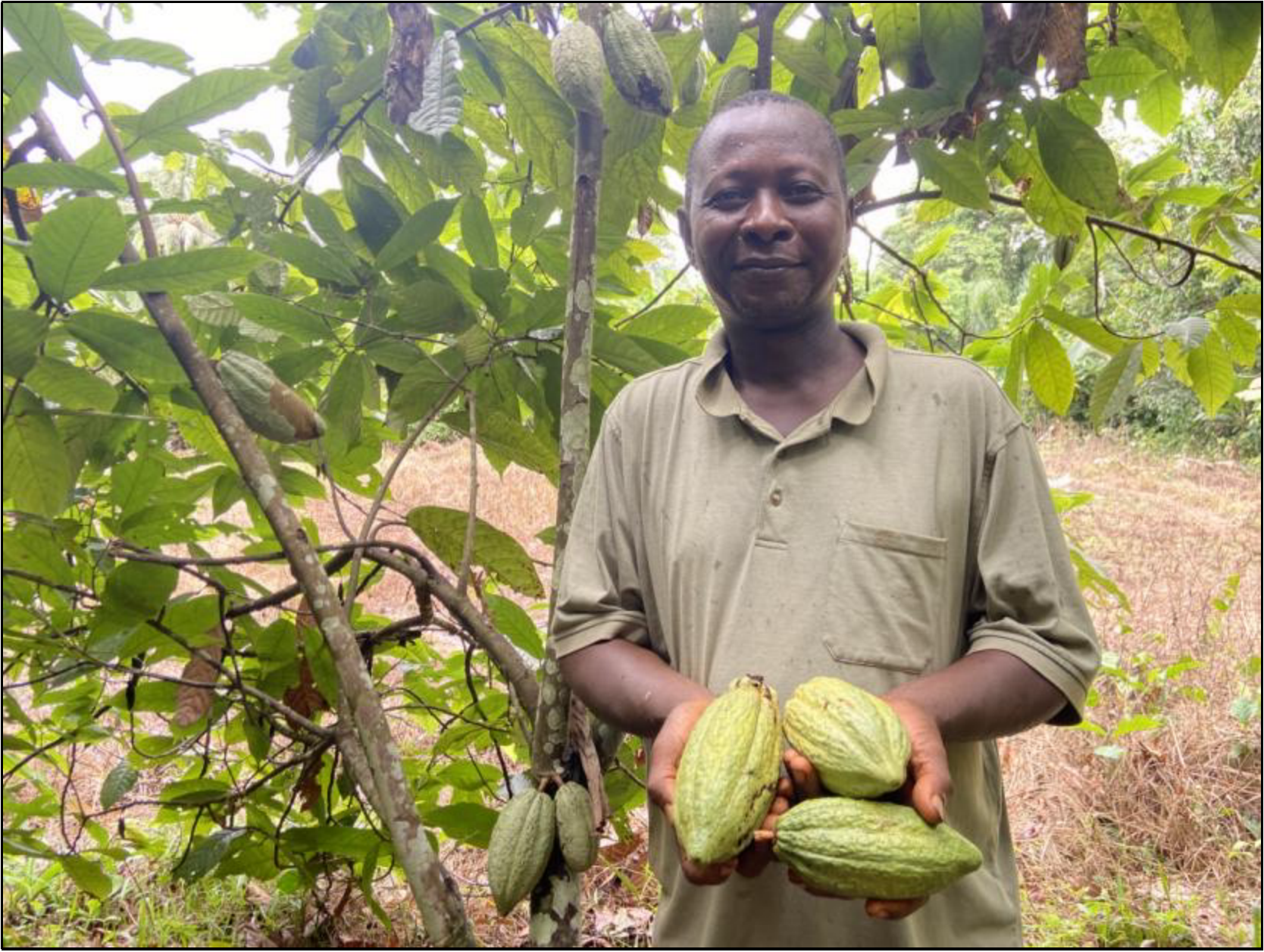
Global cocoa prices have reached historic highs, but this windfall has largely failed to benefit the smallholder farmers who produce the majority of the world’s cocoa. The Cocoa Barometer 2025, which was released today, depicts a sector that is both fragile and changing: worse in some ways than it should be, better in others, and with plenty of room for improvement.
According to the report, producers in West Africa bear the real costs of current market dynamics. Côte d’Ivoire and Ghana combined account for more than 60% of global cocoa output, influencing global prices and policy. Nigeria is also re-emerging as a significant producer, with the 2024/25 season expected to yield approximately 350,000 tonnes. However, despite their dominance, most farmers have seen little benefit from the recent price increase. According to the Barometer, forward-selling mechanisms and other contractual arrangements have delayed and diluted price gains, while falling yields — caused by ageing trees, crop diseases, and increasingly erratic rainfall due to climate change — have limited farmers’ ability to capitalise even when prices rise.
The Barometer presents three truths about the sector: it is bad, it is better than before, and there is still a lot of room for improvement. The root of the problems is persistent farmer poverty. The report contends that poverty underpins almost every major challenge in cocoa production, from deforestation and child labour to entrenched gender inequality, and that providing farmers with a living wage is both a moral imperative and an emerging legal obligation under new human rights and environmental legislation. However, the Barometer warns that political opposition in Europe threatens to reverse hard-won regulatory progress, jeopardising the legal path to fairer pay and better protections.
The report warns that high global prices are already driving a production boom, which is causing new waves of deforestation. Cocoa cultivation is spreading into previously unaffected regions of West Africa, and if it continues unabated, the resulting increase in supply could lead to another market glut and price collapse, similar to the 2016 cycle that devastated many producers. In other words, the current price increase risks creating short-term incentives for expansion, exacerbating long-term insecurity for farming communities.
Social conditions in cocoa-growing areas remain dire. The Barometer estimates that 1.5 million children continue to work in hazardous conditions on cocoa farms in Ghana and Côte d’Ivoire. Women perform the majority of farm labour, but they are routinely excluded from decision-making and receiving a fair share of benefits, perpetuating gendered income and influence gaps. The report also highlights a gap in many policy debates: farm workers and tenant farmers, who are critical to cocoa production but are routinely overlooked by programs and protections despite being among the most vulnerable.
Governance and accountability failures exacerbate these issues. The Cocoa Barometer identifies weak or absent supply management, opaque cocoa sales, and a lack of transparency in farmgate pricing as major structural flaws that expose farmers to volatile markets while limiting public scrutiny. Many voluntary sustainability commitments across the industry lack independent verification and oversight. Many voluntary sustainability commitments in the industry lack independent verification and hope. It cites emerging regulatory frameworks, increased stakeholder collaboration, and growing political attention as evidence that systemic change is possible. To accelerate progress, the Barometer makes four urgent demands for the entire cocoa sector: commit to fair pay and living incomes for farmers; implement a global moratorium on deforestation associated with cocoa cultivation; formally include farmers — both men and women — as co-decision makers in sector governance; and implement comprehensive transparency and accountability mechanisms throughout supply chains.
A consortium of civil society organisations produces the Cocoa Barometer, a periodic overview of the state of sustainability. It tracks long-term systemic trends, evaluates recent developments, and identifies future risks and opportunities. The 2025 edition makes a clear call to action: record prices alone will not address the cocoa sector’s deep structural issues. Without fairer value distribution, stronger governance, and decisive environmental protections, higher market prices risk becoming a one-time windfall that harms the livelihoods and rights of millions of producers in the long run.
