

The World Health Organisation (WHO) has delivered a new shipment of infection prevention and control (IPC) materials to Sierra Leone’s national health authorities, bolstering the country’s Mpox response as schools resume. The donation, made through the WHO African Regional Office, adds to the Government of Sierra Leone’s USD 1 million in financial and technical support since the outbreak was declared a Public Health Emergency in January 2025.
The shipment includes a comprehensive package of IPC items that will be prioritised for distribution to hotspot districts’ health facilities and schools. The items provided include hand-wash sets, basic IPC commodities, 30L buckets with covers, receiving buckets, stand stools, waste bins, and hand-wash detergents. These supplies will be distributed in response to ongoing needs assessments and new case surveillance reports, assisting in the prevention of transmission among students, teachers, and health workers.
WHO data show that the average daily number of newly reported Mpox cases has dropped from 17 to seven, a 58 per cent reduction, which WHO leaders attribute to increased prevention and response measures. Since January 2025, Sierra Leone has recorded over 6,800 suspected Mpox cases, with over 5,200 laboratory confirmed. To date, 56 people have died and over 5,100 have recovered from the outbreak.
“The IPC items are timely. “As schools reopen, WHO is committed to protecting the lives of students and medical personnel,” said Dr. Thompson Igbu, Cluster Lead for Communicable and Noncommunicable Diseases (CND) at WHO. “The donated items are intended for distribution to schools throughout the country. WHO will continue to collaborate with the Ministry of Health, NPHA, and other health partners to ensure that Mpox cases remain in the single digits.
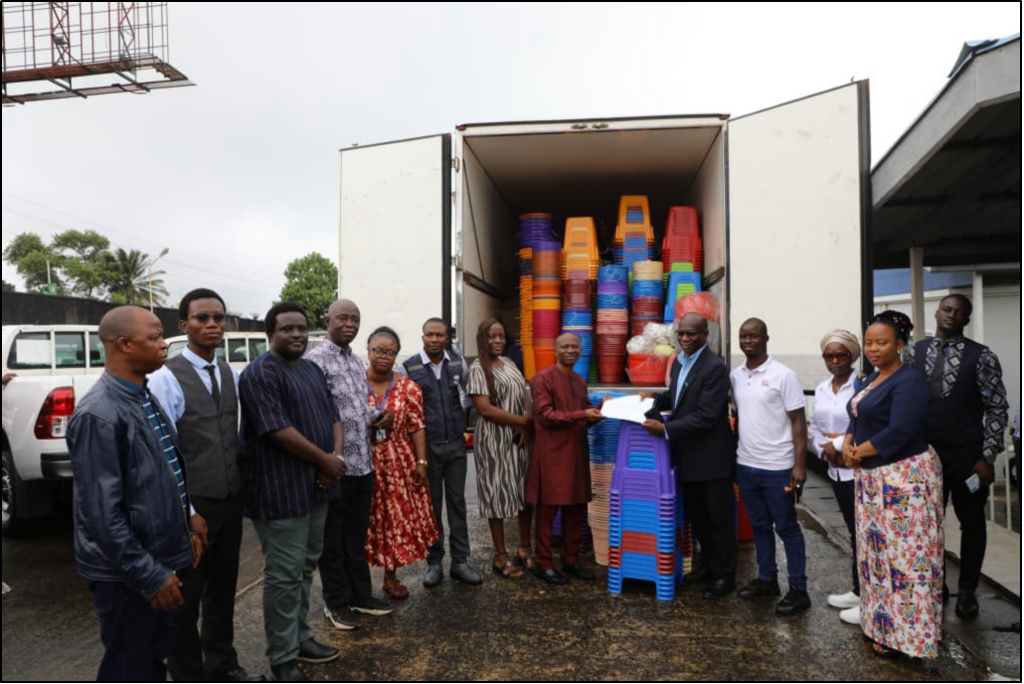
Dr. James Squire, Incident Manager for Sierra Leone’s Mpox Response, welcomed the donation and thanked WHO and its partners for their ongoing support. “We thank WHO and other partners for their ongoing support of the Mpox response. The success we have had thus far would not have been possible without the assistance of our trusted partners, such as the WHO. “We have received financial, logistical, and technical assistance from the Organisation,” Dr. Squire stated. He stated that students, particularly those in secondary and tertiary institutions, have been the most affected, and that the supplies will strengthen IPC measures and promote hand hygiene in schools.
Since the outbreak began, WHO teams have been present on the ground from the start, providing technical assistance and capacity building in a variety of critical areas. Case management training, laboratory strengthening, surveillance and data management, resource mobilisation, and risk communication have all been provided as support. WHO has also deployed national African Volunteer Health Corps personnel and technical teams, provided medical supplies, and supported vaccination activities to slow and stop transmission.
The recent donation of IPC materials is intended to reinforce these efforts and ensure that children can return to their classrooms with additional safeguards in place. WHO and health partners will make distribution decisions based on evolving epidemiological data, targeting schools and health facilities in districts with a higher number of cases.
WHO’s response in Sierra Leone has been supported by several donors, including the UK Foreign, Commonwealth and Development Office (FCDO), Gavi, the Vaccine Alliance, and the foreign affairs ministries of Denmark, the Netherlands, and Germany. These contributions have enabled WHO teams to provide lifesaving interventions and supplies to communities, including those in remote areas.
Despite the encouraging decrease in case numbers, WHO officials emphasised the importance of ongoing funding and collaboration to bring the outbreak to an end. Sustained resources will be required to continue surveillance, case management, vaccination, and IPC activities until transmission has been completely stopped and communities are secure.
