
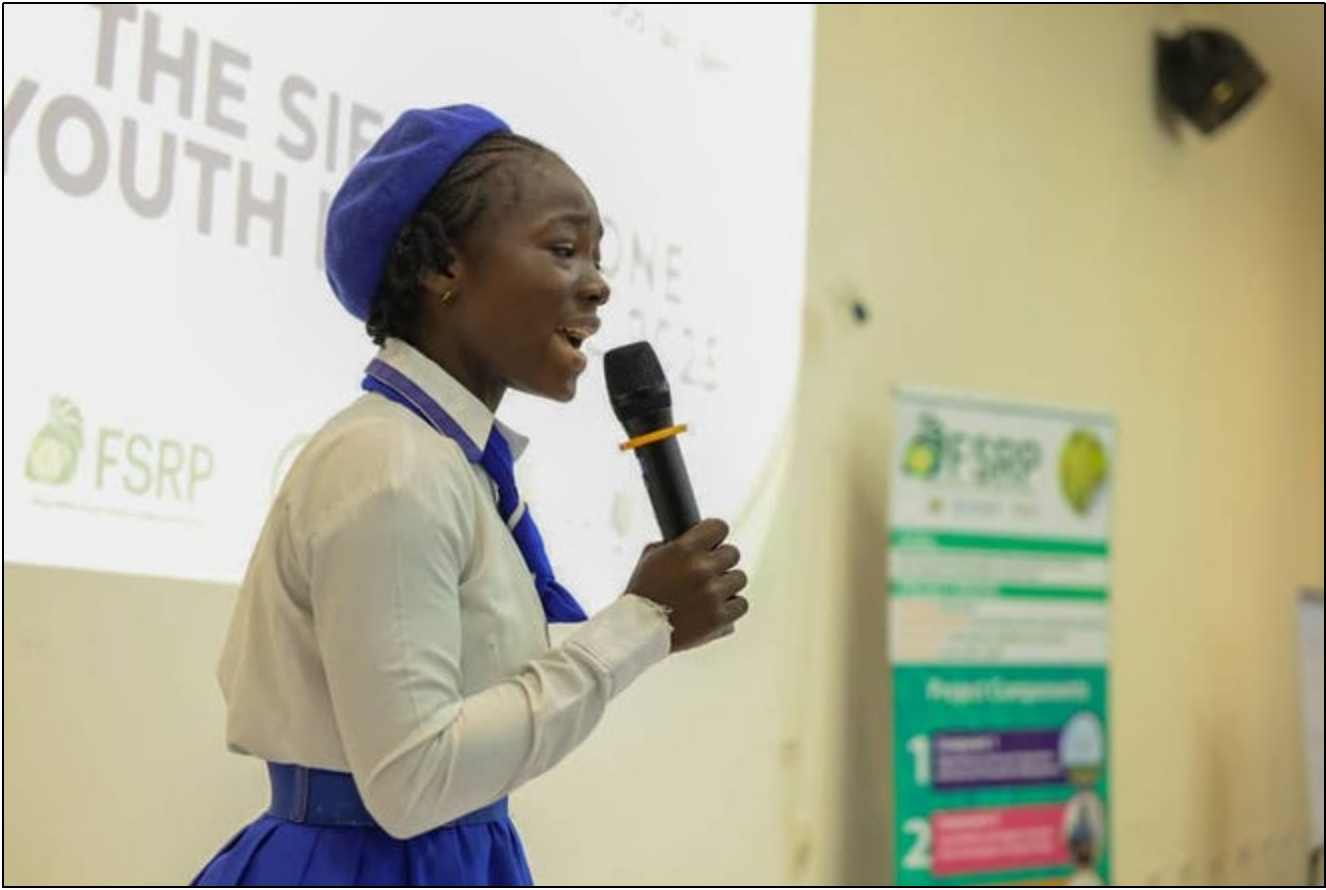
“For youth who play such a large portion of the population (in Sierra Leone), they’re going to be the ones shaping the future,” said Jon Wogman, the foundation’s senior program manager for youth programs. “So the opportunity to engage them, hear their ideas, be able to see what they thought was really needed to address improvements … was a really incredible experience.”
Foundation president Mashal Husain said the organization began running its Youth Institute in 1994 and today operates 20 annual sessions around America and in six foreign countries. It first launched in Africa last year with institutes in Uganda and Kenya. This year, the institute traveled more than 3,000 miles across the continent to Sierra Leone, and conversations are ongoing about launching new branches in Rwanda, the Philippines and other nations, she said.
Through the Youth Institute, high school students are challenged to learn about and present solutions to issues related to world hunger, a program emphasizing research skills, writing and public speaking. A select few from each group is invited each October to the foundation’s Global Youth Institute in Des Moines.
In its first year in Sierra Leone, the institute partnered with local education, scientific and government institutions to hear the proposals from 20 Sierra Leonean students.
“The Sierra Leone Youth Institute is more than a symposium,” Henry Musa Kpaka, the country’s minister of agriculture and food security, said in a statement. “It reflects our commitment to empower young people to lead in food systems transformation. Through our collaboration with the World Food Prize Foundation, we are giving students the opportunity to apply their creativity and research skills to real-world food security challenges.”
As The World Food Prize Foundation continues growing its Youth Institute program in Sierra Leone and other countries around the world, it hopes to plant the seeds for the next generation of farmers, scientists and policymakers — wherever they are.
“Whether it’s in America, whether it’s in Iowa or in Sierra Leone or Uganda, this is really about sparking confidence and commitment in young people, and showing them that their voices matter in shaping the future of food,” Husain said.
