
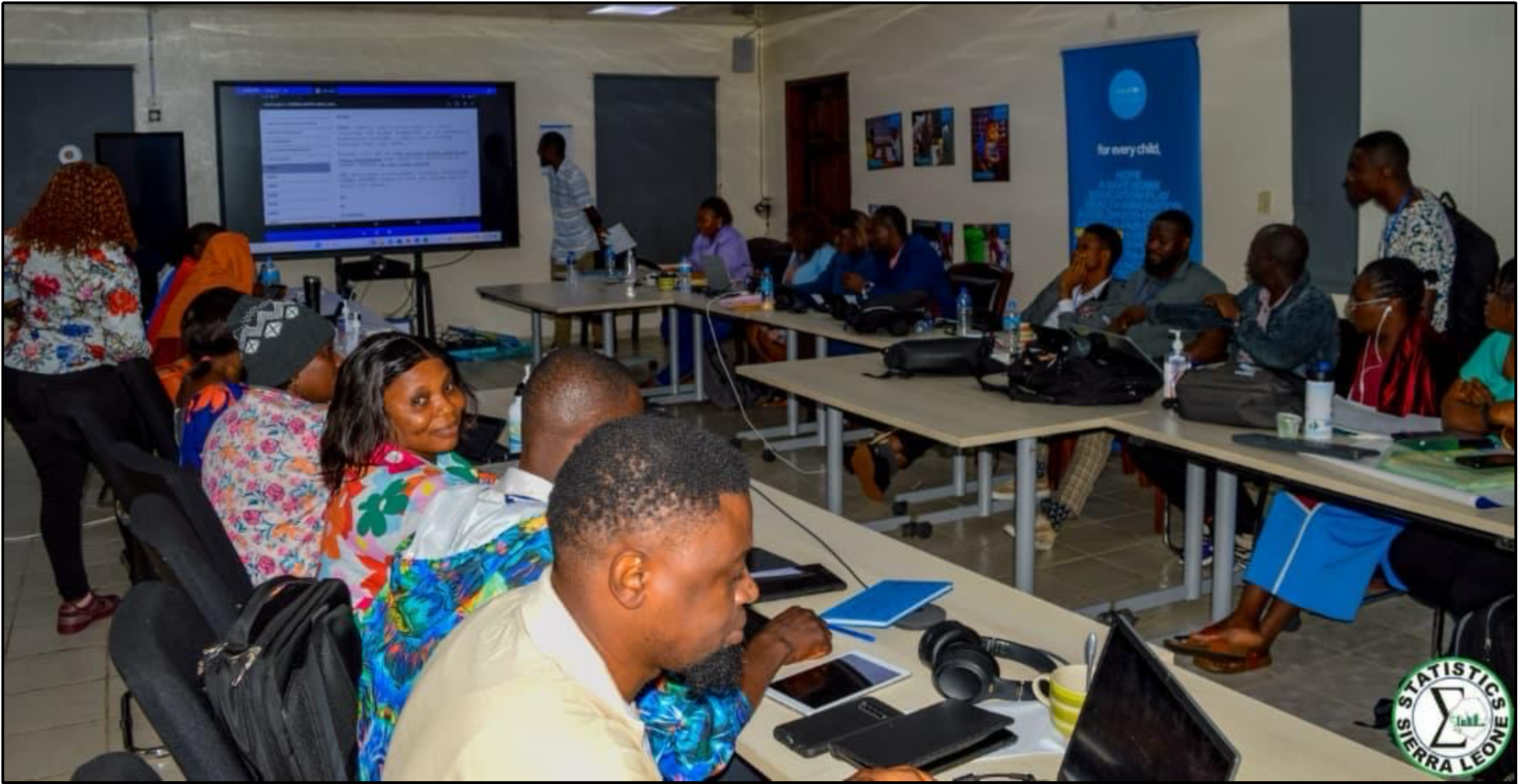
UNICEF and Statistics Sierra Leone (Stats SL) have completed a focused ten-day Computer-Assisted Personal Interviewing (CAPI) Pretest and Training of Trainers (ToT) program in preparation for the nationwide rollout of the seventh Multiple Indicator Cluster Survey (MICS-7). The workshop, which took place from August 4 to 13, 2025, brought together 32 staff members from Stats SL’s Demographic Health & Social Statistics and Data Science Divisions for intensive training in digital survey methods and the complete set of MICS-7 questionnaires.
The program aimed to improve national capacity for high-quality, standardised data collection. Participants were given hands-on experience with modern CAPI devices and software, practised standardised interview protocols, and were guided through each MICS-7 module, which included child health and nutrition, education, water and sanitation, child protection, early childhood development, and domestic violence. Trainers focused on ethical considerations, informed consent procedures, and strategies for ensuring respondent comfort and data integrity during sensitive interviews.
The CAPI pretest, which was administered in real-world settings, was a key component of the ToT. This exercise allowed participants to assess device functionality, questionnaire flow, and the cultural appropriateness of question wording. Field testing assisted in identifying technical flaws, usability issues, and potential operational challenges such as connectivity limitations and battery management in remote areas. The pretest results will be used to refine the digital tools, adjust interview protocols as needed, and finalise training materials for the national rollout.
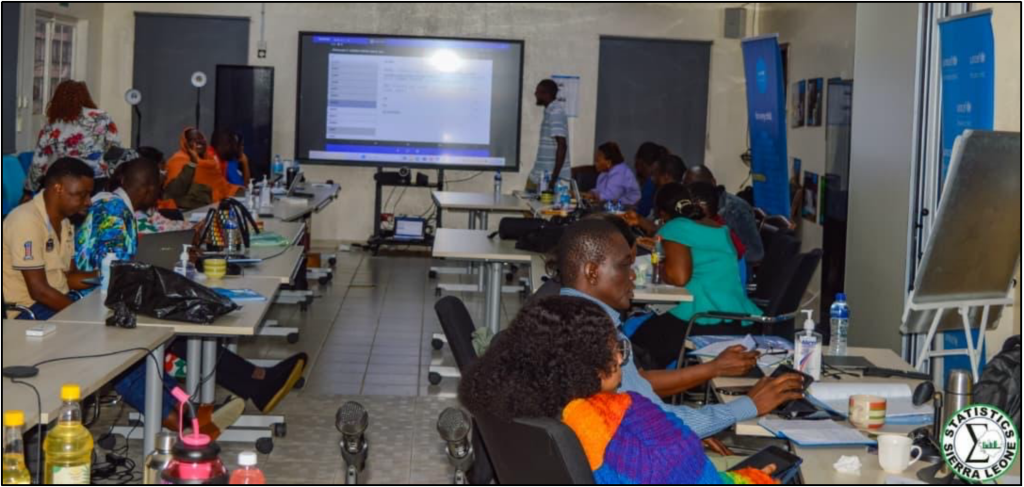
UNICEF and Stats SL intend to create a long-term training cascade by developing a cadre of master trainers. These master trainers will be in charge of training and supervising the larger team of field interviewers who will implement the entire MICS-7 across Sierra Leone. Standardising training and field procedures is intended to ensure consistency, comparability, and statistical rigour, thereby aligning the national exercise with international MICS guidelines.
MICS, developed and supported globally by UNICEF, is a flagship household survey program that generates internationally comparable and statistically robust data on the health and well-being of women and children. MICS-7 data will inform national policymaking, guide donor investments, and support targeted programs aimed at improving outcomes for Sierra Leone’s children and families.
The successful completion of the CAPI Pretest and ToT marks an important preparatory milestone in the MICS-7 process. UNICEF and Stats SL reaffirm their commitment to using technology, capacity building, and evidence-based planning to provide reliable, contextually relevant data that can drive long-term development and improve child well-being throughout the country.
