
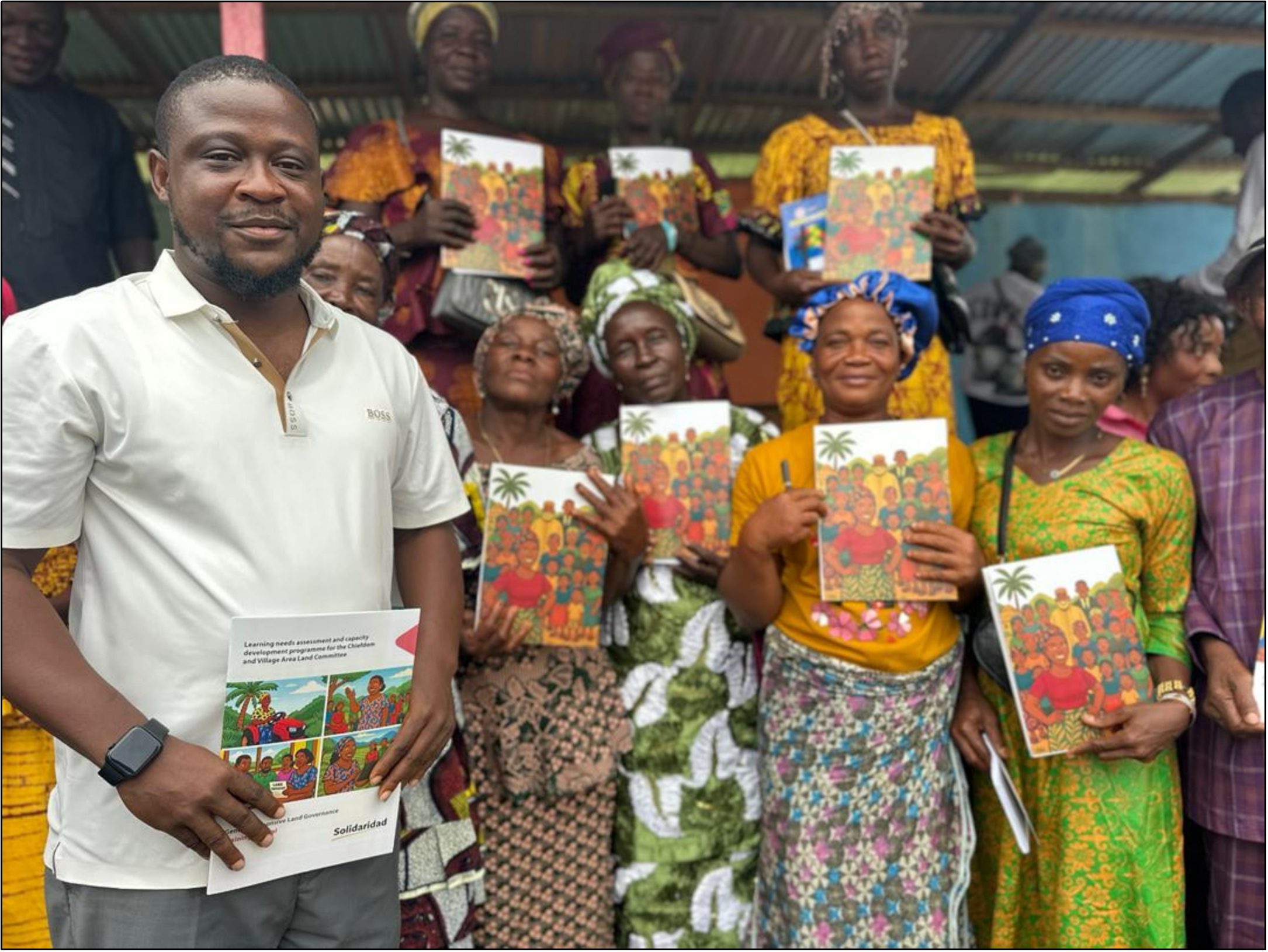
In collaboration with the Ministry of Lands, Housing, and Country Planning (MLHCP) and the Food and Agriculture Organisation of the United Nations (FAO), Solidaridad West Africa has initiated a coordinated endeavour to enhance the involvement and representation of women in land governance throughout rural communities in Sierra Leone. The initiative’s main goal is to give female members of Village Area Land Committees (VALCs) and Chiefdom Land Committees (CLCs) the information and abilities they need to assert their legal rights under recent land reform laws and participate in local land-related decision-making.
In the districts of Bo and Kenema, Solidaridad and FAO oversaw a participatory training program from July to August 2025. Members of grassroots land governance structures were the focus of the five-day training, which started in Kenema on July 28 and focused on women’s empowerment and inclusion. Solidaridad carried out a capacity assessment in both districts before the training to find any gaps and customise the modules to the particular requirements of committee members.
According to James Musa, Program Officer at Solidaridad Sierra Leone, “the goal of the Gender-Responsive Land Governance training is to increase awareness about the rights and responsibilities of women in CLCs and VALCs.” According to Musa, the training facilitates the full application of the National Land Commission Act and the Customary Land Rights Act, two laws that are essential to the reform of land ownership, rights, and access nationwide. According to him, the trainings are meant to support committee members in fulfilling their responsibilities under the 2022 land reform framework and to improve local governance.
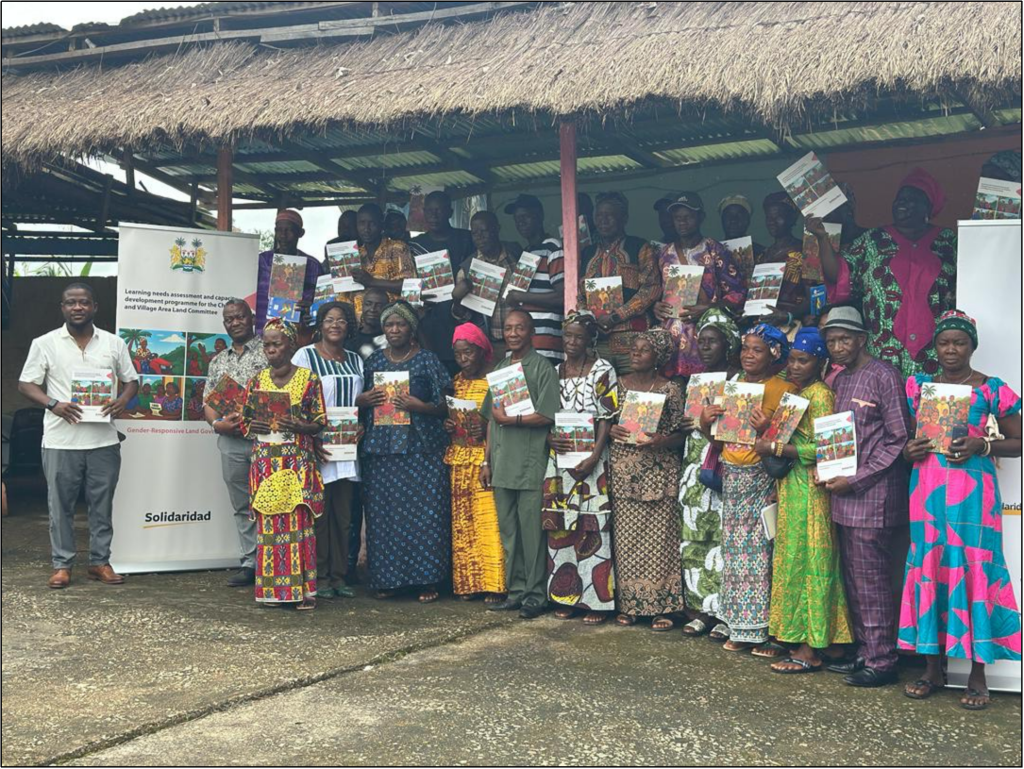
The project’s focus on inclusive, locally based approaches to land tenure reform is further highlighted by FAO’s involvement. Joel Kamara, FAO’s National Project Coordinator, stated, “We have been helping the government to make sure that land reforms are implemented throughout Sierra Leone so that more women can have rightful access to land.” According to Kamara, Solidaridad is receiving assistance from FAO in training VALCs and CLCs, which are organisations created to enhance land governance at the local level.
Beyond training, there are other elements to the three-year program. Kamara claims that the project will help the government create a multi-stakeholder mechanism to handle land conflicts and associated issues, bolstering channels for local dispute resolution and more open governance. “We urge women to seize these chances to the fullest extent possible. They can secure their livelihoods and invest in agriculture if they have access to land,” he continued.
The program was hailed by local officials as an essential step toward more effective and equitable land governance. The Bo Land Commission’s Land Commissioner, Mohamed Koroma, commended the training for making roles and responsibilities in community land bodies clearer. Members of these committees must be fully aware of their roles and responsibilities if they are established to assist the government in land governance. Koroma acknowledged that unresolved land disputes still put social and economic strain on families and communities, which is why this type of training is essential.
Charlie Tucker, the District Land Commissioner for Kenema, highlighted the government’s dedication to gender parity as part of the nation’s reforms. He reminded participants that the Customary Land Rights Act grants both men and women the right to inherit and make decisions regarding family land. The purpose of the Land Commission is to defend women’s rights. Tucker urged men to assist women in asserting their legitimate place in land governance and to encourage women to participate actively in committees, saying, “The government is committed to ensuring the full implementation of this law.”
Gender activists and traditional leaders also contributed their voices to the cause. On behalf of the Nongowa Chiefdom, Chief Bob Abdulai recognised that women have often been left out of decisions about land and benefits in rural households. He praised recent legal changes as a step toward equal rights for men and women to own and invest in land, saying, “In many of these families, women are completely excluded from land decisions and benefits.” He praised the creation of Land Commissions as a crucial tool for controlling land use and averting disputes in rural areas.
The program’s wider social significance was reaffirmed by Victor Macarthy, Assistant Director at the Ministry of Gender and Children’s Affairs in Kenema. He called for an end to customs that exclude women from inheritance, pointing out that land access has long been a barrier for women in Kenema and other districts. According to Macarthy, the Customary Land Rights Act, the Gender Equality and Women’s Empowerment Act, and the Devolution of Estates Act’s supporting provisions all offer legal support for enhancing women’s rights in land management and inheritance.
Participants in the training were given customised modules that addressed the particular needs found in the pre-training assessments. These modules included practical advice on how women can assert their rights in statutory and customary contexts, committee governance, legal literacy regarding land laws, and conflict prevention and resolution. By bringing together committee members, land commissioners, traditional leaders, and gender officials, the participatory approach, according to the organisers, helped create local consensus and workable plans for putting reforms into practice.
Officials and organisers stressed that social support and local capacity for women’s participation are just as important to the long-term success of land reform as legislation. To convert national reforms into real benefits on the ground—such as more secure land tenure for women, increased investment in agriculture, decreased conflict, and more inclusive local governance—the program combines legal education, institutional strengthening, and multi-stakeholder problem-solving.
Solidaridad, FAO, and the MLHCP will keep collaborating with communities and local authorities throughout Sierra Leone as the three-year program begins to track developments, close gaps, and advance women’s meaningful participation in land governance.
