
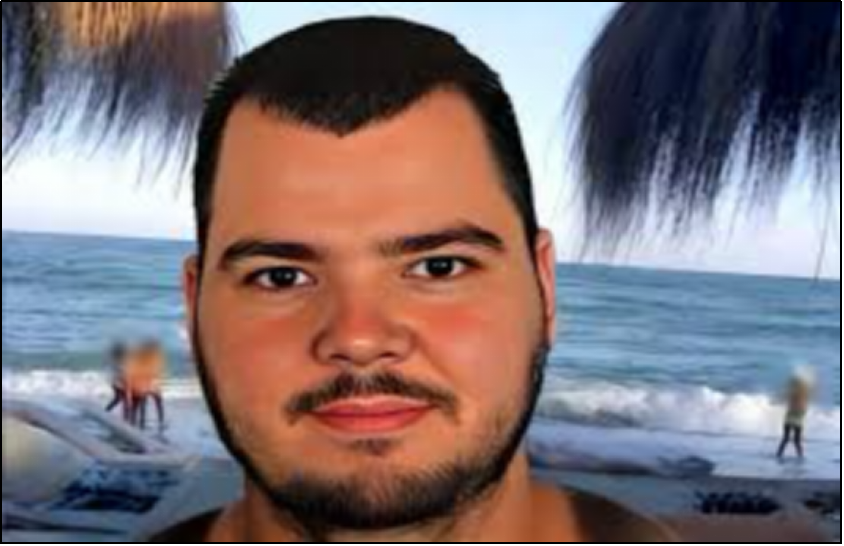
Convicted cocaine smuggler, Jos LeijdekkersA shocking revelation from a former housekeeper for Jos Leijdekkers has shed light on the murky life of a notorious criminal who is wanted in Europe and is rumoured to have significant influence in Sierra Leone. In an interview with New Lines Magazine, the staffer described Leijdekkers as a generous philanthropist who has gained favour with top government officials, military leaders, and law enforcement, making him a significant figure in the nation’s shadow economy.
Leijdekkers, who lived in Tokeh village and was well-known for his extravagant generosity, is said to have provided the locals with substantial food supplies, including bags of rice, gallons of cooking oil, and onions. High-ranking government ministers, who frequently visited his home, were also recipients of his deeds of kindness, in addition to the villagers. “They came to see him every day,” the worker recalled. Are you aware of the amount of money he gave them during their visit? This funding appears to have given Leijdekkers access to a network of influential government allies. He was a frequent visitor to the State Lodge, the opulent home of the president of Sierra Leone, and his influence extended beyond Tokeh village.
The lodge’s security staff remembered a well-dressed man who would occasionally show up and, as he left, would kindly throw $100 bills to the group of guards. According to one guard who reflected on the interactions, he had come to regard Leijdekkers as a person of significant wealth and influence, frequently referring to him as “Jagaban,” a term that denotes a respected and powerful individual.
Leijdekkers made a name for himself at LOR, the most upscale eatery in Freetown, where a single meal could cost up to $100, which is equivalent to three months’ worth of wages for the typical Sierra Leonean. The restaurant staff noticed that he frequently dined there two or three times a week and left tips ranging from $700 to $800. Despite his extravagant spending, he was frequently referred to as just “a Turkish man,” leading staff members to speculate about who he was. “We thought of him as a drug lord,” one waiter said bluntly. What else could it be—a wealthy white man in Freetown without a business?
His presence appeared to not affect the locals, despite the suspicions surrounding his wealth and activities. People have learned to manage the intricacies of their surroundings by keeping to themselves in a city where the distinction between lawfulness and criminality is frequently hazy. Frequently referred to as a “low-key gentleman,” Leijdekkers was remembered by a patron of a Lumley Beach Road lounge as “very chill, yet somehow distinctive,” particularly when accompanied by his bodyguards.
Questions concerning the scope of Jos Leijdekkers’ influence and the consequences for the local community are raised by the way wealth, power, and criminality are intertwined in his web of influence in Sierra Leone. His tale serves as a reminder of the complexity that lurks beneath Freetown’s surface, where the darker realities of crime can be overshadowed by the lure of wealth.
