
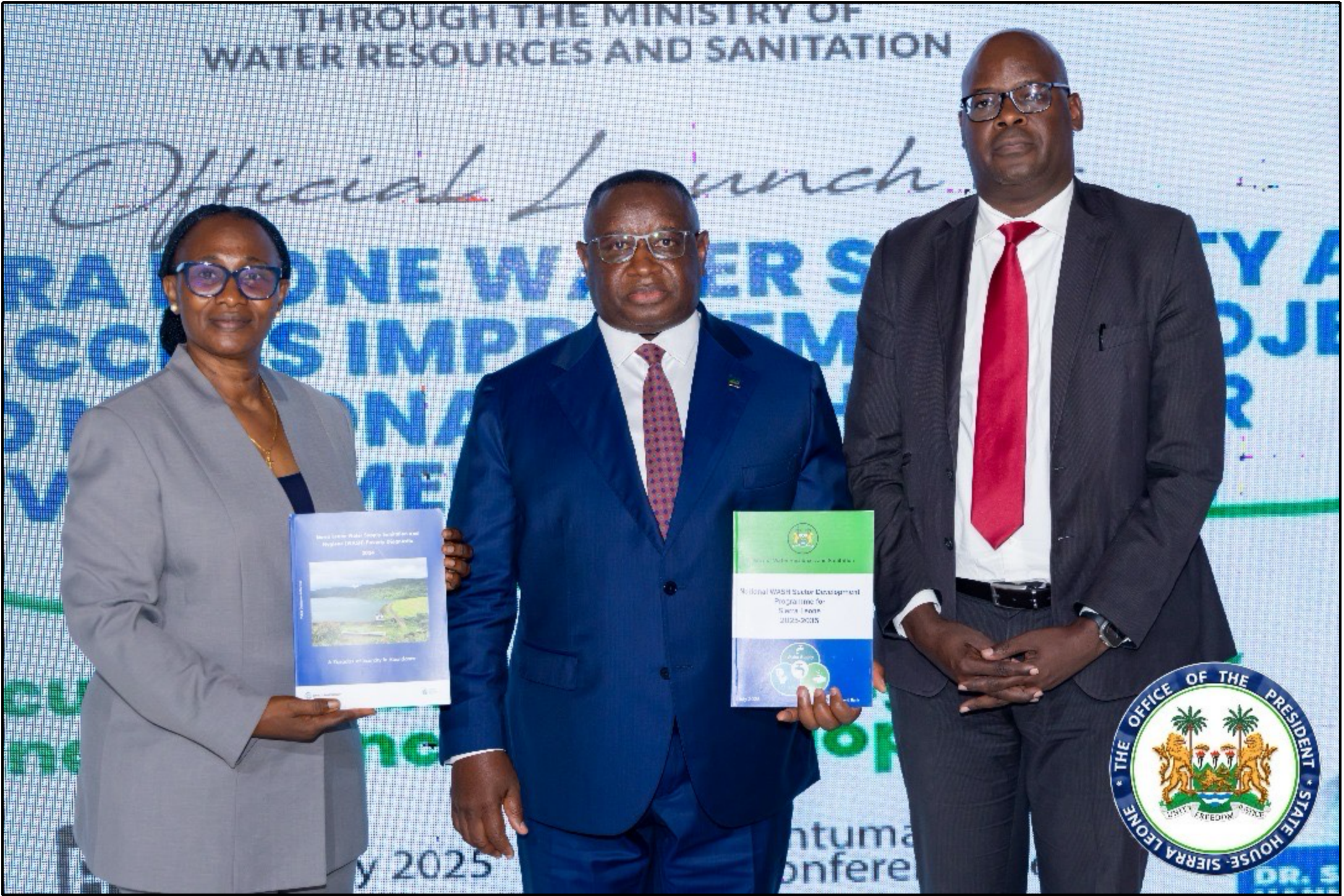
His Excellency President Dr. Julius Maada Bio officially launched the Water Security and WASH (Water, Sanitation, and Hygiene) Access Project. This ambitious initiative, supported by a $180 million World Bank investment, aims to address the country’s pressing water access and sanitation issues. The project, themed “Securing Water, Enabling Dignity, and Advancing Development,” aims to reach 4 million people by 2035, with a goal of 90% national coverage in WASH services.
During his keynote address at the launch event, President Bio emphasised that the initiative is a watershed moment in Sierra Leone’s ongoing journey towards equity, dignity, and sustainable development. He emphasised that access to safe water and sanitation is not a privilege, but a fundamental human right. “My government is guided by the belief that access to safe water and sanitation is a right guaranteed to all,” he declared, emphasising the importance of WASH in the National Development Plan and the Human Capital Development agenda.
The President articulated many citizens’ daily struggles, particularly the difficulties that children and mothers face as a result of inadequate water and sanitation services. He expressed his disappointment that no child should have to walk long distances to get water before going to school, and that no mother should have to risk infection during childbirth due to a lack of safe water. He also condemned the persistence of open defecation and waterborne diseases, stating that such practices should not be tolerated in the modern era.
President Bio framed the new WASH program as a critical step towards breaking the cycle of deprivation that has long plagued many communities. The initiative is divided into three progressive phases that provide a comprehensive roadmap for achieving national water security and sanitation access. He assured the audience that each phase would be rigorously monitored, implemented transparently, and linked to incentive-based delivery mechanisms, ensuring accountability and effectiveness throughout the project’s life cycle.
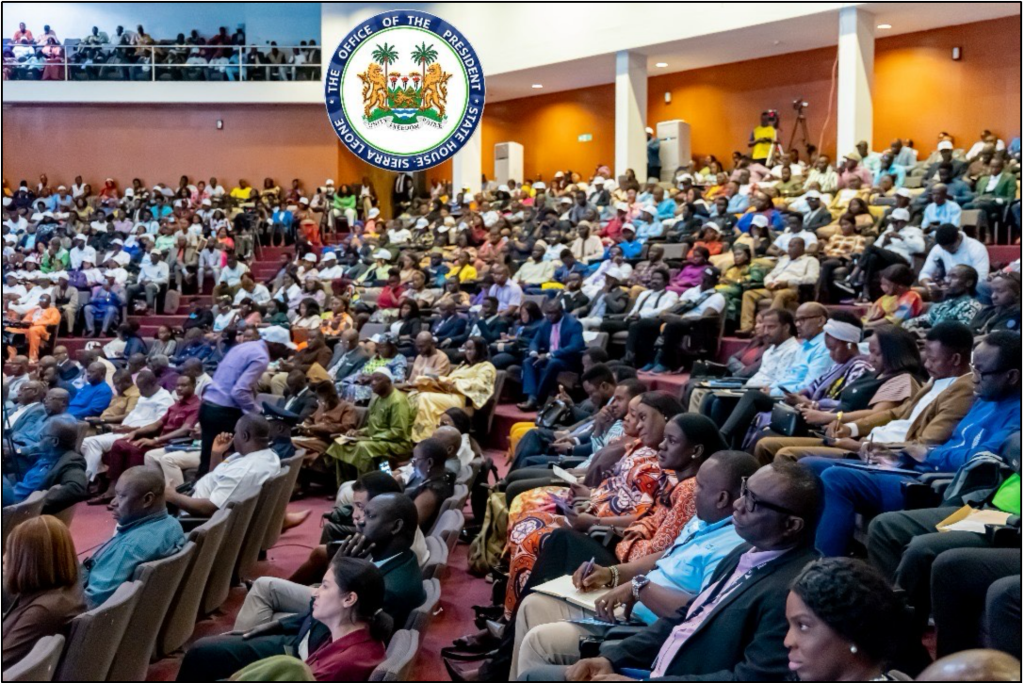
The WASH program’s vision is both ambitious and attainable. President Bio envisions a future in which water poverty is eradicated, girls can continue their education due to improved sanitation facilities, health institutions operate safely and effectively, and ecosystems are preserved. Furthermore, the initiative is expected to generate approximately 5,000 jobs, with 2,000 specifically for women, through a gender-responsive recovery strategy that empowers marginalised groups.
In a significant governance move, President Bio announced plans to establish a Water Administration House to consolidate oversight, regulation, and coordination in the water sector. He reaffirmed his government’s commitment to strengthening the Ministry of Water Resources and Sanitation, emphasising the importance of upholding standards, attracting investment, and coordinating efforts among the sector’s various stakeholders.
“This multiphase programmatic approach is a shining example of what is possible when national ownership meets international solidarity,” President Bio said, emphasising the project’s alignment with the United Nations’ Sustainable Development Goal 6, Clean Water and Sanitation for All. This alignment demonstrates the government’s commitment to global standards and collaboration in addressing local issues.
World Bank Country Manager Dr. Abdu Muwonge praised President Bio for his strong advocacy on behalf of the country. He recalled how the President personally made a compelling case for investment in Sierra Leone’s WASH sector during a visit to Washington two years ago, which resulted in the funding for this transformative initiative. Dr. Muwonge emphasised the importance of a comprehensive and inclusive strategy that strengthens the capacity of key sector institutions such as the GUMA Valley Water Company, SALWACO, and local councils, while also encouraging national participation in water resource stewardship.
The Minister of Water Resources and Sanitation, Dr. Sao-KpatoHannah Max-Kyne described the launch as a watershed moment in President Bio’s development vision. She called for national collaboration on the implementation of the project and the creation of a clear, focused roadmap to effectively address the challenges facing the WASH sector.
President Bio reaffirmed his unwavering commitment to ensuring that the Water Security and WASH Access Project receives adequate funding and that every Sierra Leonean, whether in rural or urban areas, benefits from this significant investment. “Water is not just a development commodity; it is a symbol of justice, a foundation of peace, and a building block of national resilience,” he declared, capturing the essence of this historic initiative and its potential to reshape Sierra Leone’s future.
