
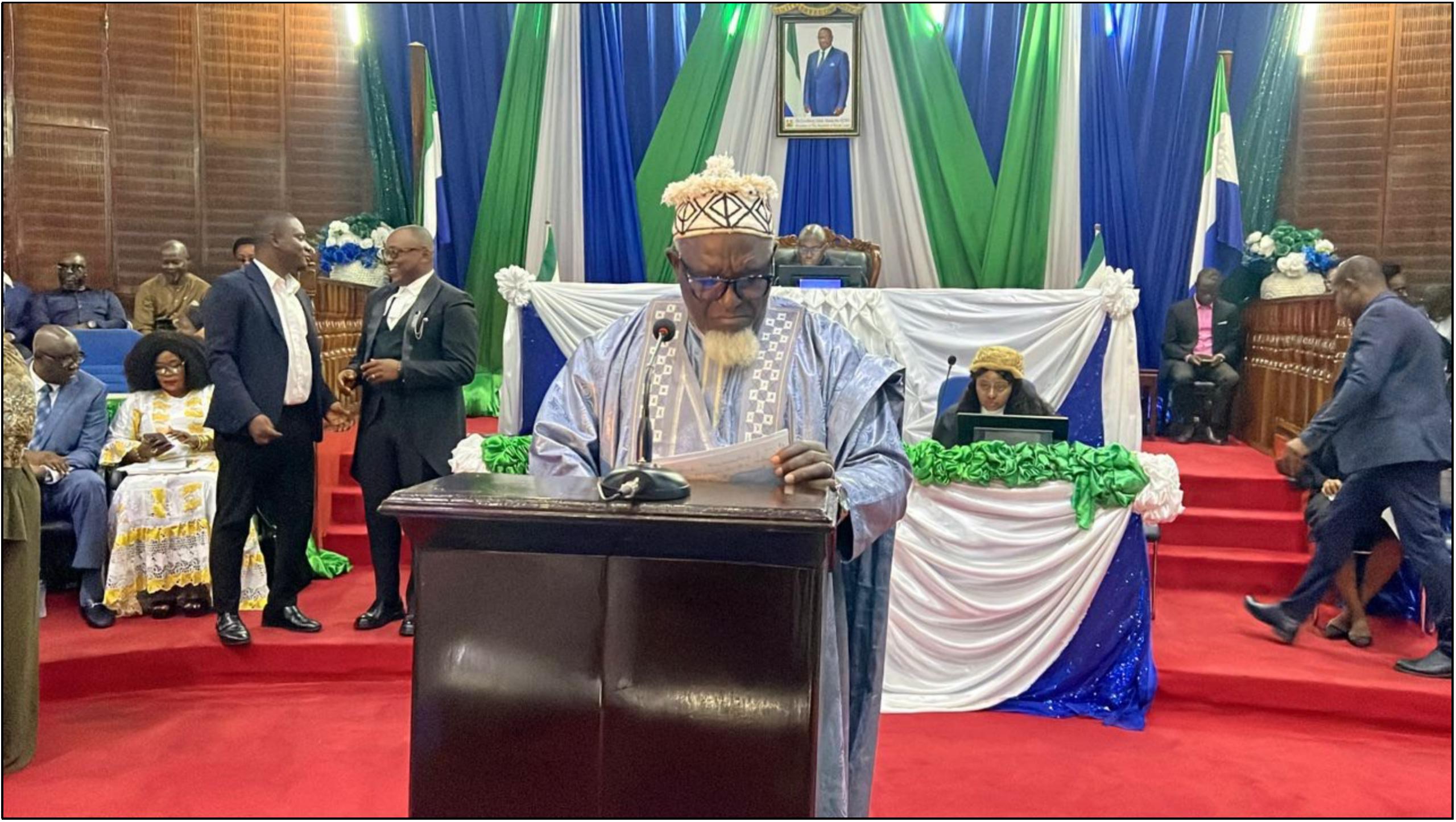
Paramount Chief Member of Parliament, P.C. Hon. Alhaji Musa Bamba Foray Kulio Jalloh IIIOn Thursday, July 3, 2025, a pivotal moment unfolded in the Sierra Leonean Parliament as Paramount Chief Member of Parliament, P.C. Hon. Alhaji Musa Bamba Foray Kulio Jalloh III, spearheaded a petition addressing urgent land ownership issues that have ignited tensions between local communities and government regulatory bodies. The petition, representing the voices of communities and fellow Paramount Chiefs from Dansogoia, Sambaia, and Diang Chiefdoms in the Tonkolili District, seeks to confront pressing concerns regarding land rights in light of recent directives from the Sierra Leone Mines and Minerals Development and Management Corporation (SLMMDC).
During the parliamentary session, PC Hon. Jalloh III articulated the intent behind the motion, clarifying that it was not designed to undermine the government. Instead, he emphasised the need to address the legitimate concerns of the affected communities. “We respectfully submit herewith a public petition on behalf of the people, landowners, and traditional authorities of Dansogoia, Sambaia, and Diang Chiefdoms in the Tonkolili and Koinadugu Districts, under Standing Orders 17 and 70 (5)a of the Standing Orders of Parliament,” he stated, underscoring the gravity of the situation.
The crux of the petition revolves around regulations issued by the SLMMDC, which assert exclusive ownership and leasing authority over the Kasafoni area. These claims are rooted in the Sierra Leone Mines and Minerals Development and Management Corporation (Allocated Minerals and Mineral-Related Assets) Regulations, 2024 Statutory Instrument No. 11 of June 2024.
According to Hon. Jalloh III, these assertions directly conflict with customary land ownership rights and infringe upon critical national legislation, notably the Customary Land Rights Act, 2022, and the Mines and Minerals Development Act, 2022.
“The implications of these regulations threaten not only our traditional land ownership but also undermine the social fabric of our communities,” Hon. Jalloh III asserted. He expressed profound concern over the potential repercussions these actions could have on the livelihoods of local landowners and the broader community. His remarks highlighted the urgent need for action from Parliament to rectify these issues.
In addition to addressing the overarching land ownership concerns, the petitioners are also advocating for Parliament to acknowledge their lawful lease agreement with the Gento Group of Companies. They are calling for section 2 of the disputed regulations to be declared invalid due to its conflict with the Constitution of Sierra Leone. “We trust that you will give this matter the urgency and attention it deserves in the interest of justice, community rights, and national cohesion,” he implored, appealing for legislative support to safeguard the rights of the communities he represents.
The call for action resonated with Hon. Jawah Sesay, who seconded the motion, emphasizing the paramount importance of upholding the rights of local communities amidst governmental regulations. The discussion is poised to ignite further debates within Parliament as lawmakers grapple with the challenges posed by the SLMMDC’s regulations on established customary rights.
Following the presentation of the petition, Rtd. Hon. Segepoh Solomon Thomas, Speaker of Parliament and Chairman of the Public Petitions Committee announced that the committee would convene on Monday at 2 PM to deliberate on the pressing issues raised. This move indicates a willingness to thoroughly investigate the concerns presented, with the possibility of inviting witnesses to provide additional insights into the matter.
As the situation unfolds, local communities in the Tonkolili and Koinadugu Districts remain vigilant and hopeful for a resolution that acknowledges their historical land rights and ensures their voices are heard in legislative discussions. In a nation where land disputes frequently ignite tensions, the outcome of this parliamentary petition could have significant implications for governance, community rights, and the future of mining operations in Sierra Leone.
The petition starkly illustrates the delicate balance that must be struck between national development objectives and the preservation of customary rights. As stakeholders prepare for the upcoming deliberations, the sentiment among local communities is one of cautious optimism. They seek a resolution that honors their long-standing connection to the land they inhabit, hoping that their traditional rights will be respected in the face of modern regulatory frameworks.
The outcome of this parliamentary initiative will be closely monitored, as it could set a precedent for how land ownership issues are addressed in Sierra Leone, influencing the relationship between local communities and government entities for years to come. The stakes are high, and the eyes of the nation are on Parliament as they consider the future of land rights in the context of national development and community empowerment.
