
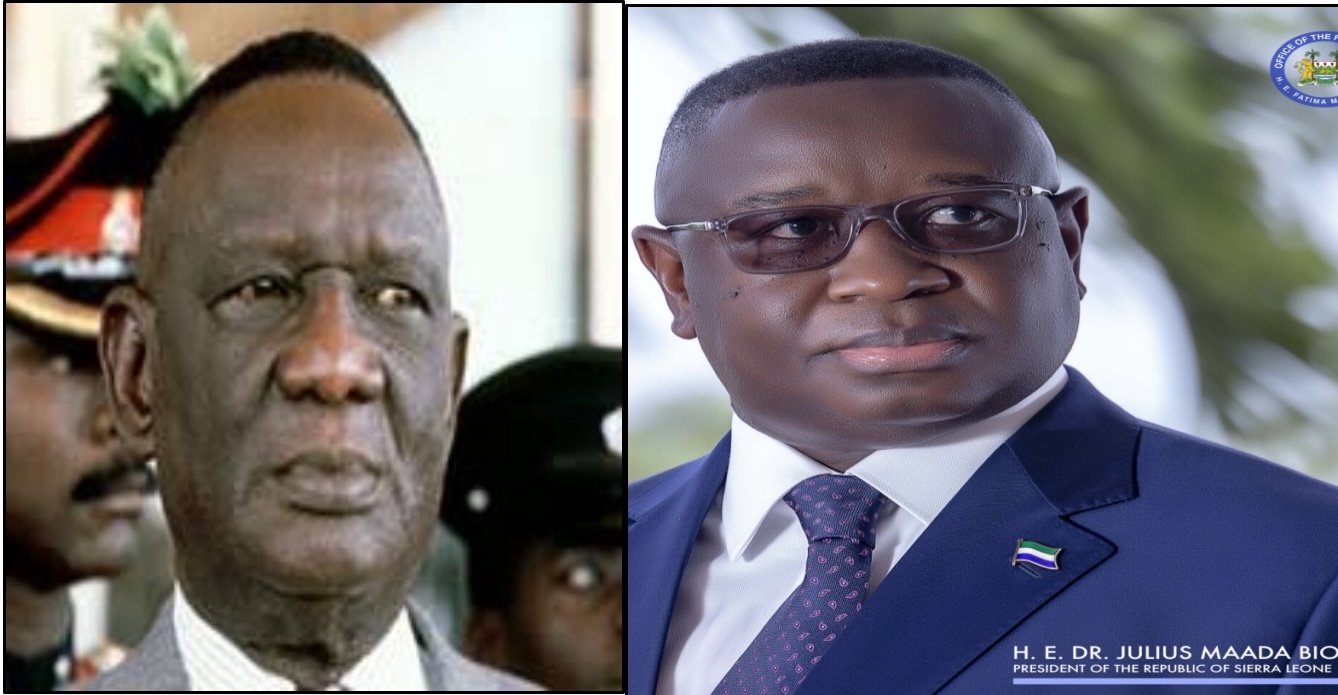
President Siaka StevensSierra Leone has once again assumed the chairmanship of the ECOWAS Authority of Heads of State and Government, marking a significant step forward for the Economic Community of West African States (ECOWAS). President Bola Ahmed Tinubu of Nigeria, whose term had come to an end, was officially replaced on June 22, 2025, by President Julius Maada Bio. For the second time in the 50-year history of the regional bloc, Sierra Leone is occupying this esteemed position.
The change of leadership was formally announced at the 67th Ordinary Session of the ECOWAS Authority, which was held in Abuja, the capital of Nigeria. Regional leaders met at the summit to discuss important topics related to economic integration, security, and advancing democratic governance across West Africa. In his acceptance speech, President Bio emphasized his commitment to fostering peace, bolstering regional stability, and accelerating economic growth during his administration.
Reviving regional security cooperation, restoring constitutional order and bolstering democracy, facilitating economic integration, and building institutional credibility within ECOWAS are the four strategic priorities that President Bio stated will guide his leadership to achieve these objectives. From 1981 to 1982, President Siaka Stevens chaired ECOWAS, which was Sierra Leone’s first time doing so. The ECOWAS Treaty was signed by fifteen West African countries in Lagos, Nigeria, on May 28, 1975, marking the beginning of ECOWAS. Benin, Burkina Faso, Côte d’Ivoire, The Gambia, Ghana, Guinea, Guinea Bissau, Liberia, Mali, Mauritania, Niger, Nigeria, Sierra Leone, Senegal, and Togo were among the original members. The treaty sought to encourage member states’ cooperation and economic integration.
Benin, Cabo Verde, Côte d’Ivoire, The Gambia, Ghana, Guinea, Guinea Bissau, Liberia, Nigeria, Sierra Leone, Senegal, and Togo are the current members of ECOWAS. Notably, founding member Mauritania signed a new associate membership agreement in August 2017 after withdrawing in December 2000. On January 29, 2025, Burkina Faso, Mali, and Niger also formally left ECOWAS.
One of the cornerstones of the African Economic Community, ECOWAS works to strengthen economic cooperation among its member nations to foster collective self-sufficiency and the formation of a single trading bloc. There is hope that the West African region will make new efforts to accomplish these lofty objectives under President Bio’s leadership.
